
Slicing firm cheese
You want to cut even slices from a firm piece of cheese now and then, and first want to check that the blade and machine are designed for the job.


For firm cheese, first choose a model whose manufacturer explicitly says it is suitable for that type of cheese; an adjustable slice thickness alone is not enough. Then consider how much space the appliance takes up and how easy the blade and carriage are to clean. Manufacturer claims are not independent slicing tests.
You want to cut even slices from a firm piece of cheese now and then, and first want to check that the blade and machine are designed for the job.
You only slice a little at a time and want setting up, cleaning and putting the machine away to be no more work than the slicing itself.
For quick slicing jobs, your main concerns are a stable set-up, finger protection and safe cleaning.
Start with the blade and the manufacturer’s information about the types of cheese it is designed for. Then weigh up cleaning, safe handling and storage against how often you’ll use the machine.
| What to consider | What to look for | Who should prioritise this? |
|---|---|---|
| Even slicing | Check whether the manufacturer lists firm cheese as suitable for the exact model and standard blade; also check the slice thickness setting. | If I want to cut firm cheese into even slices, I want to know whether the blade supplied is designed for it. Around 31% of consumers give slicing performance top priority. |
| Cleaning after a small portion | Check whether the blade or carriage can be removed, and how those parts should be cleaned according to the manual. | After cutting a few slices, I want to clean the machine without having to take it apart in a complicated way. Ease of cleaning comes first for around 25% of consumers. |
| Safe handling | Check the food holder, carriage lock and controls on the exact model; follow the manual when using and cleaning it. | For quick slicing jobs, I want to keep my fingers away from the rotating blade and clean the parts carefully. Around 25% of consumers prioritise safe use. |
| Size for occasional use | Compare the dimensions and folding design with the worktop and cupboard space available. | If I only use the slicer occasionally, I don’t want it taking up unnecessary storage space. Around 19% of consumers give size and cost top priority. |
Those figures don’t prove that the standard blade will slice your firm cheese the way you want.
Check the information about cheese and the blade supplied with the exact model. Don’t treat a manufacturer’s claim as an independent test.
For small portions, storage and cleaning can matter more than extra-heavy construction.
Compare the dimensions and removable parts with a compact or foldable alternative. Decide which trade-off suits the way you’ll use it.
According to ACM ConsuWijzer, your statutory guarantee rights exist alongside any guarantee offered by the manufacturer or seller.
If the appliance breaks too soon under normal use, contact the seller. The solution that is appropriate depends on what you could reasonably expect from the product and the circumstances.
The SKS110 is an electric food slicer that Graef explicitly says is suitable for firm cheese.
The AS 3912, AS 3917 and AS 3915 models differ in their storage features and construction.
The E 16 is an electric food slicer with a metal construction and removable carriage.
This selection includes compact models for small portions and one model whose product description explicitly mentions hard cheeses. For each model, check that the blade and machine are suitable for the cheese you want to slice.
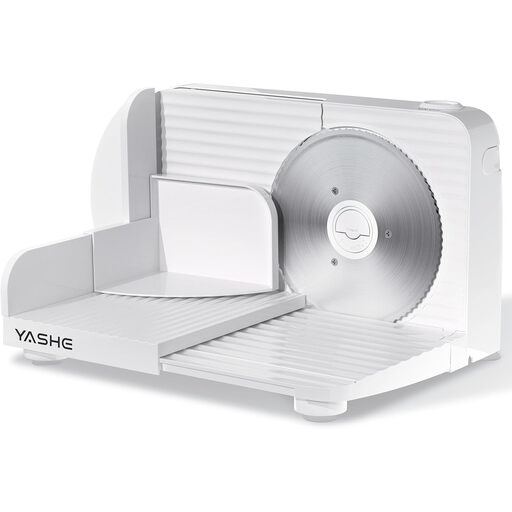 No image available
The product title mentions cheese and a foldable design; check whether the standard blade is suitable for your firm cheese.
180 W; adjustable slice thickness from 0–15 mm; 17 cm stainless steel blade.
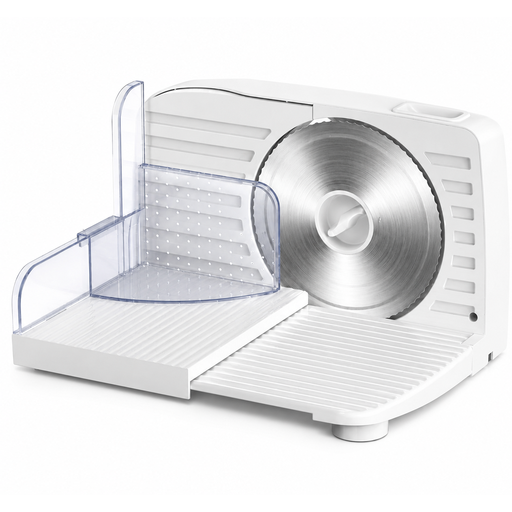 No image available
The product description mentions cheese and a foldable design. Check whether the blade is suitable for firm cheese.
The description mentions a removable blade and cutting platform.
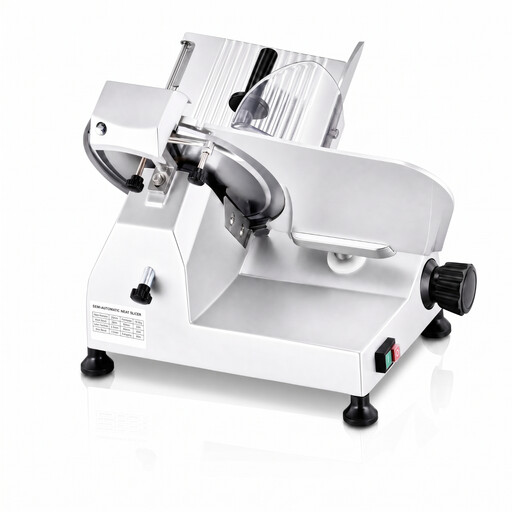 No image available
The product description explicitly mentions hard cheeses. Check that the size of the appliance and blade are suitable for your portions.
25.4 cm carbon steel blade; adjustable slice thickness from 0–12 mm.
 No image available
The product title mentions a metal construction and removable carriage. Check whether the blade supplied is suitable for firm cheese.
The product title also mentions a glass base.
No. Also check what the manufacturer says about cheese for the exact model and the blade supplied. Graef explicitly mentions firmer cheese for the SKS110; that does not prove other models will produce the same result.
Follow the manual for the exact model and unplug the appliance before taking it apart or cleaning it. Ritter states this explicitly for the E 16.
No. A foldable design affects storage, not slicing performance. For firm cheese, check the blade and the manufacturer’s information for the exact model.
Store cheese in a sealed container in the fridge. For slices of the 40+ cheese described by the Voedingscentrum, the Bewaarwijzer recommends 4 days in the fridge; don’t automatically apply this advice to other types of cheese.
Yes. According to ACM ConsuWijzer, your statutory guarantee rights exist alongside any manufacturer’s guarantee. The solution that is appropriate depends on what you could reasonably expect from the product and the circumstances; the seller is your point of contact.