
Fan of thin slices of ham
You mainly want thin, even slices for your guests, so you compare the blade supplied with the slicer and its thickness settings.


If thin slices of ham are your priority, look for a smooth blade and precisely adjustable slice thickness. If you want a versatile slicer and wafer-thin slices are less important, a serrated blade may suit you. Measure the ham and the space you have available, and check in advance how the parts that come into contact with food can be cleaned. The preference for a smooth blade when slicing very thinly is advice from GRAEF, not the result of an independent performance test.
You mainly want thin, even slices for your guests, so you compare the blade supplied with the slicer and its thickness settings.
You want to slice plenty of portions one after another, so you check whether the joint will fit on the carriage and within the stated cutting capacity.
You want to be able to reach and clean the parts that come into contact with the ham after serving, while operating the slicer safely.
Start with your preferred slice thickness, then check that the ham will fit and that the slicer will be easy to clean and store.
| What to consider | What to look for | Who should prioritise this? |
|---|---|---|
| Preferred slice thickness | Check whether the specific model has a smooth blade and look at its slice-thickness adjustment range. | If I mainly want thin slices of ham for guests, I look at the blade and thickness settings; around 36% of consumers prioritise thin slicing. |
| Space for the ham | Measure the joint and compare it with the stated cutting height, carriage and slicer dimensions. | If I have a large joint or want to slice plenty of portions one after another, I want to know whether the ham will fit securely on the carriage; around 29% of consumers put capacity first. |
| Cleaning and operation | Check the cleaning instructions and see which parts are removable and whether a food holder or food pusher is included. | If I want to clean the parts that come into contact with food properly and operate the slicer with control, accessible parts matter; around 21% of consumers name this as their main priority. |
| Storage | Compare the dimensions and check whether this specific model folds away. | If I need to put the slicer back in the cupboard after a festive meal, I want to know how much space it takes up; around 14% of consumers choose storage space as their main consideration. |
The model number matters: the FRITEL SL 3110 is not the same model as the SL 3080.
Compare the full model number and blade type, not just the brand name or product photo.
Clatronic lists 150 W for the MA 3585, while a Joybuy listing states 500 W. Wattage alone does not show how well a slicer cuts cooked ham.
Check which model is being offered, and compare the blade, carriage and controls too.
Voedingscentrum advises not leaving perishable food out of the fridge for more than 2 hours. Storage advice for opened ham joints also depends on the circumstances and who will be eating them.
Ideally, slice only what you plan to serve, store the rest in a sealed container at 4 °C, and follow the advice for the specific product and the people eating it.
Ham that is not chilled or used in time may go to waste unnecessarily.
The G52 TWIN is worth considering if you want a model with a smooth blade for thin slices of ham.
The AS 3915 is an option to compare if you want adjustable slice thickness and a blade for cold meats.
The SL 3080 is worth considering if you are looking at a folding slicer with a serrated blade.
The DO522S is worth comparing if you want to assess the stated capacity for a larger piece of food.
The T250 may be worth considering if you are looking at a larger slicer for cold meats.
These products have been selected with ham and cold meats in mind. Check whether the blade, adjustment range and size of each model suit your needs. CE marking is mandatory for electrical products in the Netherlands; check the marking and applicable product information for the specific model.
 No image available
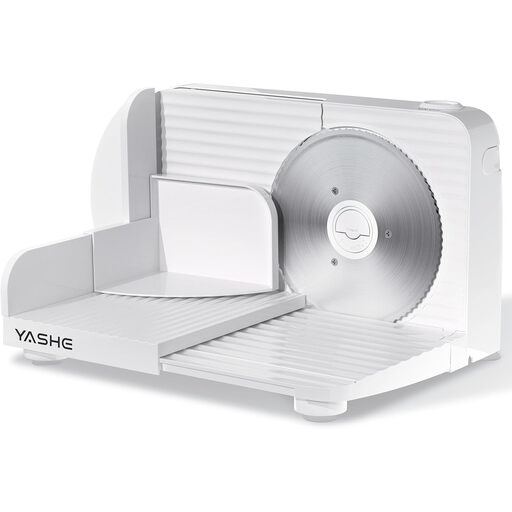
The serrated version is designed for versatile slicing. For wafer-thin slices of ham, GRAEF recommends a smooth blade.
The product title lists a slice thickness of 0–15 mm, a 17 cm stainless steel blade and 180 W.
 No image available
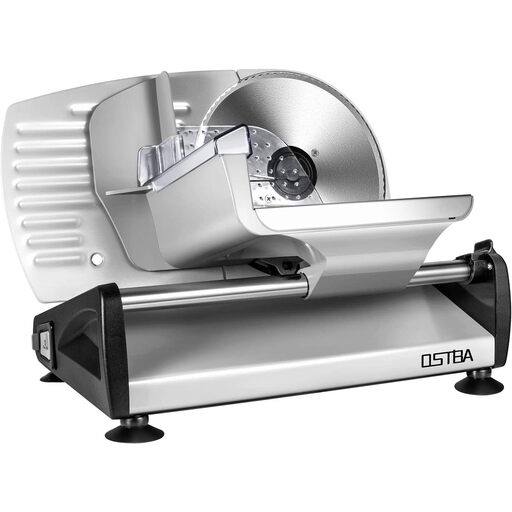
The title and product description list ham as a suitable use; check whether the size suits the piece you want to slice.
The product title lists a 19 cm blade, an adjustment range of 0–15 mm, a child lock and 150 W.
 No image available
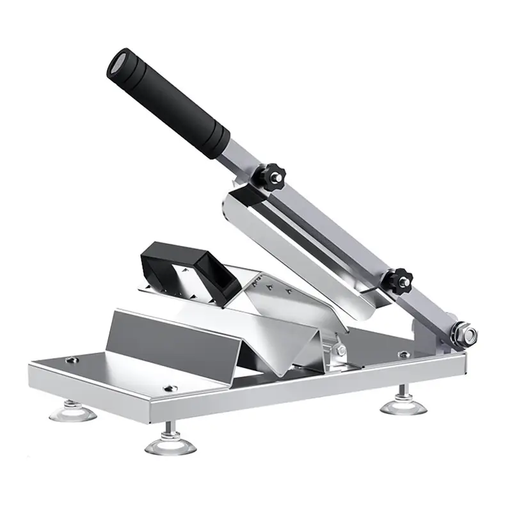
The product description lists ham and other types of meat as suitable uses. Check the available details about the blade, slice thickness and cleaning for this model.
The product title lists SS304 stainless steel.
 No image available
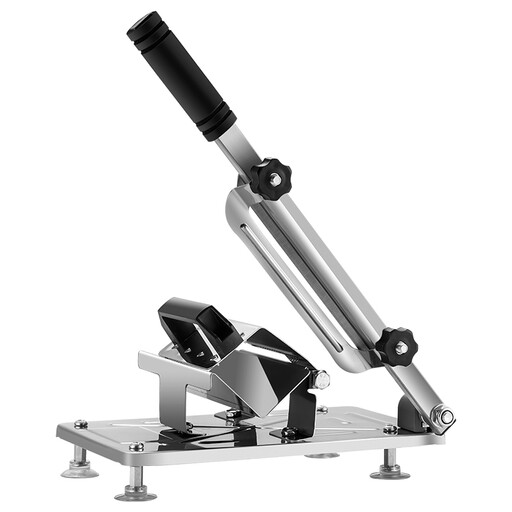
The product title describes an extended model for slicing meat; compare the slicer's dimensions with your worktop and storage space.
The product title lists stainless steel.
 No image available
This model is designed for cold meats and folds away. Note that its serrated blade does not follow GRAEF's recommendation of a smooth blade for wafer-thin slices.
The product information lists a removable stainless steel blade, an adjustment range of 0–15 mm, a blade diameter of 17 cm and 100 W. The carriage has a food holder.
GRAEF recommends a smooth blade for wafer-thin slices of ham. Check whether one is included with the exact model; GRAEF says the G52 TWIN comes with an extra-smooth blade. This is the manufacturer's advice, not an independent test of cooked ham.
Follow the cleaning and dismantling instructions for the exact model, and clean the parts that come into contact with food thoroughly. Voedingscentrum recommends using clean kitchen utensils; which parts can be removed varies from one slicer to another.
Store cold meats in a sealed container in the coldest part of the fridge at 4 °C, and do not leave perishable food out of the fridge for more than 2 hours. For opened ham joints, Voedingscentrum recommends 3–5 days in the fridge, or 2 days during pregnancy. It also advises older people, pregnant women, very young children and people with weakened immune systems not to keep opened cold meats for more than 2–3 days. For other ham products and sealed packaging, follow the specific storage advice and check the label.
No. According to the Dutch Government, there is no fixed statutory warranty period in the Netherlands: you are entitled to a product that meets what you could reasonably expect. If something is wrong, the seller is your point of contact; a manufacturer's warranty is separate.
According to the Netherlands Food and Consumer Product Safety Authority, CE marking is mandatory for electrical products. The Low Voltage Directive applies to electrical equipment with a rated AC voltage of 50–1000 V. Check the marking and applicable product information for the specific model; a product listing alone does not prove that the model meets all requirements.