
Slicing thin deli meats
You mainly want to slice chilled, cooked pork thinly, so you’re comparing the blade supplied and the thickness settings. Severin says the AS 3915 comes with a deli blade and has an adjustable slicing thickness.


For thin slices of chilled, cooked pork, an adjustable slicer with a suitable deli blade is a good choice. In a shared kitchen, you’ll also need to consider how to clean the parts and other food-contact surfaces. Before choosing a model, decide whether it will be used at home or for business.
You mainly want to slice chilled, cooked pork thinly, so you’re comparing the blade supplied and the thickness settings. Severin says the AS 3915 comes with a deli blade and has an adjustable slicing thickness.
You share equipment with others and want to clean the food-contact parts thoroughly between uses. Keep raw and cooked food separate; the Netherlands Nutrition Centre recommends using clean utensils and equipment.
You’re looking for a machine that fits on a small worktop without compromising on your preferred blade or safe operation. Graef describes the SKS110 as a compact all-purpose slicer; check the dimensions of the model you’re considering.
First, compare the blade and slicing thickness with the food you want to slice. Then consider cleaning, operation, available space and permitted use.
| What to consider | What should you check? | Who should consider this? |
|---|---|---|
| Blade and thin slices | Check which blade is supplied and what slicing thicknesses can be selected. The settings alone won’t guarantee a particular result with every piece of meat. | If your main aim is to slice chilled, cooked pork thinly, focus on the blade and thickness settings. Around 36% of consumers prioritise slicing thickness and suitability for the food they want to slice. |
| Cleaning between users | Check which parts can be removed, which are dishwasher-safe according to the manual, and how to clean the other food-contact surfaces. | If several people use the machine, you’ll want to clean its parts thoroughly between uses and keep raw and cooked food separate. Around 29% of consumers put cleaning first. |
| Operation and workspace | Check the safety features, switches and non-slip fittings, as well as the machine’s dimensions and the clearance needed around the carriage. | If the machine needs to fit on a shared or small worktop, a stable setup and enough room to operate it are important. Around 21% of consumers focus on ease of use and available space. |
| Conditions of use | Decide whether it will be used at home or for business, and check the permitted use and operating time in the manual. | If you’re using the machine in a business, you’ll want to know whether it’s designed for that purpose and what food safety requirements apply. For around 14% of consumers, conditions of use and aftercare are the top priority. |
A kitchen doesn’t become a business simply because several people use it. According to ritterwerk, the ritter E 16 is intended for domestic, non-commercial use.
Before buying, decide whether the machine will be used at home or for business. If a business prepares, processes or sells food, food safety requirements set by the Netherlands Food and Consumer Product Safety Authority (NVWA) apply.
Tristar’s dishwasher-safe claim applies to removable parts; other food-contact surfaces also need attention. The Netherlands Nutrition Centre recommends keeping raw and cooked food separate and using clean utensils and equipment.
Read the cleaning instructions for each part and agree on who will clean the machine after use in your shared kitchen.
Remember to allow time to clean food-contact surfaces that can’t be removed.
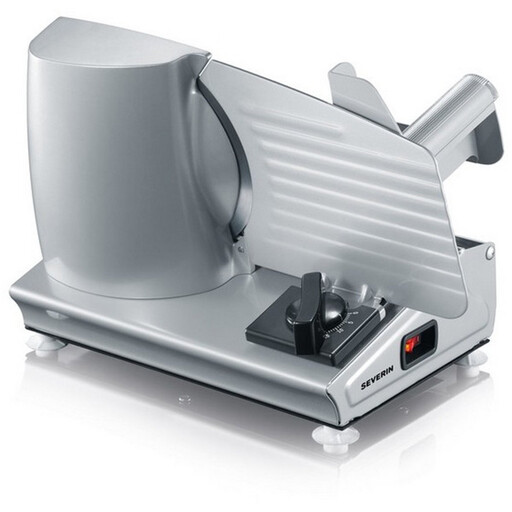
Severin describes the AS 3915 as a domestic all-purpose slicer supplied with a deli blade, aimed at anyone who wants to slice meat for sandwiches thinly.
Tristar says the EM-2099 is suitable for foods such as deli meats. It may be worth considering if easy dismantling and cleaning are important to you.
Graef describes the SKS110 as a compact all-purpose slicer for kitchens with limited space.
The manufacturer describes the E 16 as a compact, angled metal all-purpose slicer for domestic use.
These models are relevant if you want to slice meat thinly and need to clean and store the slicer between uses.
 No image available
An option for slicing meat thinly if you’re looking for a smooth meat blade and adjustable slicing thickness.
The product description lists a smooth meat blade, an adjustable slicing thickness of 0–15 mm and a tilting carriage. Unplug the machine before cleaning or changing blades. Don’t touch the moving blades, and keep the appliance out of children’s reach.
 No image available
An option if you’re looking for a slicer with parts that can be removed, according to the product description.
The product name lists a serrated blade, a 0–15 mm thickness setting, a 17 cm blade diameter, a folding design and 100 W. The product description says the blade and carriage are removable.
The Netherlands Nutrition Centre recommends keeping raw and cooked products separate and using clean utensils and equipment. Clean anything that has come into contact with raw food, and follow the model’s manual when dismantling and cleaning the slicer.
Not simply because several people share the kitchen. If you run a catering or food business that prepares, processes or sells food, the NVWA requires you to follow a HACCP food safety plan. You can use an applicable approved hygiene code for this purpose.
For opened roast pork sold as a deli meat, the Netherlands Nutrition Centre recommends storing it covered in the fridge for 2 days, at 4 °C in the coldest part. This advice applies to this specific product and isn’t a general shelf life for all cooked pork products.
No. For private purchases, you also have a legal right to a product that works properly, explains the Dutch government. There is no fixed statutory guarantee period in the Netherlands; if a product is faulty, contact the retailer.
No. For products that must carry a CE mark under the relevant EU rules, the manufacturer declares that the product meets those rules. There is no central EU body that issues general CE approval. You should also check the manual and confirm whether the model is suitable for home or commercial use.