
Vandaag of morgen in huis

Kwaliteit gegarandeerd

Welkomstaanbiedingen ontgrendelen: GRATIS bezorging | Tot 80% korting | Gratis 30 dagen JoyPlus-proefperiode
Download de app
Perfectly uniform slices of homemade bread, paper-thin carpaccio, or a beautifully arranged charcuterie board with freshly sliced meats. The promise of an electric slicer is alluring. Yet, the search often ends in disappointment: a device that gets relegated to the back of a cupboard after just a few uses. Marketing jargon and confusing specifications make it difficult to make a sound choice. Let's expose the most common pitfalls so you can choose a model you'll actually use.
Before you buy a slicer, it's wise to know where things often go wrong. Many models look fine at first glance but have hidden flaws.
To avoid the pitfalls above, it's crucial to look beyond appearances. These three technical specifications determine whether an all-purpose slicer will perform well.
The power, expressed in Watts (W), gives an indication of its strength. For occasional use and soft items like cake or white bread, 100W may suffice. Do you regularly slice hard crusts, firm cured meats, or cheese? Then look for a model with at least 150W and a gear drive. This type of drive ensures a more efficient and consistent power transfer from the motor to the blade, making the machine less likely to jam.
The blade is the heart of the machine. Most home-use models come with a serrated blade. This is a great all-rounder, suitable for use as both a bread slicer and a meat slicer. For paper-thin slices of meat (like carpaccio), a smooth blade yields a cleaner result, but this is often only found on a professional-grade slicer for home use.
A crucial feature is the adjustable slice thickness. Check if the thickness can be set easily and precisely, for example, from 0 to 15 or 20 mm. This gives you the flexibility to cut both ultra-thin slices and thick cuts of bread.
A machine must stand firmly on the countertop. A metal housing offers the most stability and durability but also makes the appliance heavier. High-quality plastic can be a good alternative, provided the base is solid and equipped with non-slip feet. A foldable slicer can be a great solution for smaller kitchens, but pay close attention to its stability when unfolded.
Not everyone has the same needs. That's why we've highlighted a few models that suit different user profiles, based on their specifications.

Why This Fits Their Persona: Ideal for those who want a functional slicer without sacrificing permanent counter space. Perfect for standard slicing tasks like bread and meats in a kitchen where storage is a premium.
This model tackles the problem of taking up too much space. Its foldable design makes it easy to store, preventing it from becoming a dust collector. The blade is removable for thorough cleaning.
Foldable design for compact storage. Features a child-safe on/off switch and a removable stainless steel serrated blade.
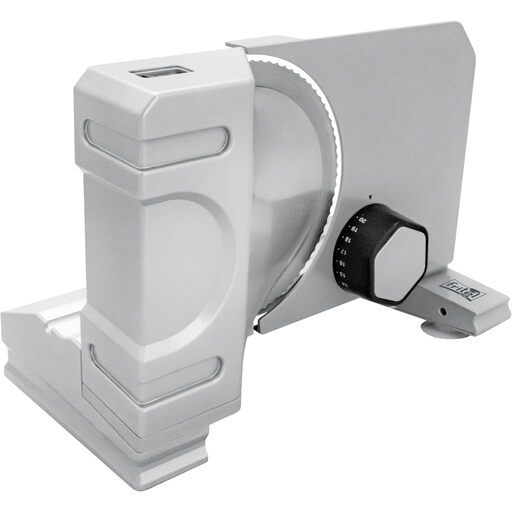
Why This Fits Their Persona: For those who regularly slice large cuts of meat, cheese, or homemade bread and require power, precision, and stability. This is a step towards a professional-grade slicer for home use.
With a 150W motor and gear drive, this model addresses the underpowered motor pitfall. The metal construction and tilted carriage (15°) ensure stability and efficiency, so you won't have issues with a wobbly machine.
Powerful performance thanks to the 150W motor. The large blade (? 190 mm) and tilted design make slicing larger items easier. Adjustable thickness up to 20 mm.
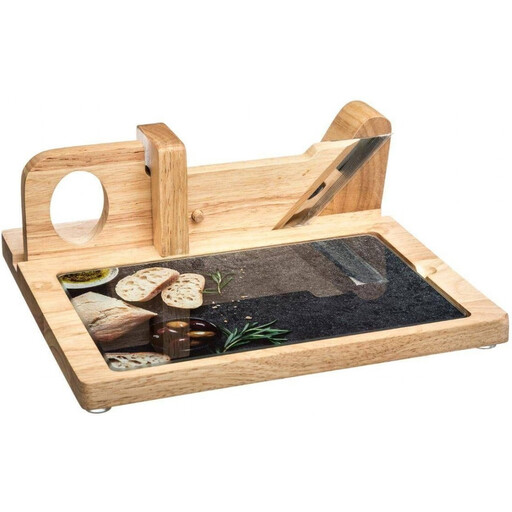
Why This Fits Their Persona: For those who focus on the experience of entertaining. This isn't an electric powerhouse, but a stylish, manual slicer for cutting sausages and hard cheeses at the table for immediate serving.
This slicer completely bypasses the technical pitfalls of electric models. No motor that can fail, no cords, and a simple, easy-to-clean design. It does exactly what it's made for: slicing with style.
Combines a cutting board and slicer in one. The wooden design is aesthetic and functional for serving freshly sliced charcuterie and cheese directly.
We've curated a complete, up-to-date list of products that meet these strict selection criteria and safety regulations.
Safety first. Always unplug the machine from the power outlet before you start cleaning. Many modern machines have removable parts, such as the carriage and the blade. Follow the manufacturer's instructions to remove the blade; never touch the cutting edge with your bare hands. Wash the loose parts with warm, soapy water and dry them thoroughly. You can wipe down the housing with a damp cloth.
For most home cooks, a serrated blade is the best all-round choice. It effortlessly cuts through hard bread crusts, as well as soft cheese and meats. A smooth blade is a specialist's choice, ideal for slicing items like prosciutto or roast beef paper-thin. Some more professional models offer the option to swap blades.
A valid question. The stability of a foldable slicer depends on its build quality. Well-designed models, like the Fritel SL 3110, have a sturdy locking mechanism and non-slip feet that ensure the machine remains stable during use. However, for slicing very large or heavy items, a fixed, metal machine generally offers more stability.
