What should you look for when choosing?
First check that the blade and slice thickness suit the bread. Then consider how easy the machine is to use and whether it’s suitable for the length and type of workshop.
| What to consider |
What to look for |
Who will value this? |
| Bread blade and slice thickness |
Check whether a scalloped or serrated blade is included and whether the thickness range covers the slices you want. |
If I’m slicing crusty bread, I want a suitable blade and the ability to adjust the slice thickness. Around 30% of consumers prioritise this. |
| Using the machine around participants |
Compare the carriage, food holder, finger guard and stability; decide who will operate the machine. |
When participants are close to the demonstration, I want to be able to organise the operation and work area properly. Around 30% of consumers particularly value controlled operation. |
| Operating time |
Check the intended use and any short-time rating in the instruction manual; for a professional model, also confirm that it comes with a bread blade. |
If I’m catering for successive groups, I want to know whether the machine is designed for that length of use. Around 20% of consumers focus particularly on intensity of use. |
| Cleaning and parts |
Check the cleaning instructions and, if you need a replacement blade, confirm the exact size and fitting. |
After a demonstration, I want to know how to clean the cutting surfaces safely and which blade fits the model. Around 20% of consumers prioritise maintenance and parts. |
Products related to this topic
This selection includes domestic slicers for bread and a model described as professional. For each model, check which blade is included and whether its stated intended use suits your workshop.
 No image available
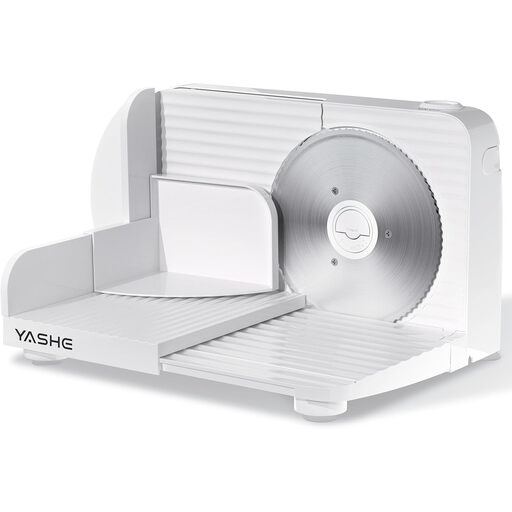
YASHE SL-5801D23B3 folding electric slicer
A serrated blade and adjustable thickness are useful if you want to slice bread.
Serrated stainless steel blade; cutting thickness 0–15 mm; 17 cm blade; 180 W.
Joybuy
 No image available
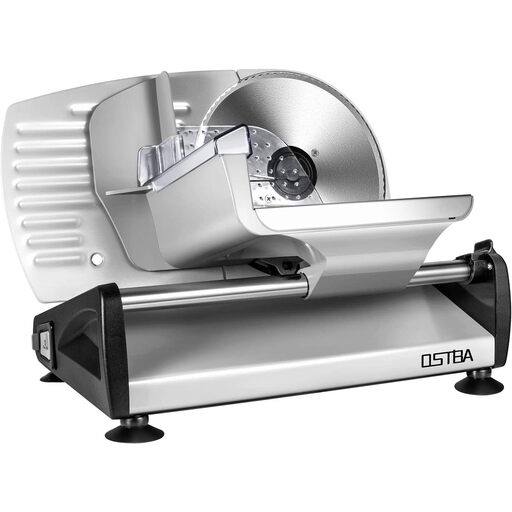
OSTBA SL518 electric slicer
The specified serrated blade and adjustable cutting thickness make this model suitable for slicing bread.
19 cm blade; cutting thickness 0–15 mm; 150 W; the product details specify a child safety lock.
Joybuy
 No image available
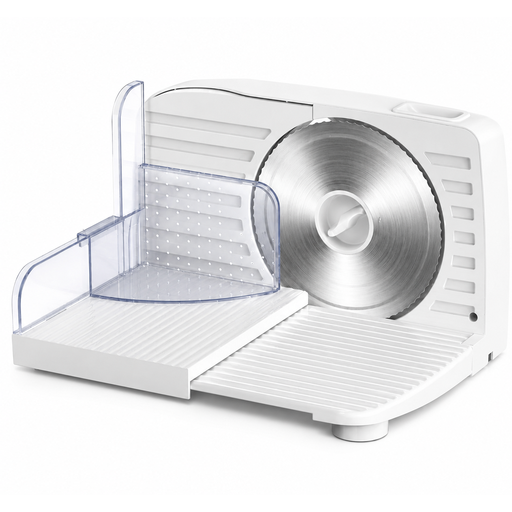
250 W electric slicer with 2 blades
The product details specify a serrated blade for bread and a second smooth blade for other foods.
Two blades; cutting thickness 0–15 mm; removable blade and cutting platform; safety switch and finger guard on the food pusher.
Joybuy
 No image available
Ritter Serano professional electric slicer
The product details specify a serrated bread blade; check that this professional model and its intended use suit your workshop.
Serrated bread blade and smooth blade; cutting thickness up to 23 mm; electronic speed control; removable carriage; momentary and continuous operation.
Joybuy
 No image available
FRITEL SL 3110 electric bread slicer
The product details specify bread and a serrated blade; this model is described as being for home use.
17 cm serrated stainless steel blade; cutting thickness 0–15 mm; 100 W; folding design and food holder.
Joybuy
Frequently asked questions
Which blade should you choose for crusty bread?
Check whether the exact model has a scalloped or serrated blade for bread. Graef specifically mentions hard bread crusts in connection with the serrated blade on the Classic C20; the Severin AS 3915 manual describes a serrated blade and a separate ham blade.
How do you clean the slicer after a demonstration?
Follow the instructions for the exact model. For the AS 3915, Severin says to unplug the appliance before cleaning, clean it regularly and never immerse it in liquid.
Is there always an exact two-year statutory guarantee in the Netherlands?
No. The Dutch Government states that there is no fixed statutory guarantee period for consumer purchases in the Netherlands; what you can expect also depends on the product and the information provided. If a product is faulty, the retailer is your point of contact. If you’re buying for a business, check separately which terms and conditions of sale apply.
Do you need a food safety plan for a cookery workshop?
That depends on the activity and the regulations that apply to it. Business.gov.nl explains that professional food businesses need a food safety plan based on HACCP or must follow an approved hygiene code. Check how the workshop is organised before applying those rules to your situation.
Is CE marking relevant for an electric slicer?
Yes. The NVWA states that CE marking is compulsory for electrical products. Check the marking on the appliance in question; by itself, it doesn’t show that the model is suitable for commercial workshop use.


