
Vandaag of morgen in huis

Kwaliteit gegarandeerd

Welkomstaanbiedingen ontgrendelen: GRATIS bezorging | Tot 80% korting | Gratis 30 dagen JoyPlus-proefperiode
Download de app
Working or studying from home often means sitting for hours on end. An electric sit-stand desk seems like a logical step towards a healthier posture. However, a hasty purchase often leads to disappointment. Many desks look great online but prove to be unstable, noisy, or impractical in reality.
Before you invest in a new home office desk, it's crucial to know what to look for. We'll cover the three most common pitfalls and how to avoid them, ensuring you choose a model that truly supports your productivity.
A common complaint is a desk that wobbles as soon as it's raised to standing height. Even a slight vibration while typing can be incredibly distracting and feel insecure. This is often caused by a frame that is too light or a motor that isn't powerful enough to keep the desktop stable. Marketing photos rarely show this.
You want to be able to concentrate, not be disturbed by a loud, buzzing sound every time you change your posture. A noisy motor is a sign of lower quality and can be particularly disruptive in a quiet home environment or during online meetings. The noise level (measured in decibels) is often not clearly stated.
You buy a basic model to save money, only to find yourself constantly searching for the right height manually after a few weeks. A sit-stand desk with memory presets is not an unnecessary luxury; it makes the transition between sitting and standing effortless. The lack of cable management or a convenient USB port can also become a daily annoyance later on.
To bypass the pitfalls above, focus on a few concrete specifications. These determine the quality and user-friendliness of your ergonomic desk.
A stable desk starts with the frame. A solid steel frame is the foundation for stability, especially at maximum height. Pay attention to the maximum static load capacity. A capacity of 70 kg is typically sufficient for a standard setup with a monitor, laptop, and some accessories. A desk with dual motors (one in each leg) often provides more stability and smoother movement than a single-motor model.
Measure your available space and consider what you want to place on the desk.
The functionality of the control panel makes a big difference in daily use.
Based on these criteria, we have selected a number of models that suit different user profiles.
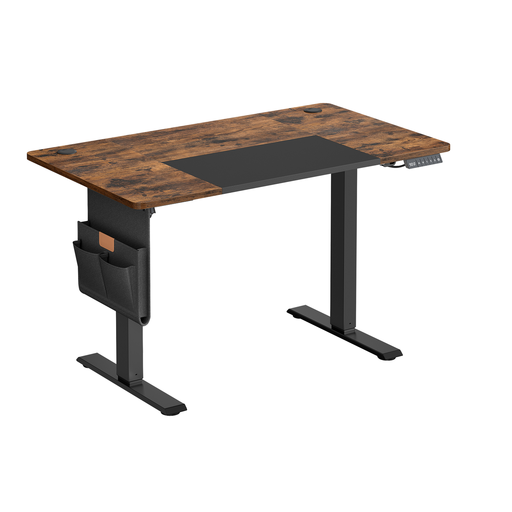
Why This Fits Their Persona: Perfect for those who want to set up a full-fledged ergonomic workspace in an apartment or dorm room without sacrificing much floor space.
The sturdy steel frame prevents instability, even with its compact size. The memory function and USB-C port provide modern functionality often missing from entry-level models.
Compact footprint (120x60 cm) with full electric functionality, including memory presets, a quiet motor, and convenient extras like a storage pouch and hooks.
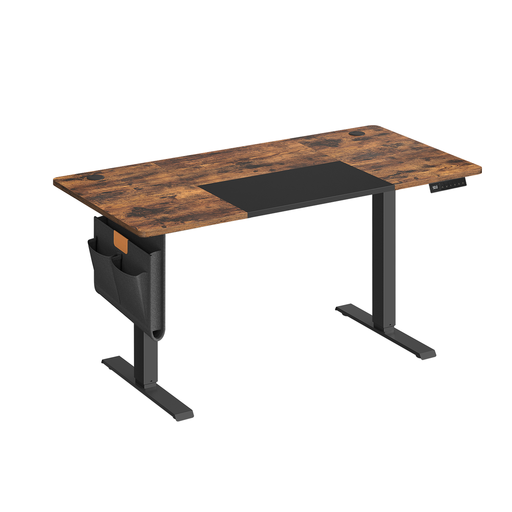
Why This Fits Their Persona: The ideal middle ground for the serious remote worker. This size offers enough space for a comfortable setup with a monitor and laptop, without dominating the room.
The combination of a quiet motor and a stable frame tackles the two biggest annoyances. The four memory presets make changing posture seamless and consistent.
A balanced size (140x60 cm) with a complete feature set, including a USB-C port, cable management, and a reminder function for healthy breaks.
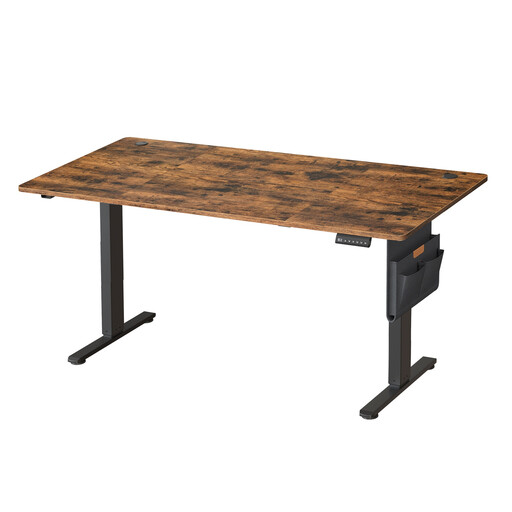
Why This Fits Their Persona: For professionals, creatives, or gamers who need maximum workspace for multiple screens, heavy equipment, and want to maintain a clutter-free desk.
The robust frame is essential for keeping a large and heavily loaded 180x80 cm desktop stable, completely avoiding the 'wobbly tower' pitfall. The quiet motor ensures peace in a demanding work environment.
Very spacious desktop (180x80 cm) and high stability. Equipped with all modern conveniences like memory presets, a USB-C port, and a lock function for extra safety.
Didn't find what you were looking for? Browse our full range of desks that meet strict selection criteria for an ergonomic and productive workspace.
A quality electric sit-stand desk typically produces less than 50 decibels (dB) during adjustment. This is comparable to the sound of a quiet refrigerator or gentle rain and is generally not considered disruptive, even in a quiet room.
The motor's lifespan is often expressed in the number of adjustment cycles (one up and one down movement is one cycle). Good motors are designed for 10,000 to 20,000 cycles. If you change your posture four times a day, this translates to a theoretical lifespan of over 10 years. The actual lifespan depends on the build quality and intensity of use.
