
Vandaag of morgen in huis

Kwaliteit gegarandeerd

Welkomstaanbiedingen ontgrendelen: GRATIS bezorging | Tot 80% korting | Gratis 30 dagen JoyPlus-proefperiode
Download de app
Long days behind a laptop, whether you're working from home, studying, or freelancing, take their toll. A stiff back and neck are often the result of a workspace that isn't adapted to your body. An electric sit-stand desk is often seen as the solution, but the market is flooded with models that promise more than they deliver.
Before you invest in a new home office desk, it's important to recognise the common pitfalls. Many buyers fall for marketing hype and end up with a product that causes frustration after just a few months.
To avoid these pitfalls, you don't need to pore over a technical manual. Pay attention to a few concrete specifications that make the difference between a good and a mediocre ergonomic desk.
The motor is the heart of your desk. The speed and noise level are decisive factors here. A quiet motor (often under 50 dB) ensures you can adjust the height without disturbing your housemates or colleagues during an online meeting.
An electric desk with memory presets is a feature that significantly increases ease of use. With preset heights, you can switch between your ideal sitting and standing positions with the press of a button. This makes the barrier to changing posture much lower.
Stability comes from the design and material of the frame. A frame made of solid steel provides a solid foundation. Also, pay attention to the construction of the legs. Desks with 2-stage legs are common, but 3-stage legs often offer a greater height range and extra stability at the highest setting. The weight of the frame itself is also a good indicator; a heavier frame is typically more stable.
Measure your available space before choosing a desk. A popular size like a 120x60 cm desk fits in most rooms, but if you work with multiple screens, a wider top of 140 cm or 160 cm might be a better choice.
Always check the maximum load capacity. Add up the weight of your monitor(s), computer, and other heavy items. A safe load capacity starts around 70 kg for a standard home office setup. This ensures the desk can not only support your gear but also remain stable during adjustments.
Not everyone needs the same type of standing desk. Below are a few options, tailored to different user profiles.
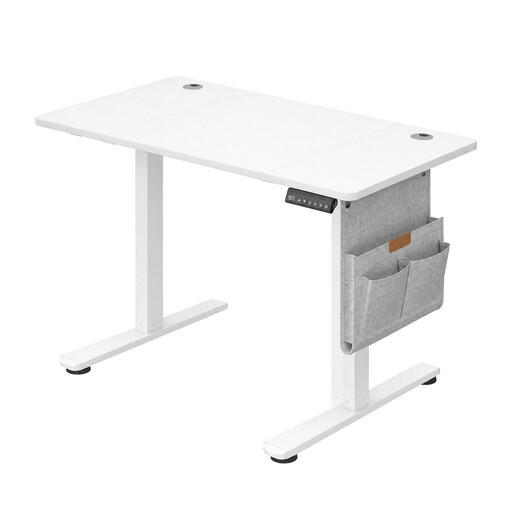
Why This Fits Their Persona: Ideal for those who need a functional home office desk but have limited space. It fits perfectly in a student room or a corner of the living room without being dominant.
This 120x60 cm desk tackles the pitfall of incorrect dimensions. The specifications mention a quiet motor, ensuring you'll actually use the height adjustment feature.
Four memory presets for quick changes and a sleek, white design. The steel frame and 70 kg load capacity provide a solid base for a standard setup.
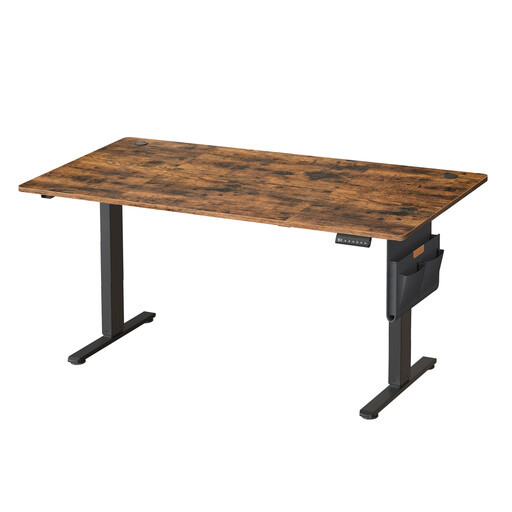
Why This Fits Their Persona: For the professional or gamer who needs ample workspace and a high load capacity for a setup with multiple monitors, a heavy PC case, and other equipment.
The solid steel frame and wide 160 cm top directly address the pitfall of a wobbly and undersized desk. It provides the stability needed for a heavy setup.
A very spacious work surface and a 70 kg load capacity. Includes handy extras like a storage pouch and cable grommets for a tidy workspace.
We have compiled a complete, up-to-date list of products that meet these selection criteria and current regulations.
The lifespan of the motor depends on its quality and usage. Manufacturers often provide an indication in the number of adjustment cycles or a warranty period for the electrical components. With normal use, a few times up and down per day, the motors in most common models last for years. Check the manufacturer's warranty terms for a clear indication.
Most electric desks are delivered as a flat-pack kit, similar to other furniture. The instructions are usually clear and include illustrations. The frame and the desktop are the heaviest parts, so it can be helpful to assemble the desk with two people. Expect an assembly time of about one hour.
A height-adjustable desk only consumes power when the motor is active, i.e., during height adjustment. In standby mode, the consumption is negligible, often less than 0.5 watts. The impact on your energy bill is minimal, comparable to charging a phone.
