
Livraison le jour même et le lendemain

Qualité garantie

Débloquez vos offres de bienvenue: Livraison GRATUITE | Jusqu'à -80 % | 30 jours d'essai gratuits à JoyPlus
Téléchargez l'application
An electric sit-stand desk can be useful if you want to switch between sitting and standing during a working day, study session or gaming session. However, a large control panel or a promise of “ergonomic working” tells you little about whether a desk will suit your needs in practice. Its dimensions, stability and safety features are what really determine whether it will fit your room and daily routine.
Look out for these common pitfalls before you order.
A 120 x 60 cm desk has room for a laptop, monitor, keyboard and a few accessories, but not always for two large screens and speakers. So check both the width and the depth. A 120 x 60 cm desk is often a practical choice for a compact student room. If you work with several screens, consider a 140 x 60 cm or 160 x 70 cm desk instead.
Also think about the space behind the desk. When you adjust the height, the desktop must not hit a wall, shelf or windowsill.
The stated weight capacity is usually the maximum static load. This means the weight the desk can support while stationary; it does not automatically mean that it will move up and down just as steadily in all conditions.
Add up the weight of your monitors, computer, monitor arms, lamp and other equipment. The models in this selection state a maximum static load of 50 or 70 kg. Do not exceed this limit, and distribute heavy equipment as evenly as possible across the desktop.
A desk with a memory function can save preset heights. This is useful if several people share the same desk or if you want to switch quickly between sitting and standing heights. However, it does not stop you selecting the wrong height or overlooking obstacles.
According to the product information for several JOYFURNOS models, the motor protection may activate if the desk is adjusted continuously for around two minutes. The instructions then say to wait approximately 18 minutes. So avoid planning frequent, continuous height adjustments, and check that there is enough clear space for the desk to move beforehand.
A height-adjustable desk with a range of around 72 to 120 cm suits many sitting and standing positions. The right setting depends on your height and chair. When sitting, adjust the desk so that your shoulders stay relaxed and your forearms rest roughly horizontally on the desktop. When standing, the screen should be directly in front of you, so you do not have to look down for long periods.
So treat the term ergonomic desk as no guarantee of an ideal posture. The desk allows you to change position, but your chair, monitor height and working habits matter too.
A stable computer desk needs a sturdy frame, properly adjusted feet and a level surface. Steel frames are common in this product category. Adjustable feet can help if your floor is not completely even.
After assembly, check all the connections and tighten the fixings if the instructions say to. Do not position the desk right up against a wall while adjusting its height. Keep cables clear of moving parts and make sure electrical components do not come into contact with liquids.
Digital controls with two or four memory settings can make it easier to switch between your preferred positions. A desk with a USB-C port can also be handy for charging compatible devices. However, check exactly what charging function is specified and whether your cable and device are suitable. A USB-C port is not a substitute for a full power supply for a laptop or monitor unless this is expressly stated in the product specifications.
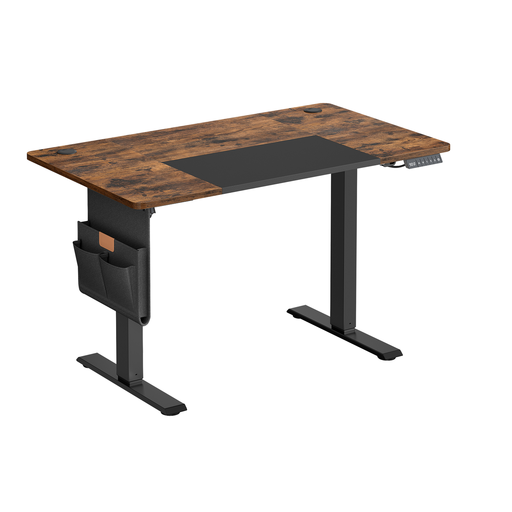
Why it suits this type of user: This compact home-office desk combines electric height adjustment with memory settings, cable management and a USB-C port. Its size suits a smaller workspace or study area.
The stated dimensions and maximum static load of 70 kg are clearly specified. The product information also covers movement clearance, overheat protection and assembly limitations.
120 x 60 cm, height range of 72 to 120 cm, memory function, USB-C port, cable management and three hooks, according to the product description.
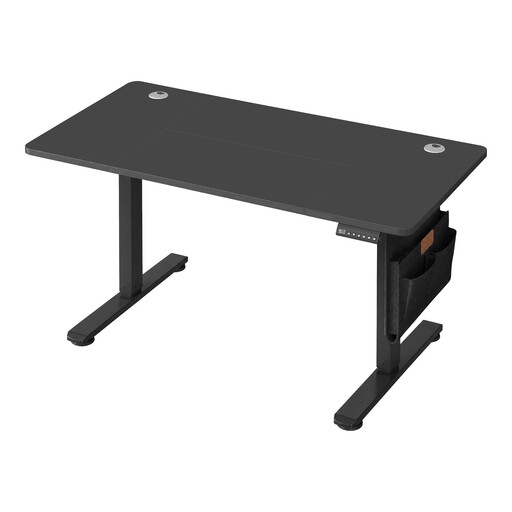
Why it suits this type of user: The generous workspace suits office professionals or people working from home with several screens, documents and peripherals.
The extra depth and width make it easier to plan your setup than a general claim about a spacious desktop would. The product specifications also state a static load capacity of 70 kg.
160 x 70 cm, height range of 72 to 120 cm, USB-C connection, memory function, cable holes and adjustable feet.
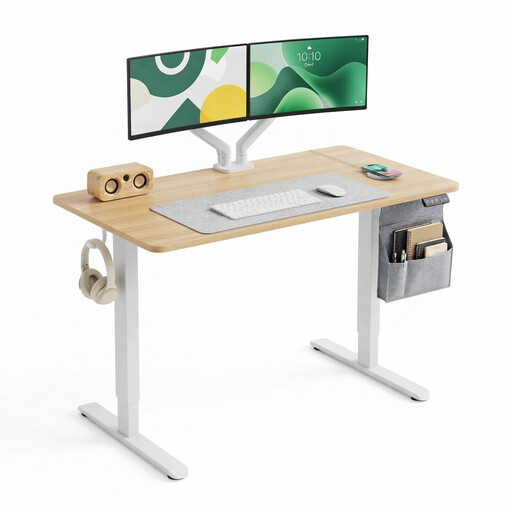
Why it suits this type of user: This option suits studying, daily work from home and gaming if a digital display, two memory settings and a 70 kg load capacity meet your needs.
The height range, desktop dimensions and load capacity are specified. The product page also mentions CE and European standard certification; check the current documentation when you buy.
120 x 60 cm, digital control panel, two memory settings, 72–118 cm height range and two hooks, according to the product information.
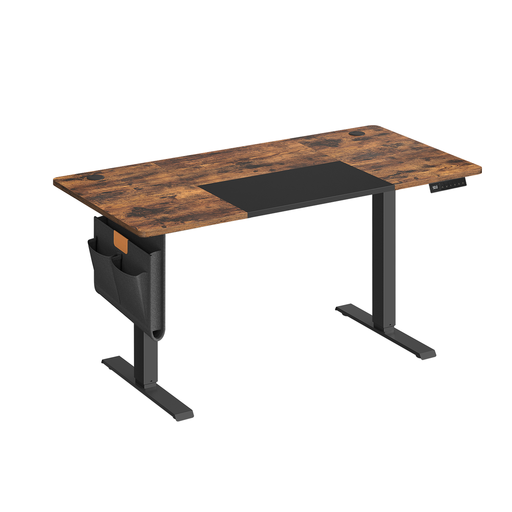
Why it suits this type of user: Four memory settings are useful when housemates, partners or colleagues share a desk and each needs a different height.
The four separate presets make it clear what the memory function offers. The 70 kg static load capacity and two-minute limit for continuous adjustment are also specified.
140 x 60 cm, height range of 72 to 120 cm, four memory settings, USB-C port, cable management and storage options.
We’ve put together a complete, up-to-date list of products that meet these strict selection criteria and the applicable European safety regulations.
Yes, as long as its dimensions suit your equipment and room. A 120 x 60 cm desk is suitable for a laptop or one monitor. For several screens or lots of documents, a 140 x 60 cm or 160 x 70 cm desk gives you more workspace. Switching between sitting and standing is only practical if you can adjust the height easily and the cables have enough slack.
Its lifespan depends on the motor, frame, assembly, load and how often you use it. Use the desk within its stated limits and avoid adjusting it continuously for long periods. Check the screws, cables and moving parts regularly. Product information does not give a universal lifespan, so compare the warranty terms, instructions and service information available.
Exact consumption depends on the motor type, how long you use it for and its standby consumption. As a desk usually only moves for short periods, its active power use is generally not comparable to that of an appliance running continuously. If energy costs matter to you, check the energy label or technical details for the specific model. A USB-C port may also use power when charging a device.
