
Livraison le jour même et le lendemain

Qualité garantie

Débloquez vos offres de bienvenue: Livraison GRATUITE | Jusqu'à -80 % | 30 jours d'essai gratuits à JoyPlus
Téléchargez l'application
An electric sit-stand desk can be useful if you want to change position regularly while working, studying or gaming. However, a low price or a long list of features doesn’t tell you everything. A desk might not offer enough legroom, could wobble at its highest setting or may not have enough space for your monitors and accessories.
This buying guide will help you check the specifications that matter, including the height range, dimensions, maximum load and features for everyday use.
A cheap electric desk may appear to offer the same features as a more expensive model, but always check:
A desk that can rise to a certain height won’t automatically suit every user. The right height depends on your height, chair and monitor setup.
A desk with a memory function saves preset heights. This is handy if you often switch between sitting and standing. However, it doesn’t mean the desk will work out your ideal posture for you. You’ll need to set the positions yourself and check that your screen, keyboard and chair are adjusted correctly.
Check how many memory settings it has, too. Two may be enough for one user, while four can be more convenient in a shared workspace.
A desk with USB-C can help keep your workspace tidy, but check what the connection is designed for and what charging function is specified. A USB-C port isn’t automatically a fully capable charger for every laptop.
Cable grommets, storage compartments and hooks are useful too, but their presence doesn’t tell you how much usable space there is. Check the desktop dimensions and the position of the cable openings.
A height-adjustable desk should go low enough for comfortable sitting and high enough for standing. The selected models, for example, have a range of around 72 to 118 or 120 cm. This gives you a useful indication, but you’ll also need to consider your chair, armrests and monitor stand.
An electric height-adjustable desk is particularly practical if you want to change the height without manually releasing anything. Check whether the controls include a display, shortcut buttons or memory settings.
A 120 x 60 cm desk may be large enough for a laptop, keyboard and documents. This size is often easier to fit into a bedroom, student room or compact home office.
A 160 x 70 cm desk gives you more space for two monitors, speakers, a desk lamp or gaming accessories. Measure the available space beforehand, and allow for cables and room to move around the desk. Don’t place an electric desk right up against the wall if the desktop may move as you adjust it.
Check the maximum static load, not just the weight of the desktop. Monitor arms, a desktop computer, books and speakers all add to the total. The models in this selection specify a maximum static load of 70 kg.
A steel frame can help create a stable structure, but stability also depends on the floor, assembly and how the weight is distributed. Adjust the feet correctly and check that all the connections are secure after assembly.
A digital control panel makes the height easy to read. Memory settings make it quicker to switch between working positions. Some models also specify overheating protection if the height adjustment is used continuously for an extended period. Always follow the instructions and keep electrical components away from liquids.
Some models’ product information refers to CE marking and European standards. Treat this as information provided by the seller, and check the current specifications, included parts and instructions when you buy.
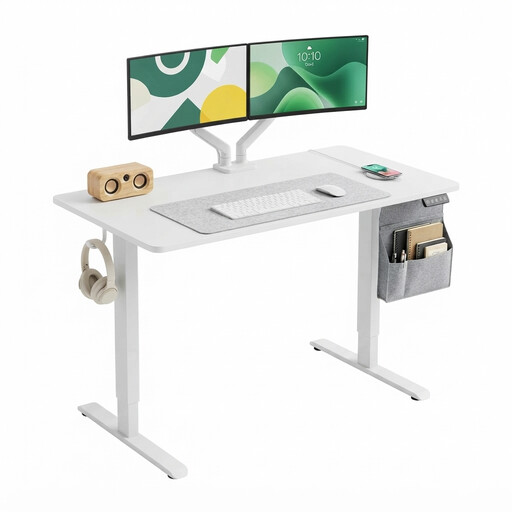
Why it suits this user: Its compact size is a good fit for a student room, bedroom or simple home office. The two memory settings are easy to use for one person.
The product information specifies a height range of 72–118 cm, a load capacity of 70 kg and a digital display. This means you can check the key details before buying.
120 x 60 cm, two memory settings, two hooks and a white steel frame. The product description states that CE marking and European standards certification are included.
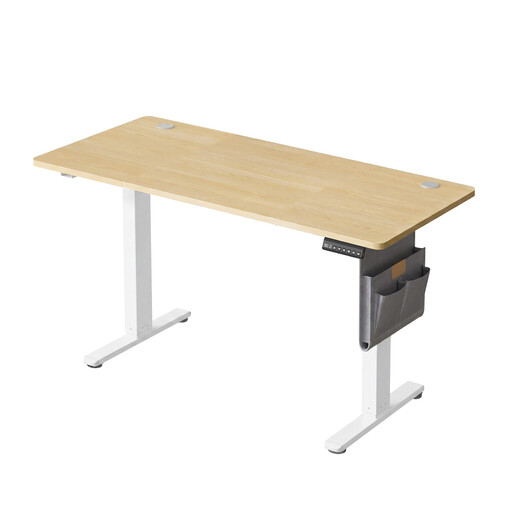
Why it suits this user: The spacious desktop is ideal for a permanent office setup with multiple screens, accessories and documents.
The specifications list dimensions of 160 x 70 cm, a load capacity of 70 kg, USB-C and cable openings. This gives you a clearer idea of its practical capacity than general claims about a large desk.
Four memory settings, a USB-C connection, an energy-saving mode, adjustable feet and two cable openings.
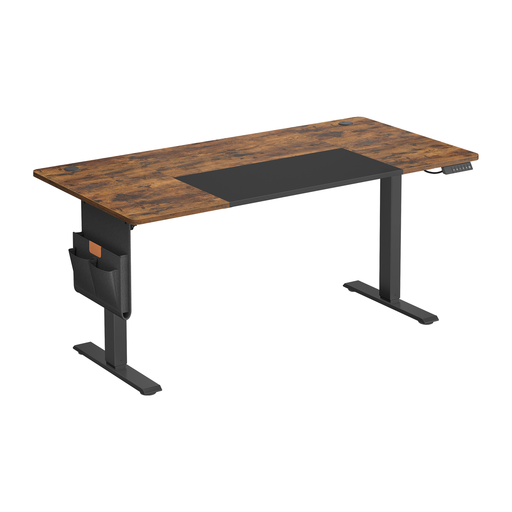
Why it suits this user: This size provides room for a gaming setup, home office or study area with multiple devices and accessories.
The product information lists cable management, a storage pouch, three hooks and a maximum static load of 70 kg. Just make sure your complete setup stays within that limit.
160 x 70 cm, a memory function, USB-C port, cable management and overheating protection according to the product description.
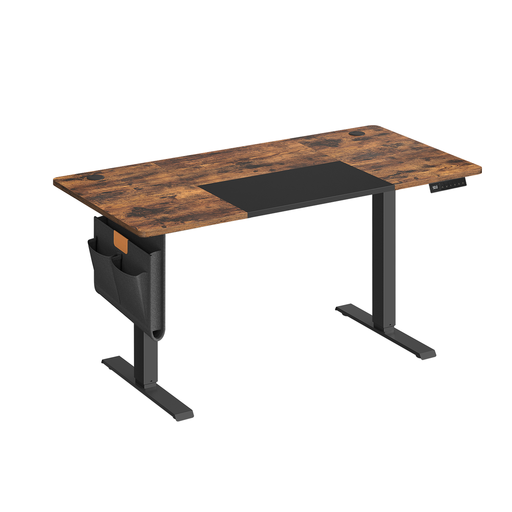
Why it suits this user: Four saved positions are handy when several people share the same desk or when you need different working heights.
The dimensions of 140 x 60 cm, height range of 72–120 cm and load capacity of 70 kg are all listed. This lets you check the available space and load capacity in advance.
Four memory settings, a USB-C port, cable management, a storage pouch and three hooks, according to the product information.
We’ve put together a complete, up-to-date list of products that meet these strict selection criteria and current European safety requirements.
Start by sitting in a relaxed position. Adjust the desktop so that your shoulders stay relaxed and your forearms rest roughly horizontally on the keyboard. Then check the monitor height. The same principle applies when standing: avoid looking up or down at the screen for long periods. Only use the memory settings once you’ve adjusted the positions carefully.
Its lifespan depends on assembly, load, how often it’s used and maintenance. Stay within the maximum load capacity, distribute the weight evenly and don’t force the height adjustment. On models with specified overheating protection, the motor may stop temporarily after prolonged continuous use. If this happens, let the mechanism cool down according to the instructions.
Power consumption depends on the motor, how often you adjust the height and the standby function. The motor mainly uses energy while the desk is moving; occasional changes between sitting and standing generally use less than leaving peripherals connected for long periods. A desk with an energy-saving mode may reduce consumption when idle, but check the exact details in the product information.
