
Vandaag of morgen in huis

Kwaliteit gegarandeerd

Welkomstaanbiedingen ontgrendelen: GRATIS bezorging | Tot 80% korting | Gratis 30 dagen JoyPlus-proefperiode
Download de app
An electric shaver for men can save you time, but not every model suits every beard, skincare routine or travel plan. A compact device is handy when you’re on the go, while a more advanced model may be better for wet shaving, longer beards or shaving your head.
Most disappointing purchases happen not because a device doesn’t work at all, but because important details haven’t been checked in advance. Look out for these three common pitfalls:
If you want to shave in the shower or rinse your device easily, you’ll need a waterproof electric shaver. Look for terms such as IPX6 or IPX7, but read the safety instructions too. An IPX7 rating generally indicates greater protection against temporary immersion than IPX6, but the charging port must still be dry before you charge the device.
With wet and dry shaving, you can use the device dry or with shaving foam or gel, depending on the product description. According to Philips’ own product information, the Series 3000, Series 7000 and i9000 are suitable for wet and dry use. Never charge a wet device near a sink or shower.
A rotary shaver uses round shaving heads that move across your face. This can be useful around the jawline and neck, where hair grows in different directions. A foil system uses a thin shaving foil and usually requires straight strokes.
Check the number of heads, their flexibility and whether there’s a precision trimmer. For example, the Philips Series 3000 S3243/12 has 5D Pivot & Flex heads and a pop-up trimmer for sideburns and moustaches. The product description also lists 60 minutes of use and full washability.
Be mindful of claims about skin comfort. According to Philips’ own information, certain coatings, sensors or blades are designed to reduce friction or skin irritation. This isn’t a guarantee for every user. You may also need time to get used to a new shaving method.
A rechargeable shaver is convenient for everyday use, but check the following:
For travel, a travel lock, compact size and protective case are more useful than a large number of extra features. If you’re flying, check the airline’s rules for devices with lithium-ion batteries too.
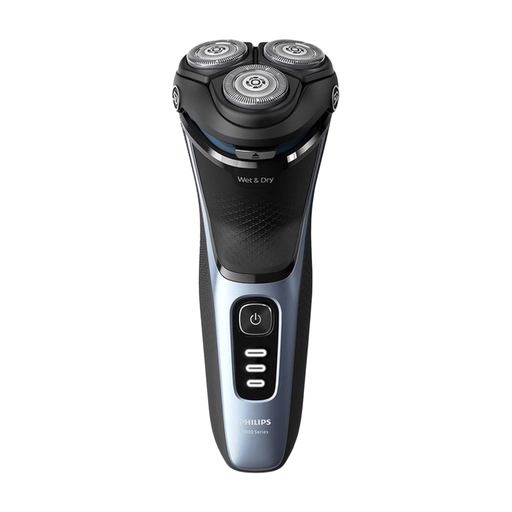
Why it suits this profile: A straightforward model for everyday facial shaving, with a rotary system, wet and dry use, and a pop-up precision trimmer.
The product details explicitly list wet and dry use, full washability and a 3-step battery indicator.
60 minutes of use, 5D flexible shaving heads and a quick-charge function for one shave.
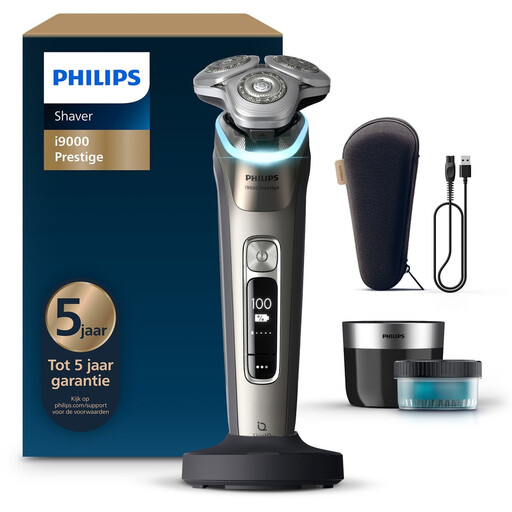
Why it suits this profile: For users who value flexible heads, sensors and a more advanced shaving experience for the face and neck.
The description mentions a pressure indicator and a sensor that, according to Philips’ own information, adjusts the shaving intensity.
Suitable for wet and dry use; 360° rotary dual-steel precision blades and a compact, flexible shaving unit.
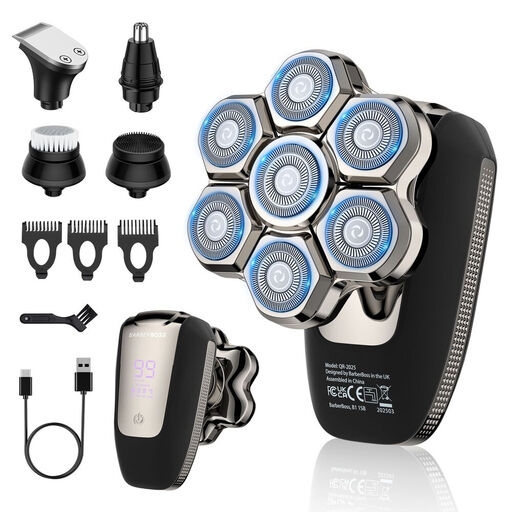
Why it suits this profile: Designed for anyone looking for a shaver for the head and face with multiple functions, including a beard trimmer and a nose and ear trimmer.
The product information specifies IPX6, USB-C charging and a removable magnetic shaving head; the charging port must not get wet.
7D flexible heads, five attachment functions, LED display, travel lock and up to 60 minutes of cordless use, according to the product details.
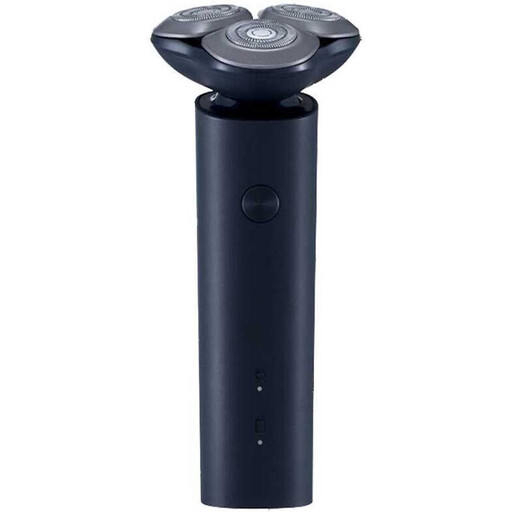
Why it suits this profile: A lightweight, cordless shaver for anyone who wants to travel light and charge their device with a Type-C cable.
The specifications list IPX7, wet and dry use, and a universal Type-C connection. Check the charging port and manual before use.
0.21 kg, three floating shaving heads and a stated run time of up to 60 days when shaving daily.
We’ve put together a complete, up-to-date list of products that meet these strict selection criteria and current European safety regulations.
It depends on the model, the cost of replacement shaving blades and how often you shave. An electric device usually involves an initial purchase, followed by replacement shaving heads or foils over time. The electricity costs of a rechargeable shaver are generally low, but always check the recommended replacement schedule and availability of parts.
Its lifespan depends on how often you use it, how you clean it and how you store it. Rinseable models should be left to dry completely after cleaning. Don’t use a device with damaged shaving blades, and replace parts when they become blunt or misshapen. Follow the manufacturer’s maintenance instructions.
Yes, many models work well as an electric shaver for travel. Look for a compact size, protective case, travel lock, worldwide voltage compatibility and USB-C charging. Carry a device with a lithium-ion battery in line with your carrier’s baggage rules, and never charge it when the connection is wet.
