
Vandaag of morgen in huis

Kwaliteit gegarandeerd

Welkomstaanbiedingen ontgrendelen: GRATIS bezorging | Tot 80% korting | Gratis 30 dagen JoyPlus-proefperiode
Download de app
An electric screwdriver can make assembling furniture, carrying out repairs and maintaining vehicles much easier. However, not every model is suited to every task. A compact cordless screwdriver for electronics, for example, has little in common with an impact driver for heavy-duty bolts.
The most common buying mistakes usually come down to three pitfalls:
Below, you’ll find out which specifications really matter and which type of electric screwdriver is right for your needs.
Start with the job, not the look of the tool.
An electric drill and a cordless screwdriver aren’t automatically interchangeable. Drilling requires a suitable chuck, while fine screwdriving work benefits most from control over speed and torque.
Torque is measured in newton metres (Nm). A higher value is most relevant for large screws, bolts and nuts. For assembling furniture or working on electronics, too much force can damage screw heads or materials.
So, check:
According to the product information, a compact Powerplus 12V screwdriver has 18 torque settings. This gives you more control when working with different materials. The MOVECRAB is listed as adjustable to 3, 4 and 5 Nm, making it better suited to light assembly and precision work than heavy construction.
Don’t just look at the amp-hour (Ah) rating. A 2.0 Ah battery may be suitable for shorter jobs, while a spare battery is handy if you’re working for longer periods. A set with two batteries means you won’t have to stop while one is charging.
Also check:
For example, the product information for the GISAM brushless screwdriver states that it’s compatible with certain 18V Makita B-series batteries, but not with G-series and certain Ni-Cd batteries. Check the exact battery number before ordering.
A 1/4-inch hex drive is practical for bits and quick changes. A 3/8-inch or 1/2-inch square drive is better suited to sockets for nuts and bolts.
Also consider the differences between:
Claims about longer service life or lower energy loss come from the relevant brands’ product descriptions. Treat them as product specifications, not as a guarantee for every use.
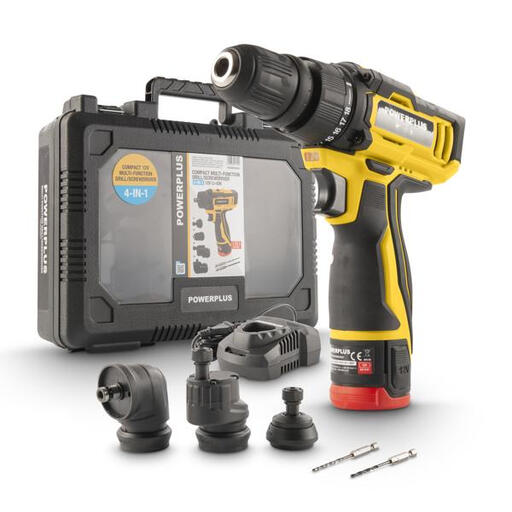
Why it suits this user: A versatile option for assembling furniture, hanging pictures and doing light drilling around the home.
The 4-in-1 design and 18 torque settings make this set more versatile than a model with just one fixed function.
12 V, 2,000 mAh battery, work light, storage case and accessories for wood and metal.
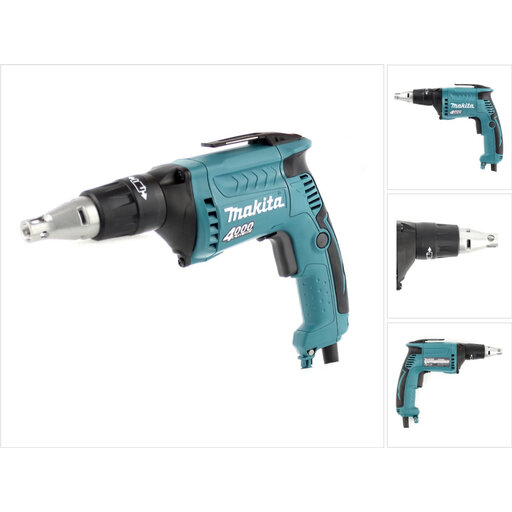
Why it suits this user: Suitable for repetitive work, such as fixing plasterboard to metal profiles, when you prefer a corded model.
The depth adjustment helps you drive screws more consistently, rather than relying on speed alone.
570 W, 4-metre cable, 1/4-inch hex drive, variable speed and 0–4,000 revolutions per minute.
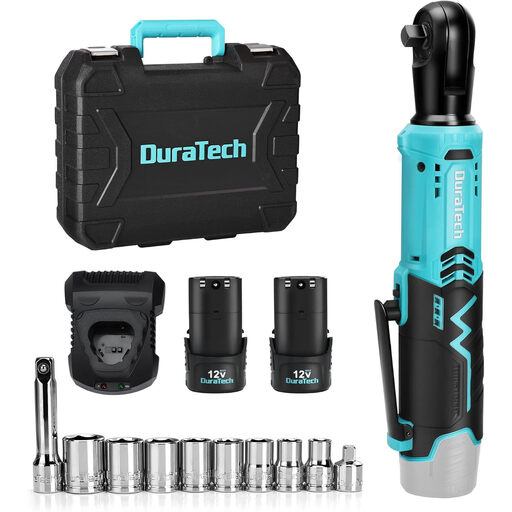
Why it suits this user: A practical choice for car enthusiasts and machinery maintenance, where bolts are often in tight spaces.
The set uses a 3/8-inch ratchet connection with sockets, so you’re not limited to using loose bits.
According to the product listing: maximum 65 Nm, two 2.0 Ah batteries, LED light, charge indicator and sockets from 9 to 17 mm.
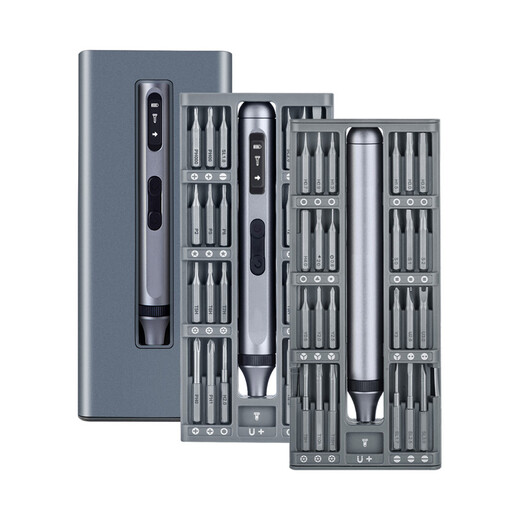
Why it suits this user: Its low electric torque and wide choice of bits make it a good fit for laptops, phones and small appliances.
Its stated electric torque of 0.3 Nm is considerably lower than that of a cordless drill, making it easier to control for small jobs.
48 bits, 350 mAh battery, approximately 90-minute charging time and an aluminium handle.
We’ve put together a complete, up-to-date list of products that meet these strict selection criteria and the applicable European safety regulations.
Always use a bit or socket of the correct size. A poor fit can damage the screw head and cause the tool to slip. Heavy-duty tools require impact-rated sockets; standard hand sockets aren’t always designed for this purpose.
An electric torque wrench or impact driver isn’t the same as a calibrated torque wrench. For critical fastenings, such as wheel bolts, use a calibrated torque wrench for final tightening, following the vehicle manufacturer’s instructions.
To help your tool last longer:
Yes. For most furniture assembly, a compact cordless screwdriver with adjustable torque is sufficient. Use a low setting and, if necessary, finish tightening by hand to avoid damaging chipboard.
It depends on the battery capacity, workload, material and how often you use it. A spare battery is especially useful for longer jobs. As well as the Ah rating, check the charging time and availability of replacement batteries.
An impact driver is designed for high-load work with bits. A cordless ratchet wrench uses sockets and is practical for bolts and nuts in tight spaces. A torque wrench is still the right choice for precise final tightening.
