
Vandaag of morgen in huis

Kwaliteit gegarandeerd

Welkomstaanbiedingen ontgrendelen: GRATIS bezorging | Tot 80% korting | Gratis 30 dagen JoyPlus-proefperiode
Download de app
An electric scooter for adults may seem like an easy choice on paper. However, many disappointments stem from a stated range that only applies under ideal conditions, motor power that does not automatically mean greater safety, or a model that is not suitable for use on public roads in the Netherlands.
This buying guide compares the key specifications for commuting, urban journeys and recreational use. It also covers popular options such as a KuKirin electric scooter, the Joyor E6-S and the Todimart D6.
Manufacturers usually state range under specific test conditions. Rider weight, tyre pressure, temperature, wind, inclines and speed all affect the result. An electric scooter with a long range may therefore cover fewer kilometres in real-world conditions than stated on the product page.
Use this simple rule of thumb: choose a stated range that is comfortably above your daily round-trip distance. For a 25-kilometre commute, a theoretical range of 30 kilometres leaves very little margin.
An electric scooter with a 500W motor may provide sufficient power for hills and heavier riders, but always check whether the stated figure is nominal or peak power. For example, the Todimart D6 is described as having a 500W motor and a higher peak output. These are two different specifications.
Also pay attention to the permitted speed. A model rated at 800W or more cannot automatically be used legally on public roads. Before buying, check the current Dutch requirements with the RDW and the Dutch government, including approval, registration, insurance and any helmet requirements.
“Dual suspension” does not tell you how the scooter will perform on cobblestones or poor-quality asphalt. Look at the suspension type, its placement and the tyres. An electric scooter with hydraulic or disc brakes is not automatically suitable for every situation either. Check whether the brakes operate on both the front and rear wheels and whether replacement parts are available.
Battery capacity is usually expressed in volts and amp-hours. A 48V electric scooter with a 15.6Ah battery has a larger energy reserve on paper than a 48V model with 10Ah. As a rough calculation, energy capacity is:
volts × amp-hours = watt-hours
A 48V, 15.6Ah battery provides approximately 749Wh. This is a technical indication, not a guarantee of how many kilometres the scooter will cover. Also check whether the battery is removable. This is useful if you cannot park the scooter near a power socket at work or in an apartment.
Look at the nominal motor power, maximum speed and number of riding modes. Three speed settings can be useful in busy urban traffic, while higher speed is mainly relevant on private property if the model is not approved for public-road use.
An electric scooter for commuting should also respond predictably. Cruise control, lighting, indicators and a clear display are practical features, but check whether they may be used under Dutch regulations.
Pneumatic tyres generally provide greater comfort on uneven roads, but they can puncture and require regular pressure checks. Solid or hollow tyres reduce the risk of punctures, although they may feel different on cobblestones.
A foldable electric scooter is convenient for storage and transport, but check its weight, folded dimensions and the locking mechanism. If you need to carry it up to a train or another floor every day, a heavy model may be less practical than its specifications suggest.
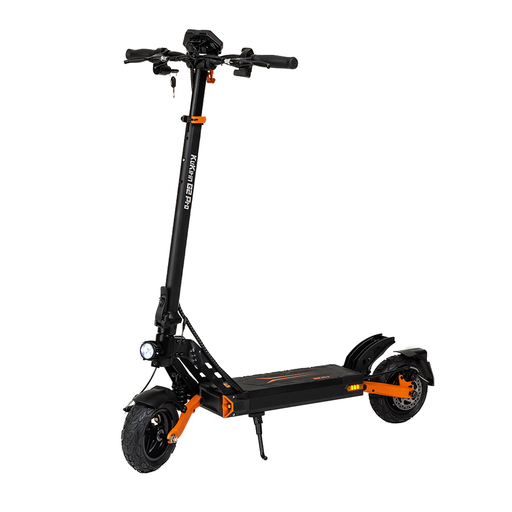
Why it suits this profile: This model is worth considering for adults looking for a straightforward scooter for urban journeys and shorter commutes.
The product listing states a maximum speed of 20 km/h, making the intended speed and use case more clearly defined.
48V 15.6Ah battery, stated range of up to 65 km, dual disc brakes, suspension and ABE certification mentioned in the listing.
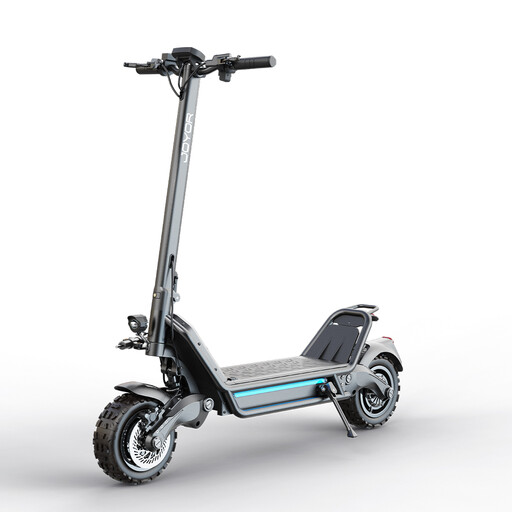
Why it suits this profile: An option for riders who cover substantial distances and value a large battery and powerful braking components.
The standalone 100 km figure should be treated as a theoretical maximum; plan with a safety margin for everyday use.
60V 31.5Ah battery, 11-inch tyres, front and rear hydraulic brakes and a removable battery according to the product listing.
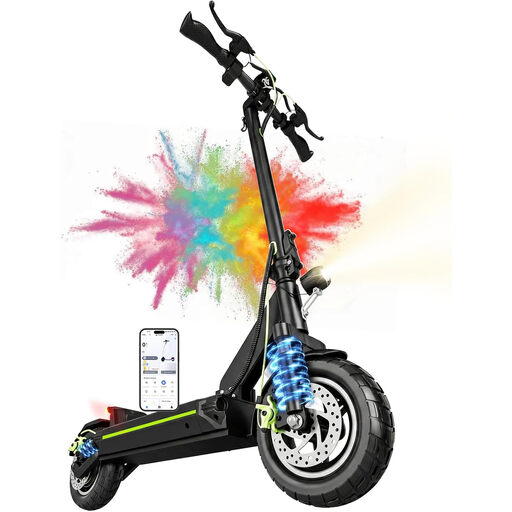
Why it suits this profile: Designed for adults looking for a foldable scooter for asphalt, uneven paths and everyday transport.
The listing distinguishes between 500W nominal power and peak power. You should also verify Dutch road approval yourself before using the scooter on public roads.
48V 13Ah battery, stated range of 45–50 km, 10-inch pneumatic tyres, dual suspension, electronic plus mechanical braking and a foldable design.
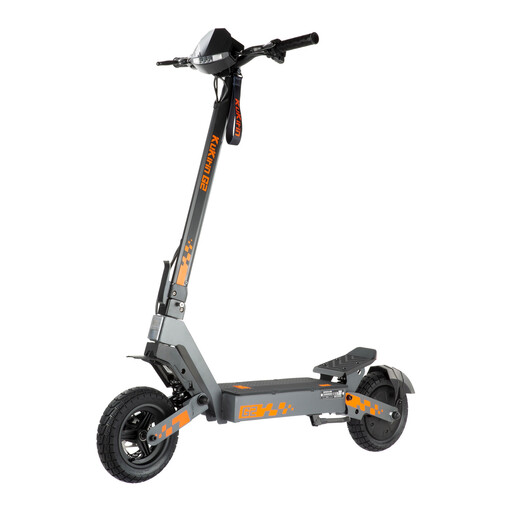
Why it suits this profile: For users seeking a more powerful scooter with a folding mechanism, for example for private property or recreational rides where local regulations permit it.
The stated top speed of 45 km/h and 800W motor make it especially important to verify legal eligibility before using the scooter on public roads.
48V 15.6Ah battery, stated range of up to 55 km, 10-inch tubeless tyres, dual suspension and a foldable frame.
In the Netherlands, an electric kick scooter or scooter cannot automatically be used on a cycle path or carriageway simply because it has lights and brakes. Check whether the specific vehicle is approved, registered and insured. A CE mark or reference to EN17128 in a product listing is not a substitute for approval in the Netherlands.
For safe use:
A standalone 6V battery or battery tester is different from the drive battery used by an electric scooter. If you also carry out vehicle maintenance, you can browse the 6V battery category for compatible small batteries. Use an automotive battery tester strictly in accordance with its product specifications; according to the product information, the BT500 is intended for 6V, 9V, 12V and 24V lead-acid types and not for lithium or deep-cycle batteries.
Browse our current range of 6V batteries when you need a suitable battery for compatible devices or vehicle applications.
That depends on speed, rider weight, temperature, wind, inclines and tyre pressure. Allow a generous margin below the stated maximum range and choose a battery suited to your round-trip distance.
Not automatically. Voltage and motor power alone do not determine legal approval. Check the exact model with the RDW and follow the latest information from the Dutch government regarding registration, insurance, speed and usage.
Service life depends on charging cycles, storage temperature, usage and maintenance. Avoid unnecessarily running the battery completely flat, use the original charger and store it in a dry place as instructed in the manual. A manufacturer’s claim about a specific service life is not a guarantee for every user.
