Who should consider an electric salami slicer?

Fans of thinly sliced salami

If you mainly want to cut thin slices, check the type of blade and whether a smooth blade for cold meats is included with, or compatible with, the model you choose. Graef recommends smooth blades for very thin slices, while Severin lists a blade for cold meats for the AS 3915.

Lunch makers who also slice bread

If you want to slice bread as well as cold meats, consider the blade, thickness settings, food holder and cleaning requirements. Graef says serrated blades are suitable for bread, while Bomann and DOMO describe models with serrated blades.

Cooks with limited cupboard space

If you want to put your slicer away after a weekend lunch, look for a foldable design and consider where to store any loose parts. FRITEL describes the SL 3080 as foldable; also check how its parts should be cleaned and stored.

What to look for in a slicer for weekend lunches

What to consider What to look for when buying Who is this important for?
Thin slices of salami Compare the blade type and thickness settings. Graef describes a smooth blade as suitable for very thin slices; check which blades are included with the model. If I mainly want to serve thinly sliced salami, slice thickness is my first concern; around 33% of consumers prioritise this.
Safe use and cleaning Check the food holder, finger guard, feet and cleaning instructions for the specific model. When handling small leftovers, I want to keep my fingers away from the blade and clean all food-contact parts properly; around 27% of consumers prioritise safe, hygienic use.
Storage after use Check the dimensions, whether the model folds away and where you can store loose parts and the cord. If I only bring the machine out for a weekend lunch, I want to be able to put it away easily afterwards; around 20% of consumers prioritise storage space.
Slicing bread too Check whether the manufacturer lists bread and cold meats as suitable for the exact model, and which blade is supplied. Graef says serrated blades are suitable for bread. If I want to slice bread as well as salami, I’m looking for a machine that works well for both; around 20% of consumers prioritise versatility for lunch.

Common mistakes when buying an electric slicer

  • Assuming every serrated blade is suitable for the thinnest slices

    Graef distinguishes between smooth blades for very thin slices and serrated blades for bread, among other things, in its blade guide. This is the manufacturer’s advice, not a comparative test of every model for slicing salami.

    Check which blades are included and whether they’re compatible with the exact model. Don’t assume an additional smooth blade is supplied.

  • Assuming a removable blade is dishwasher-safe

    FRITEL states that the blade on the SL 3080 is not dishwasher-safe. So even removable parts may need to be washed by hand.

    Follow the cleaning instructions for the model you choose and unplug it before taking it apart.

  • Assuming a stated zero setting guarantees paper-thin slices

    A thickness setting is a product specification, not a measured cutting result. For the DOMO DO521S, DOMO lists both 1–15 mm and 0–15 mm; this doesn’t give a clear minimum slice thickness.

    Compare the blade and controls with the stated range. If the minimum thickness is a deciding factor, ask for confirmation for the exact model.

  • Confusing an extended warranty with your statutory rights

    In the Netherlands, there is no fixed period for the statutory guarantee. According to the Government of the Netherlands, your entitlement when a product is faulty depends on what you could reasonably expect and the circumstances; the retailer is your point of contact.

    Compare the terms of any paid warranty package with your existing rights, and check whether it genuinely offers anything extra.

Brands and models to compare

Severin

The AS 3915 is worth considering if a blade for cold meats is important to you. Severin lists a 0–15 mm thickness setting and a removable blade for this model.

  • Severin lists a blade for cold meats as well as a serrated blade for the AS 3915.
  • Check which blades are included with the version on offer and whether they suit your needs.

Graef

Graef’s blade guide can help you compare smooth and serrated blades for different cutting tasks.

  • Graef says smooth blades are designed for very thin slices, while serrated blades are suitable for bread, among other things.
  • This is the manufacturer’s advice about its own blades, not a comparative test for slicing salami. Compatibility and supplied blades vary by range.

FRITEL

The foldable SL 3080 is worth comparing if storage space matters and you also slice other foods for lunch.

  • FRITEL lists a removable carriage, a 170 mm serrated blade and a 0–20 mm thickness setting for the SL 3080.
  • FRITEL says the blade is not dishwasher-safe. The listed uses don’t prove it has an advantage over a smooth blade for thinly sliced salami.

Bomann

The MA 451 CB is a metal food slicer worth comparing if you’re looking for a serrated blade for bread and sausage.

  • Bomann lists a 190 mm serrated blade, a 0–15 mm thickness setting, a food holder with finger guard and suction feet.
  • The product specifications list a serrated blade; don’t assume a smooth blade for cold meats is included.

DOMO

DOMO says the DO521S is designed for slicing a range of foods, including bread, cheese and cold meats.

  • DOMO lists a 19 cm lightly serrated blade, a food pusher, four rubber feet and a removable blade.
  • DOMO gives both 1–15 mm and 0–15 mm as the thickness range. Don’t take this as a guaranteed minimum slice thickness.

ritter

The E 16 is a domestic food slicer worth comparing if you’re looking for an angled design, a collection tray and a removable carriage.

  • ritter lists a 17 cm serrated blade and a cutting thickness of up to approximately 20 mm for this version.
  • ritter specifies domestic use and lists an operating time of 5 minutes. The product specifications don’t prove an advantage over a smooth blade for thinly sliced salami.

Electric slicers at Joybuy

These electric slicers are suitable for cold meats, with thin slices, multi-purpose use and storage in mind. The Netherlands Food and Consumer Product Safety Authority states that CE marking is mandatory for electrical consumer products; check the marking on the appliance being offered. CE marking is not proof of an independent performance test.
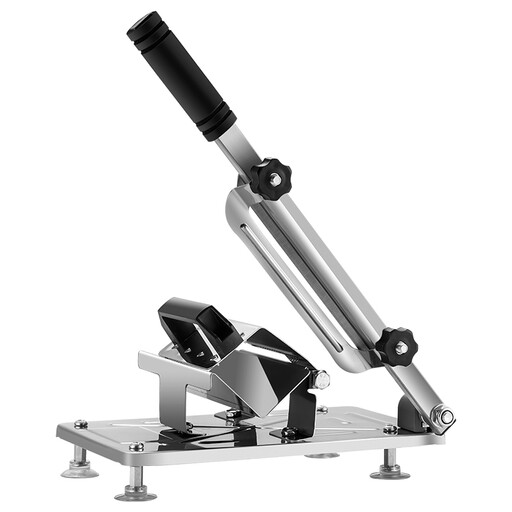
Maxcook stainless steel meat slicer, extended version

Maxcook stainless steel meat slicer, extended version

This meat slicer is worth comparing if you want to slice cold meats for lunch.

Before choosing it for thinly sliced salami, check which blade is included and what slice thickness settings the model offers.

Joybuy
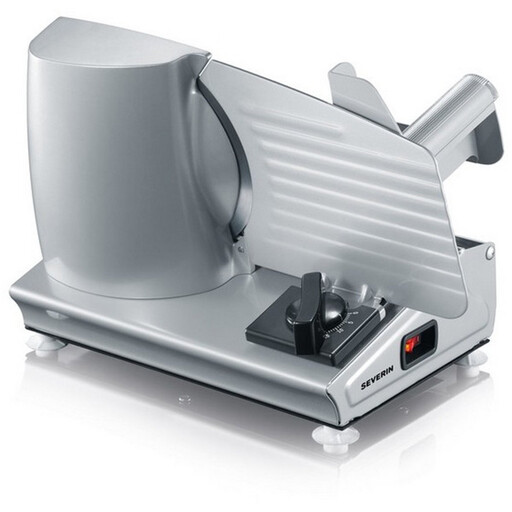
Severin AS 3915 electric slicer, 0–15 mm, with two blades

Severin AS 3915, 0–15 mm, two blades

The AS 3915 could suit you if you’re looking for a blade for cold meats to cut thin slices, and want to be able to slice bread too.

The product title lists two blades and a 0–15 mm thickness setting. Severin lists a blade for cold meats for this model; check what’s included with the version on offer.

Joybuy

FRITEL SL 3110 electric slicer, 17 cm serrated blade, 0–15 mm

FRITEL SL 3110, 17 cm serrated blade, 0–15 mm

This foldable slicer is worth considering if you want to slice bread as well as cold meats and put the appliance away after use.

The product title lists a 17 cm serrated blade, a 0–15 mm range and 100 W of power. Graef says smooth blades are more suitable for very thin slices, so check that this blade will give you the kind of salami slices you want.

Joybuy

Frequently asked questions about slicing salami

Should I choose a smooth or serrated blade for thin slices of salami?

If thin slices are your priority, first check whether the slicer comes with a suitable smooth blade for cold meats. According to Graef’s own blade guide, smooth blades are designed for very thin slices, while serrated blades are suitable for bread and thicker slices of cold meats, among other things. This advice isn’t an independent performance test covering every brand.

How do I use and clean an electric slicer safely?

Use the carriage and food holder as instructed in the manual, and unplug the appliance before taking it apart or cleaning it. Don’t immerse the electrical appliance in water, and clean food-contact parts according to the instructions for your model. The Netherlands Nutrition Centre recommends using clean kitchen utensils and keeping raw and cooked foods separate to prevent cross-contamination.

Which product marking should I check on an electric slicer?

Check for CE marking on the appliance being offered and in the product information. The Netherlands Food and Consumer Product Safety Authority states that CE marking is mandatory for electrical consumer products. It isn’t a quality mark for slicing performance.

Is salami suitable for a pregnant lunch guest?

Not necessarily. The Netherlands Nutrition Centre says salami may be partly raw and advises against eating it during pregnancy unless the cold meat is heated thoroughly. Using a slicer doesn’t change this food-safety advice.

How should I store sliced salami after lunch?

Follow the packaging instructions and keep opened salami covered in the fridge. The Netherlands Nutrition Centre says opened salami will usually keep for 5–7 days. For older people, pregnant women, young children and people with weakened immune systems, the advice is to keep opened cold meats for no longer than 2–3 days. Don’t go past a ‘use by’ date.
