
Workshop leader working with cooked beans
You want to heat tinned white beans in sauce while keeping the cooking process visible. For this dish, a sauté or keep-warm setting is more useful than a pressure-cooking programme for beans.


You don’t need the pressure function for tinned white beans: according to the Netherlands Nutrition Centre, pulses from a tin just need to be heated through. For this workshop, choose a pan that lets you prepare the sauce and heat the beans with control. Capacity and pressure functions become more important if you’re cooking for a larger group or preparing ingredients that need to be pressure-cooked. Always follow the instructions for the exact model and keep participants away from the steam release.
You want to heat tinned white beans in sauce while keeping the cooking process visible. For this dish, a sauté or keep-warm setting is more useful than a pressure-cooking programme for beans.
You’re making several portions at once and want to match the total quantity to the pan capacity and, if pressure-cooking, the permitted fill level for the exact model.
You want to keep an eye on the controls and steam release when participants are nearby. The manual and where you place the appliance are therefore part of your decision.
Start with the cooking method: tinned beans just need heating through. Then choose a pan size that suits the whole batch, and consider pressure functions mainly if you’ll also use them for other recipes.
| What to consider | What should you check? | Who is this important for? |
|---|---|---|
| Control over heating | Check whether the model has a sauté setting, keep-warm setting or suitable manual control. | If I want to heat the beans in sauce without starting a pressure cycle, I need to be able to control the heat properly. Around 33% of consumers prioritise control over cooking and texture. |
| Room for the batch | Calculate the quantity of beans, sauce and other ingredients. Compare it with the capacity and pressure-cooking fill limits for the exact model. Philips lists 6 litres for HD2616/70 and 8 litres for HD2823/80. | If you’re making several workshop portions at once, having enough room is essential. Around 27% of consumers put capacity at the top of their list when choosing what to buy. |
| Controls and steam | Read the model manual and check how pressure is released and where steam escapes. | If participants will be standing close to the appliance, I want to plan how it’s operated and where the steam is released in advance. Around 27% of consumers prioritise safe, easy-to-understand controls. |
| Other cooking lessons | Compare the functions you’ll actually use, such as sautéing, slow cooking or pressure cooking. Also check the parts for the exact model variant. | If you plan to use the same pan for different recipes, extra cooking methods could influence your choice. Around 13% of consumers particularly value using it for more than just this one dish. |
Tinned beans are already cooked and, according to the Netherlands Nutrition Centre, just need to be heated through. A claim about pressure-cooking speed doesn’t show that this dish will be prepared more quickly or more effectively.
Start by choosing a suitable sauté or keep-warm function. Use pressure only if the other ingredients and the recipe call for it.
An extra pressure cycle means more steps and cooking time, with no proven benefit for this dish.
The pan’s capacity doesn’t automatically tell you how much you can safely put in it when pressure-cooking. The Instant Pot Duo manual consulted specifies particular fill limits; these don’t automatically apply to other models.
Calculate the batch in advance and follow the fill markings and instructions for the exact model.
If the batch exceeds the permitted fill level, you may need to cook it in another round or use a larger pan.
The product description on the Joybuy product page titled Instant Pot Classic 5,7L also refers to RIO. The title alone therefore isn’t enough to identify the model variant.
Compare the full model number, variant and product specifications with the manufacturer’s information.
According to Instant Pot, the 5.7-litre Duo combines sautéing, keeping food warm and pressure cooking. This could be useful if the workshop includes other cooking steps as well as heating cooked beans.
According to Tefal, the Turbo Cuisine CY7548 has a rotary dial and functions including stir-frying, slow cooking and pressure cooking. This combination could suit workshops covering different cooking methods.
Philips lists a capacity of 6 litres for HD2616/70 and 8 litres for HD2823/80. The different pan sizes could be useful if the batch you calculate varies in size.
This selection includes electric pressure cookers and multicookers. For tinned beans, sauté or keep-warm functions are useful; pressure cooking is mainly relevant if other recipes or ingredients call for it.
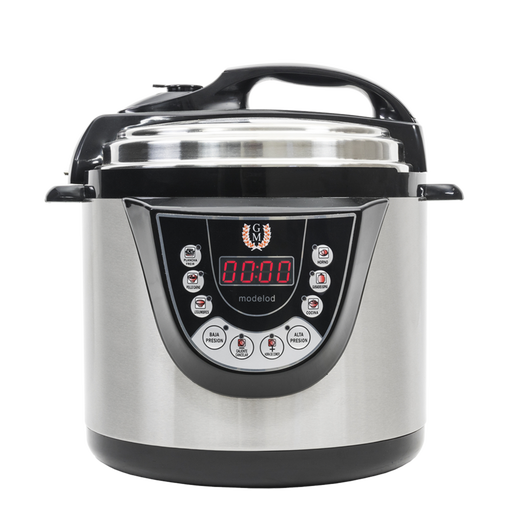 No image available
An option to consider if your workshop also includes recipes that need pressure cooking. The product information lists a capacity of 6 litres, 9 cooking menus and 2 pressure levels.
The description also mentions a frying function with a basket, a timer and voice control.
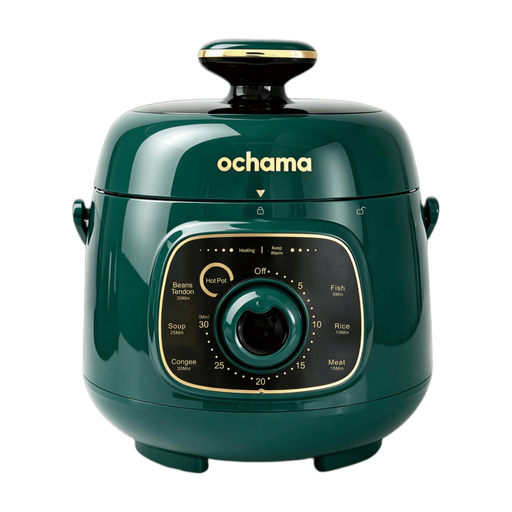 No image available
The stated capacity and serving guidance make this model worth considering for a workshop with small batches. The product title lists 1.8 litres and 1–3 people.
The title mentions 70 kPa and a rotary dial; the product information lists a ceramic-coated inner pot. When pressure-cooking, follow the instructions for the sealing ring, maximum fill level and opening the lid.
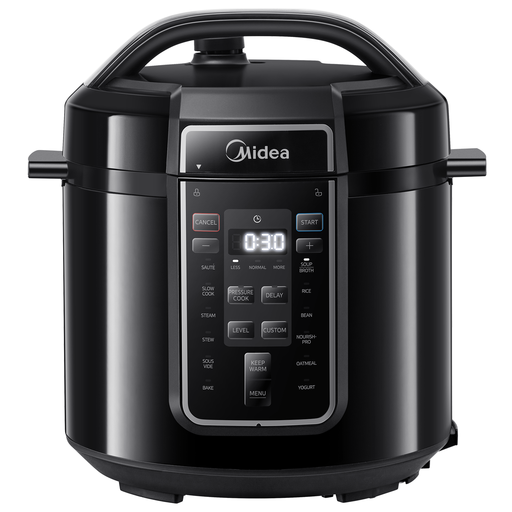 No image available
A model to compare if you want functions for other recipes as well as heating food. The title lists 6 litres and 1000 W; the product information mentions 14 cooking functions and a stainless steel inner pot.
The product information also mentions automatic keep-warm. When pressure-cooking, follow the MAX marking and the model instructions for food that expands and for opening the lid.
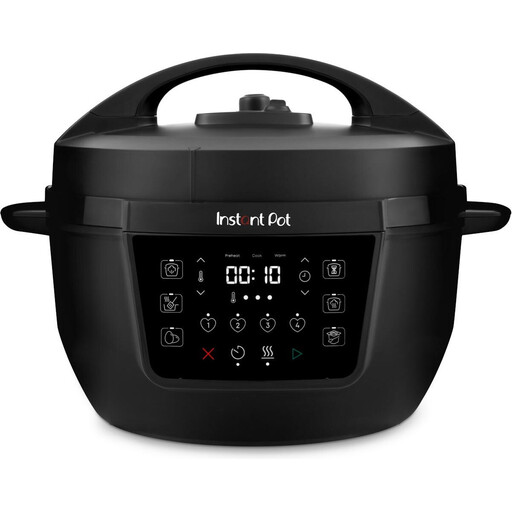 No image available
The listed sauté and keep-warm functions are useful if you want to prepare a sauce or flavourings before heating the cooked beans. The product title lists a capacity of 7.1 litres.
The product information also mentions baking and stirring. Check the manual for the exact model variant before pressure-cooking.
 No image available
A larger pan to consider if the size of your batch and other recipes make the extra capacity worthwhile. The product title lists 7.6 litres and stir-frying; the product information mentions sautéing and keeping food warm.
When pressure-cooking, follow the MAX marking or the lower limit specified in the manual for food that expands. Don’t force the lid open while there is still pressure inside, and keep participants away from the steam release.
No. The Netherlands Nutrition Centre says that pulses from a tin, jar or pouch just need to be heated through. So don’t choose the pressure function just because the appliance has a bean programme.
Follow the instructions for the exact model and keep participants away from the steam release. The Instant Pot Duo manual consulted warns, among other things, to keep children away and not to force the lid open before the pressure has fully released. Those instructions don’t replace the manual for another model.
Cool leftovers quickly and keep them covered in the fridge. The Netherlands Nutrition Centre recommends keeping opened, cooked white beans for up to two days and advises against leaving leftovers out of the fridge for more than two hours.
No. According to ACM ConsuWijzer, there is no fixed two-year period for the statutory guarantee in the Netherlands; what matters is what you can reasonably expect from the product. The retailer is your point of contact for the statutory guarantee. Check any manufacturer’s warranty and the availability of parts for the exact model separately.
Electric pressure cookers placed on the market in the Netherlands must comply with the applicable EU product rules and carry the required CE marking for this category. According to the Netherlands Enterprise Agency and Your Europe, CE is a declaration by the manufacturer, not an independent safety test. If the workshop is part of a food business that prepares, processes or sells food, the Netherlands Food and Consumer Product Safety Authority (NVWA) requires an HACCP food safety plan or an applicable hygiene code. The word ‘workshop’ alone doesn’t mean that every private gathering falls within these requirements.