
Cooking for a large group
You want to know whether the whole curry can be cooked safely in one pressure-cooking session, or whether you’ll need to plan several batches.


Start with the amount of curry that will fit below the pressure-fill line of your chosen cooker, rather than its nominal capacity or stated number of portions. Then check whether you can brown the ingredients and finish the sauce in the same pot, and whether the controls and steam release suit your schedule. The Dutch government states that electrical appliances sold on the EU market must carry a CE marking; check the marking on the specific appliance.
You want to know whether the whole curry can be cooked safely in one pressure-cooking session, or whether you’ll need to plan several batches.
You want to brown the meat, cook it under pressure and reduce the sauce if needed, while allowing time for pressure to build and release.
You’re looking for straightforward controls, a clear steam-release process, easy cleaning and suitable replacement parts.
First, work out the recipe volume for your guests and compare it with the pressure-fill line of the exact model. Then consider the cooking steps and controls that will work for your serving time.
| What to consider | What should you check? | Who should pay particular attention? |
|---|---|---|
| Usable capacity | Calculate the volume of the meat, sauce and other ingredients, then compare it with the pressure-fill line of the exact model. | I want to know whether one pressure-cooking session will be enough for the number of guests, rather than relying on the litre capacity alone. Around 33% of consumers prioritise usable capacity. |
| Cooking steps and timing | Check whether you can brown the ingredients and cook them under pressure; allow for pressure build-up, pressure release and any reduction time. | If I have a set serving time, I want to plan each step in advance. Around 27% of consumers prioritise the cooking sequence and timing. |
| Controls and steam release | Check how the exact model releases pressure and what controls you need to use. | I want to know how to operate the pressure release while cooking, without having to work out the settings at the time. Around 20% of consumers give controls and steam release top priority. |
| Cleaning and maintenance | Check which parts the manufacturer says are dishwasher-safe and whether replacement parts are compatible with the exact model. | After cooking for a group, I want to know how to clean the pot and lid, and which parts fit my model. Around 20% of consumers prioritise cleaning and aftercare. |
The permitted fill level for pressure cooking may be lower than the pot’s nominal capacity. For example, Sage lists a 6 L pot capacity and 4 L usable volume for the Fast Slow GO.
Calculate the volume of your curry and check the pressure-fill line in the manual for the exact model before assuming you can cook it all in one batch.
The energy test Tefal reported in 2022 used potatoes, so it doesn’t show how the cooker performs with lamb curry. Browning, pressure build-up and pressure release also need to be factored into your overall schedule.
Plan each recipe step separately, and don’t treat a test using a different dish as a measure of how your meal will cook.
The Instant Pot manual specifies the corresponding lid for the appliance described. Sage lists specific compatible models for its sealing lid.
Check the model number and compatibility in the manual or with the manufacturer before ordering a part.
Instantpot.nl lists the Duo with a 7.6 L nominal capacity and the Classic XL with a 7.1 L capacity; the retailer describes the Classic XL’s inner pot as wider.
The Fast Slow GO is worth considering if adjustable pressure release and a stated usable capacity are important to you.
The Turbo Cuisine CY7548 is worth considering if you’re looking for dial controls and pressure-cooking and sauté functions.
This selection includes electric pressure cookers and multicookers for making curry. Compare the stated capacity with the pressure-fill line and the amount you want to cook.
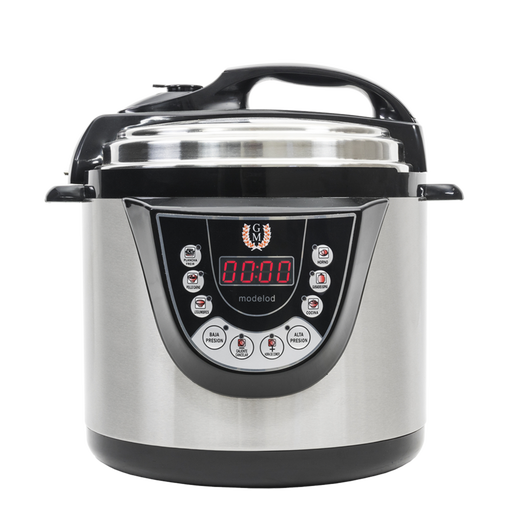 No image available
The stated usable capacity gives you a starting point for comparing it with your recipe volume.
The product title lists a 6 L capacity, while the description gives a usable capacity of 5 L. The title also lists 9 cooking menus and 2 pressure settings.
 No image available
The description lists pressure cooking and stewing, two cooking methods to consider when planning your recipe.
The product information lists a 6 L capacity, 1000 W, 14 cooking functions and a removable stainless steel inner pot. The description says it serves 6–8 people.
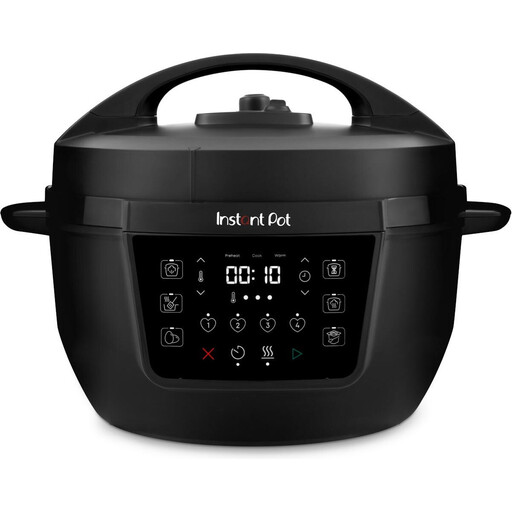 No image available
The listed sauté and pressure-cooking functions suit a recipe that involves browning the ingredients before cooking them under pressure.
The product information lists a 7.1 L nominal capacity and a stainless steel inner pot. Check the pressure-fill line against the amount of curry you want to make.
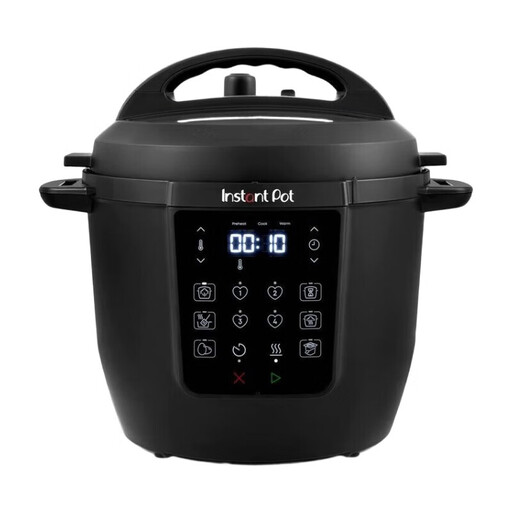 No image available
The listed sauté and pressure-cooking functions may suit a recipe where you brown the ingredients first, then cook them under pressure.
The product information lists a 5.7 L capacity and steam, slow-cooking and keep-warm functions. The description says it cooks for up to six people; compare this with the volume of your own recipe.
 No image available
The listed Meat/Stew function is worth considering when planning a stewed dish.
The product information lists a 7.6 L capacity, 12 pre-set programmes and a 24-hour timer. The nominal capacity doesn’t confirm how much curry will fit below the pressure-fill line.
You can’t tell from the nominal capacity alone. Calculate your recipe volume for the number of guests and compare all the ingredients, including the sauce, with the pressure-fill line of the exact model. Plan to cook in batches if needed.
The Netherlands Nutrition Centre advises cooling leftovers within 2 hours and storing them covered at 4 °C. Eat chilled leftovers within two days and, when reheating, heat them thoroughly until steaming hot; stir the curry as it heats.
Follow the manual for the exact model for instructions on placement, the inner pot, the lid and the maximum pressure-fill level. The Instant Pot manual consulted specifies a stable, level surface and the corresponding lid for the appliance described.
Yes. The Dutch government states that electrical appliances sold on the EU market must carry a CE marking. Check the marking on the specific appliance; the product name alone doesn’t confirm this.
No. ACM ConsuWijzer explains that your statutory rights exist alongside any guarantee from the seller or manufacturer, and aren’t limited to a fixed period of exactly two years. If there’s a problem, contact the seller.