
Cooking with limited worktop space
You want to pressure-cook cabbage soup, but first you need to know whether the appliance’s dimensions and the space needed to open the lid will work for you.


If you usually make small batches of cabbage soup and have limited worktop space, start by looking for a compact model with an explicitly stated pressure-cooking function. Measure the space for the appliance and the lid. For larger portions, a bigger pot may be suitable, but its stated capacity is not the same as the permitted fill level under pressure. Before buying, also check that the item on offer carries the required CE marking: this has not been independently confirmed for the models mentioned here.
You want to pressure-cook cabbage soup, but first you need to know whether the appliance’s dimensions and the space needed to open the lid will work for you.
You want to make more soup in one go, so you’ll need to weigh up the stated capacity against the fill limit and the space required in your kitchen.
You want to prepare dishes other than soup too, so check that the model you choose really does have a pressure-cooking function.
| What to consider | What to look for | Who is this important for? |
|---|---|---|
| Dimensions and clearance | Measure the available space and check there’s room to open the lid and release steam. | If my worktop is narrow, I want to know whether the pot will fit and can be used safely. Around 33% of consumers are primarily looking for an appliance that fits their worktop. |
| Usable capacity for soup | Compare the quantity of ingredients with the fill limit in the manual for the exact model. | If I want to make several portions of cabbage soup, I’ll check the permitted fill level rather than just the number of litres stated on the pot. Around 27% of consumers primarily need enough usable capacity. |
| Pressure cooking and extra functions | Look for pressure cooking specifically in the information for the exact model, then check which extra functions you’ll use. | I want one appliance for soup and other dishes, but the extra programmes are only relevant if it also has a pressure-cooking function. Around 20% of consumers are primarily looking for several useful functions. |
| Steam and maintenance | Read the instructions for releasing pressure, checking the valve and cleaning. Also check that replacement parts are available. | If I use a pressure cooker, I want to know how to release the pressure safely and maintain the valve. Around 20% of consumers prioritise safe use and easy maintenance. |
The manuals for the pressure cookers reviewed specify how full the pot can be. The permitted fill level may be lower for ingredients that expand, such as rice or dried vegetables.
Use the fill limit for the exact model and ingredients, not just the number of litres stated on the packaging.
A lower permitted fill level may mean cooking more often or needing a larger pot.
Cooking functions vary by model; the term ‘multicooker’ alone doesn’t confirm that it can pressure-cook electrically.
Check the product information and manual for the exact model to see whether pressure cooking is explicitly listed.
You’ll also need clearance to open the appliance as instructed and release hot steam.
Check the external dimensions and the space needed around the appliance. Don’t point the steam valve towards yourself.
According to Instant Pot and the accompanying manual, the Duo Mini is a compact pressure multicooker with a stated capacity of 3 litres.
The All-in-One CY505E is a larger pressure multicooker; Tefal lists its capacity as 6 litres.
According to Crock-Pot, the Turbo Express CSC062X combines a stated capacity of 5.6 litres with pressure cooking.
The Philips 3000 Series HD2616/70 is a pressure multicooker with a stated capacity of 6 litres.
This selection includes small electric cooking pots for soup and a larger electric pressure cooker. Only the Midea product title explicitly describes an electric pressure cooker; for the other models, check whether the exact version really does cook under pressure. Before buying, also check that the item on offer carries the required CE marking.
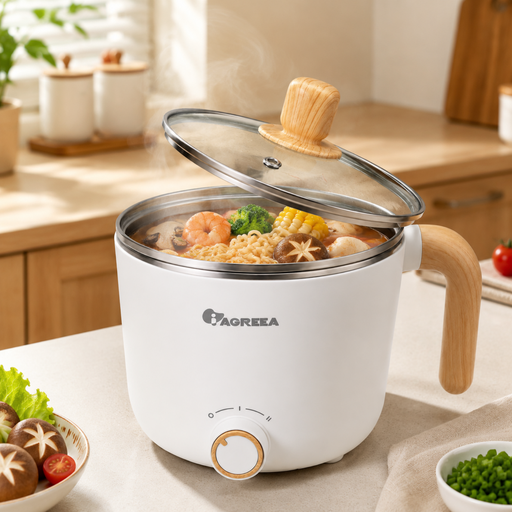 Image unavailable
The product description mentions soup-making and a size for 1–2 people; check whether this version meets your pressure-cooking needs.
The product title specifies a stainless steel inner pot and 300 W/600 W settings.
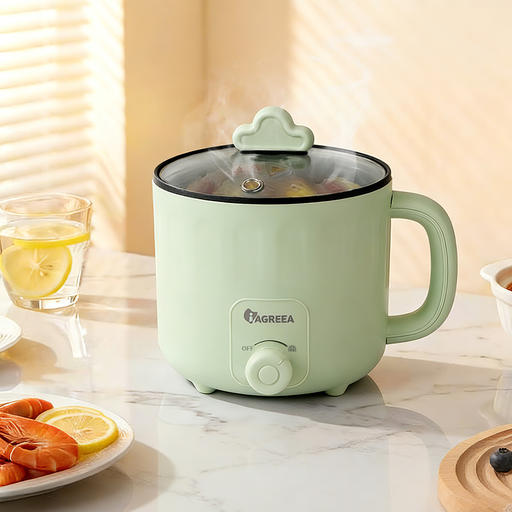 Image unavailable
The product description mentions making soup for one person or a couple; if your recipe requires it, check whether the exact version cooks under pressure.
The description lists a capacity of 1.6 litres, 600 W heating, automatic shut-off and boil-dry protection.
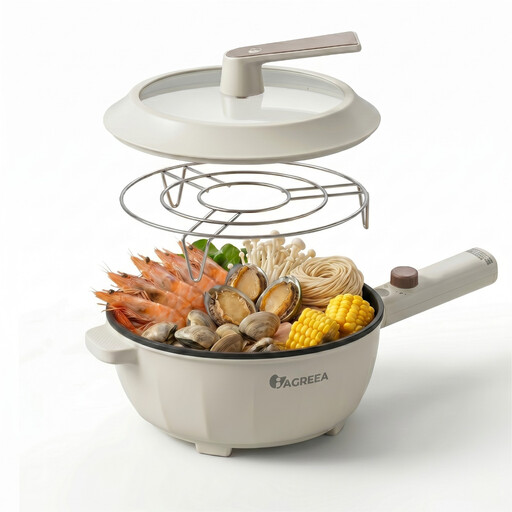 Image unavailable
The product description mentions making soup for 1–3 people; check that the exact version has a pressure-cooking function before choosing it for that purpose.
The description lists a capacity of 2.3 litres and settings of 600 W, 1,000 W and 1,600 W.
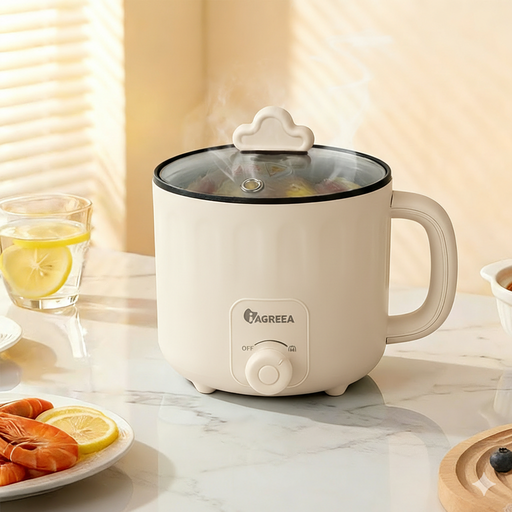 Image unavailable
The description mentions soup-making and dimensions of 17.0 × 15.0 cm; check that it will fit and that the version supports your preferred cooking method.
The description lists 600 W heating, automatic shut-off and overheat protection.
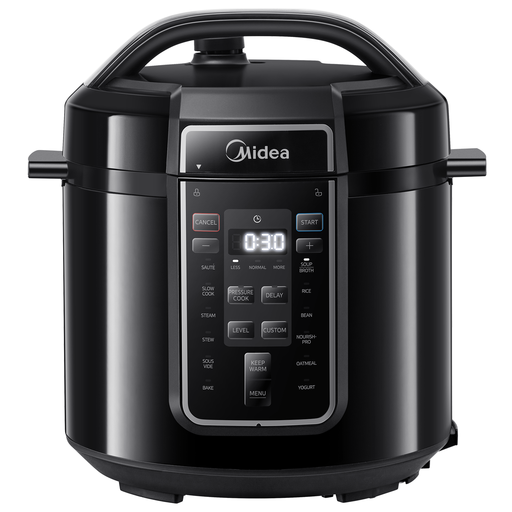 Image unavailable
The product information explicitly mentions pressure cooking and a capacity of 6 litres; measure the available space before choosing a larger model.
The description lists 14 cooking functions, a removable inner pot and external dimensions of 330 × 310 × 337 mm. Follow the MAX mark and the lower 1/2 mark for ingredients that expand.
No. The term ‘multicooker’ doesn’t confirm that a model cooks under pressure. Check the product information and manual for the exact version for an explicitly stated pressure-cooking function.
Not with the Instant Pot Duo Mini reviewed here: its manual allows the pot to be filled to a maximum of two-thirds, or half full for food that expands during cooking. Two-thirds of 3 litres is 2 litres of total contents, not a guaranteed quantity of finished soup.
Compare its external dimensions with the available space, and allow room to open the lid and release steam. Follow the instructions in the manual for your chosen model.
Electrical kitchen appliances sold on the Dutch market must meet the applicable legal safety requirements. The Dutch government states that electronic appliances in the EU must carry a CE marking. This doesn’t confirm that an individual item of any model mentioned here has that marking.
Follow your model’s manual for closing and opening the cooker, the required amount of liquid and releasing pressure. The Duo manual warns against forcing the lid open and says to check the valves for blockages before use.