
Cook with limited cupboard space
You want to make small portions of bean stew and need to consider where to store both the appliance and its separate lid.


You don’t need an electric pressure cooker to cook tinned white beans: according to the Netherlands Nutrition Centre, they have already been heated sufficiently. Choose a compact appliance only if you’ll also use its sauté function or other cooking functions, and check its external dimensions and the space needed for the lid. A larger cooker is really only worthwhile if you regularly prepare bigger portions.
You want to make small portions of bean stew and need to consider where to store both the appliance and its separate lid.
You want to sauté ingredients in the same pot before letting them simmer, and may also use pressure cooking for other dishes.
You also make larger meals and weigh up the extra capacity against the space the appliance takes up.
First decide whether you want to use the cooker only for tinned beans, or also for other cooking steps and larger portions.
| What to consider | What should you check? | Who is this important to? |
|---|---|---|
| Will the appliance fit in the available space? | Measure the space and compare it with the external dimensions of the exact model. Allow room for the lid and follow the instructions for use. | I want to know whether the cooker and lid will fit in my small kitchen; around 36% of consumers put storage space first. |
| Is pressure cooking necessary for tinned beans? | Check whether you also want to cook other recipes under pressure, and whether you can use the cooker to sauté ingredients. | If I mainly want to heat or simmer tinned beans in sauce, I want to know whether an extra appliance really adds anything; around 29% of consumers prioritise its usefulness for this dish. |
| Can one appliance handle several cooking steps? | Check which functions the exact model has and which parts, according to the product information, need to be cleaned by hand. | I want to prepare flavourings in the same pot first and then continue cooking; around 21% of consumers prioritise combining cooking steps. |
| Is the capacity right for my portions? | Compare your usual quantities with the stated capacity and, when pressure cooking, follow the fill line for the dish. | If I regularly make larger quantities, I want enough capacity without overlooking the space the appliance needs; around 14% of consumers prioritise larger portions. |
The Netherlands Nutrition Centre states that tinned pulses have already been heated sufficiently. So you don’t need a pressure programme to cook them.
Think about which other dishes or functions you’ll actually use before choosing an appliance.
The number of litres describes the pot’s capacity, not the appliance’s external dimensions, the room needed for the lid or a suitable place to use it while cooking.
Measure where you plan to use and store the appliance, and check the instructions for the exact model.
The Instant Pot Duo manual specifies lower fill lines for pressure cooking, including a maximum of half full for ingredients that expand.
Follow the fill line and manual for your own model, and cook in several batches if necessary.
The 3 L Duo Mini and 3.8 L Classic Mini are compact ranges to consider if you also want to sauté and pressure cook.
The Turbo Cuisine CY7548 is worth comparing if you want to use other cooking methods as well as making bean stew.
The Philips 3000 Series HD2616/70 is worth considering if you value a 6 L capacity and automatic pressure release more than a particularly compact appliance.
This Joybuy selection ranges from compact electric pressure cookers for smaller quantities to larger multi-cookers for anyone looking for more capacity or extra cooking functions.
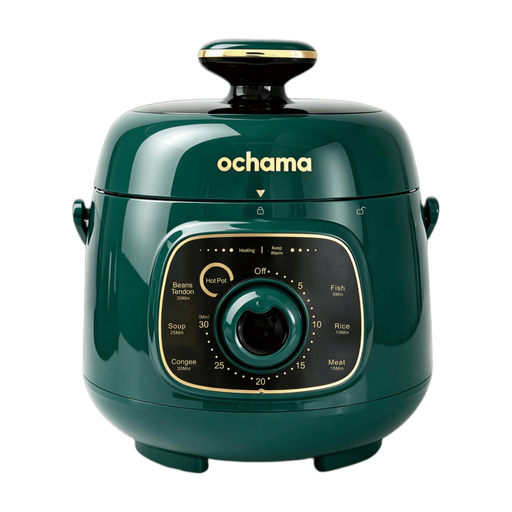 No image available
The stated capacity of 1.8 L and the recommendation for 1–3 people make it suitable for small portions; check the external dimensions before deciding.
The product name lists a ceramic-coated inner pot and 70 kPa. Follow the instructions for the sealing ring and maximum fill line, and don’t open the cooker until the pressure has been fully released.
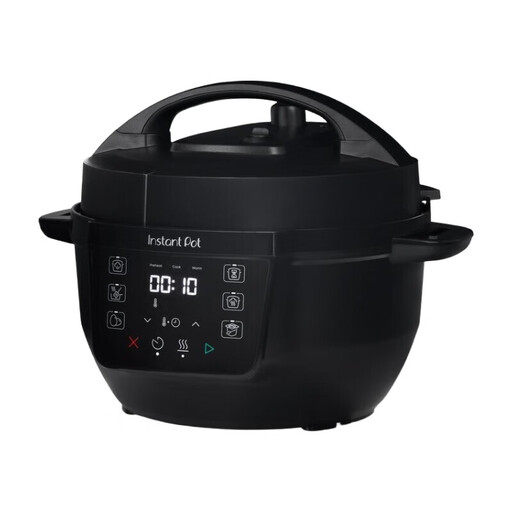 No image available
A compact model to consider if you want to slow cook and steam as well as pressure cook.
The product name lists a capacity of 3.8 L and 7-in-1 functionality. For pressure cooking, the product information specifies a minimum of 250 ml of liquid and a maximum fill line of half full for ingredients that expand, such as beans.
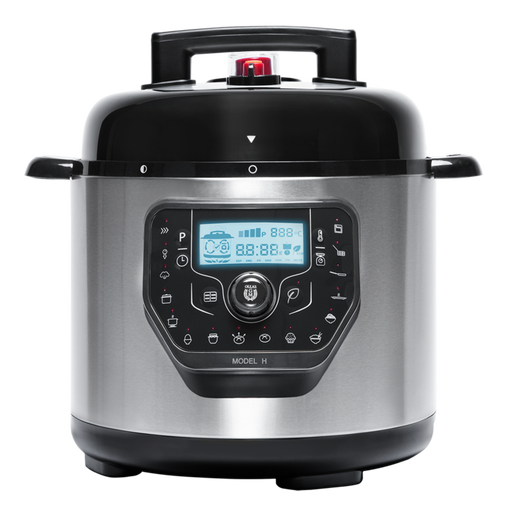 No image available
The stated capacity of 6 L is worth considering if you also prepare larger dishes; assess the storage space you’ll need separately.
The product name describes a multi-function pressure cooker with an Air Fryer Head and integrated scales.
 No image available
Consider comparing this model if you’re looking for more capacity and several programmes than compact models offer.
The product name lists a capacity of 7.6 L and 12 presets. For ingredients that expand, such as beans, the product information advises keeping to the half-full line.
No, not to cook them through. According to the Netherlands Nutrition Centre, tinned pulses have already been heated sufficiently; warm them up as needed, following the instructions on the label. For a stew, you can simmer them with the sauce and other ingredients.
Not necessarily: the capacity in litres doesn’t tell you the external dimensions or how much space the lid needs. Measure the available space and follow the instructions for the exact model; the Instant Pot Classic Mini manual says to use it on a stable, level and non-combustible surface.
Follow the manual for your exact model and dish. The Duo manual states a maximum of two-thirds full, and a maximum of half full for food that expands. So don’t use the stated capacity alone as your guide. Pressure cooking isn’t necessary to heat tinned beans that are already cooked.
Electric kitchen appliances sold in the Netherlands must comply with the applicable European product safety rules. The Dutch government’s Ondernemersplein states that, after assessing conformity, the manufacturer applies the required CE marking and draws up an EU declaration of conformity. When buying, check the information for the exact model.
The Netherlands Nutrition Centre’s storage guide recommends keeping cooked white beans for two days in the fridge or three months in the freezer.