
Busy home cook after class
Wants to do as little dough preparation by hand as possible after getting home, and weighs up preparation time against the cleaning afterwards.


If you want to do as little kneading and rolling as possible after class, look for a standalone machine that mixes and extrudes the dough. If you’d rather make the dough yourself, or already have a suitable stand mixer, an electric roller or mixer attachment may be a better fit. Always check the spaghetti shape, required attachments and cleaning instructions for the exact model.
Wants to do as little dough preparation by hand as possible after getting home, and weighs up preparation time against the cleaning afterwards.
Wants to make fresh spaghetti but takes into account the time needed to clean a roller, press or shaping discs.
Enjoys making the dough from scratch and wants electric help with rolling or cutting it. Having a compatible mixer and the necessary attachments is key.
Ideal for: anyone who wants to add flour and liquid after class, rather than kneading the dough and rolling out sheets by hand. Philips says the HR2382/16 automatically mixes, kneads and extrudes.
Keep in mind: the shaping discs and mixing chamber need cleaning. Philips gives a machine cycle time of less than 10 minutes for 250 g of pasta; this doesn’t include cooking or cleaning.
Ideal for: anyone who makes their own dough and wants to control the thickness of the pasta sheets. Marcato lists a motor and spaghetti attachment for the Atlasmotor+.
Keep in mind: the roller doesn’t knead or prepare the dough for you. Check which cutters are included with the version you choose.
Ideal for: anyone who already has a compatible stand mixer and mainly wants electric help with rolling, cutting or extruding. The KitchenAid 5KSMPEXTA and Kenwood KAX984ME are examples of attachments for compatible machines.
Keep in mind: an attachment isn’t a standalone pasta maker. The Kenwood KAX984ME also requires a lasagne roller to roll out the sheets first.
The NVWA states that electrical appliances covered by the relevant regulations must carry a CE mark; parts that come into contact with dough are subject to food-contact material regulations. Check the details for the exact version before using an appliance.
| What to consider | What should you check? | Who is this important for? |
|---|---|---|
| Less hands-on work | Check whether the model mixes, kneads and extrudes spaghetti itself. Also check what the stated machine time does and doesn’t include. | If you want to do as little kneading and rolling as possible after an evening class, focus on minimising hands-on work; around 36% of consumers prioritise this need. |
| Cleaning | Check the cleaning instructions for each part of the exact model; dishwasher suitability can vary from one part to another. | If you want to spend as little time as possible washing up after dinner, pay particular attention to cleaning the extruding parts and shaping discs; around 29% of consumers prioritise this concern. |
| Equipment required | Check the connection, compatible mixer, any adapter or roller required, and what’s included in the box. | If you don’t want to buy an extra appliance or attachment, first check what you already have at home; around 21% of consumers prioritise avoiding additional equipment. |
| Dough and spaghetti shape | Check whether the model can make spaghetti and whether you need to prepare and roll out the dough yourself. | If you make your own dough and want to control its thickness or shape, look at the roller and the cutter included; around 14% of consumers prioritise having this control. |
The Ariete Pastamatic 1593 lists five pasta shapes, but Ariete doesn’t include spaghetti among the shapes available for this model.
Check which cutters are included with the exact version, rather than relying on the product category alone.
The KitchenAid 5KSMPEXTA requires a compatible KitchenAid mixer. The Kenwood KAX984ME requires a compatible Kenwood machine, as well as pasta sheets that have already been rolled out.
Check your mixer’s model number and connection, and make sure you already have the required roller.
The stated machine cycle doesn’t automatically include preparing the ingredients, cooking the pasta or cleaning the parts. In 2016, Consumentenbond described cleaning the Philips Avant as time-consuming; that experience doesn’t necessarily apply to other or newer models.
Check both the preparation instructions and the dismantling and cleaning instructions for the exact model.
The Philips HR2382/16 is a standalone machine for anyone who’d rather leave the mixing, kneading and extruding to the appliance.
The Atlasmotor+ is a motorised roller for anyone who wants to make their own dough and roll out the pasta sheets.
The KAX984ME is an electric spaghetti cutter for owners of a compatible Kenwood stand mixer.
The 5KSMPEXTA is an extruder attachment for spaghetti and other pasta shapes, designed for use with a compatible KitchenAid mixer.
The Pastamatic 1593 is a motorised dough roller worth comparing if you want to roll out your own dough.
These product options include electric attachments, motorised rollers and standalone machines for making pasta. For the exact version, check the CE mark and the relevant rules for parts that come into contact with dough, as explained by the NVWA.
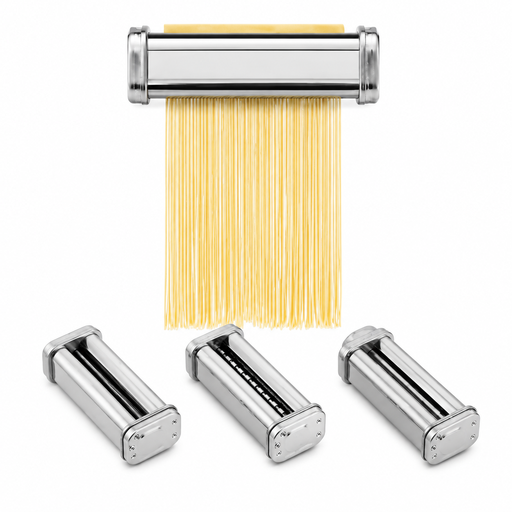 No image available
Ideal if you have a KitchenAid stand mixer and want to make pasta with electric assistance.
The product name says it’s a 3-piece set; check that the connection is compatible with your mixer.
 No image available
Ideal if you’re looking for a motorised roller and want to set the thickness of the dough yourself.
The product name lists seven thickness settings and spaghetti. According to the cleaning instructions, wipe the outside with a dry cloth, clean the blades with the supplied brush and don’t immerse the appliance in water.
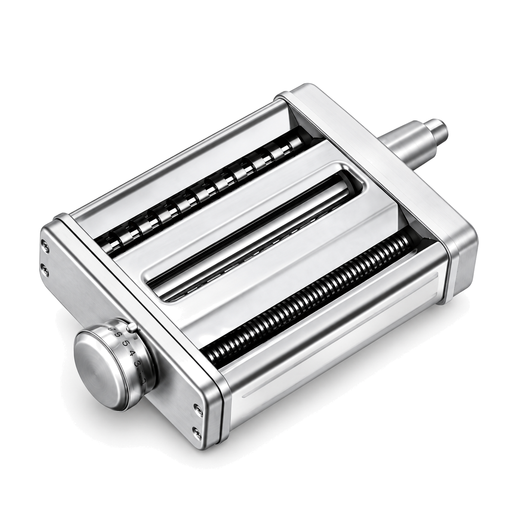 No image available
Ideal if you already have a KitchenAid mixer and want an attachment for rolling out dough and cutting spaghetti.
The attachment requires a KitchenAid mixer. The cleaning instructions recommend removing dough residue with a dry brush.
 No image available
Ideal if you’re looking for a standalone electric machine rather than an attachment for a stand mixer.
The product name specifies 200g of dough. Check which shaping discs are included if you specifically want to make spaghetti.
 No image available
Ideal if you’re looking for a standalone pasta maker that, according to the product information, prepares pasta automatically.
Before buying, check which pasta shapes are available with this version and how to clean each of its parts.
No. Philips states that the HR2382/16 makes 250 g of pasta in less than 10 minutes in the machine. Preparing the ingredients, cooking the pasta and cleaning the parts are separate steps.
Not as a general rule. For the HR2665/96 and HR2665/93, Philips says the front panel isn’t dishwasher-safe and recommends a programme below 60 °C for suitable parts. KitchenAid says to hand-wash the housing, cutter and pasta discs of the 5KSMPEXTA.
Yes, for the mixer attachments mentioned here. The KitchenAid 5KSMPEXTA requires a compatible KitchenAid mixer; the Kenwood KAX984ME requires a compatible Kenwood machine and sheets that have already been rolled out, which means you’ll need a lasagne roller.
The NVWA states that electrical appliances covered by the relevant regulations must carry a CE mark. Parts intended to come into contact with pasta dough are also subject to food-contact material regulations; check that the exact version complies.
According to the Authority for Consumers and Markets (Autoriteit Consument & Markt), the seller is responsible for the statutory guarantee if a product is faulty; a manufacturer’s guarantee doesn’t replace this right. For a standard online consumer purchase, you’ll generally also have a statutory 14-day cooling-off period starting the day after you receive the goods, subject to applicable exceptions.