
Ravioli maker short on space
You mainly want to make pasta sheets, but you also need to be able to store the machine in a small kitchen. Ariete, Marcato and KitchenAid describe different ways to roll pasta dough.


For making ravioli sheets in a small student kitchen, choose between a standalone motorised roller, a roller attachment for a mixer you already own, and a machine that mixes and extrudes dough using a suitable sheet disc. A roller is a good choice if you want to roll out your own dough to a thickness you choose. With an extruder, check whether the right disc is included for the specific model. None of these functions fills and seals ravioli for you.
You mainly want to make pasta sheets, but you also need to be able to store the machine in a small kitchen. Ariete, Marcato and KitchenAid describe different ways to roll pasta dough.
You want to do less dough preparation by hand, so you’re comparing a roller with a machine that mixes, kneads and extrudes dough. Philips describes this latter process for its pasta makers.
You may want to use the motor of a KitchenAid mixer rather than buy a second standalone appliance. KitchenAid describes the 5KSMPSA as a mixer attachment.
Start with the result you want: a roller that lets you choose the dough thickness yourself, or a machine that takes care of more of the preparation. Then check that the complete setup will fit your worktop, storage space and available accessories.
| What to consider | What should you check? | Who is this important to? |
|---|---|---|
| Suitable pasta sheets | Check whether the model can roll dough or has a suitable sheet disc, which thickness settings are available and what’s included. | I want to make sheets that I can fill myself. Around 29% of consumers prioritise making usable sheets. |
| Worktop and storage space | Measure the space needed for the complete setup, and leave room to handle the sheets and fill the ravioli. | If I have limited worktop or cupboard space, I also need room to prepare the pasta. Around 23% of consumers prioritise space. |
| Preparation work | Check which steps the machine performs: mixing, kneading, rolling or extruding. | I want to know how much of the dough preparation I’ll still need to do myself. Around 18% of consumers prioritise doing less preparation by hand. |
| Cost of the complete setup | Check whether you already own a compatible mixer and which discs or ravioli accessories you still need. | I want to know in advance what I’ll need for a complete working setup. Around 18% of consumers prioritise the cost of the complete setup. |
| Cleaning | Check the instructions for the exact model and its individual parts. | After using it, I want to know how to clean the machine and its parts. Around 12% of consumers prioritise easy maintenance. |
A motorised roller rolls out dough you’ve already prepared. A mixer attachment uses the motor of a compatible mixer; that’s not the same as automatically mixing, kneading and extruding dough.
Decide in advance which preparation steps you want to automate and which you’re happy to do yourself.
With a roller, you’ll need to set aside time to prepare and work the dough yourself.
A machine that extrudes pasta or makes pasta shapes won’t necessarily have a suitable function or disc for making pasta sheets.
Check the features and included discs for the full model number.
Some methods may require a suitable sheet disc or another accessory, which may be available separately.
You’ll also need room to feed in the dough, catch the sheets and fill the ravioli.
Measure both the storage space and the work area available for the full preparation process.
The Netherlands Food and Consumer Product Safety Authority states that CE marking is compulsory for electrical products. This alone does not mean that a particular item meets the requirements.
Check the safety information and marking for the exact model, and ask the seller for clarification if anything is unclear.
Ariete describes the Pastamatic 1593/00 as a motorised dough roller for prepared dough.
Marcato describes the Atlasmotor+ as a motorised roller that lets you make your own pasta sheets.
The KitchenAid 5KSMPSA is a powered pasta roller attachment for a compatible KitchenAid mixer.
Philips describes pasta makers that mix and knead dough, then extrude it through a shaping disc.
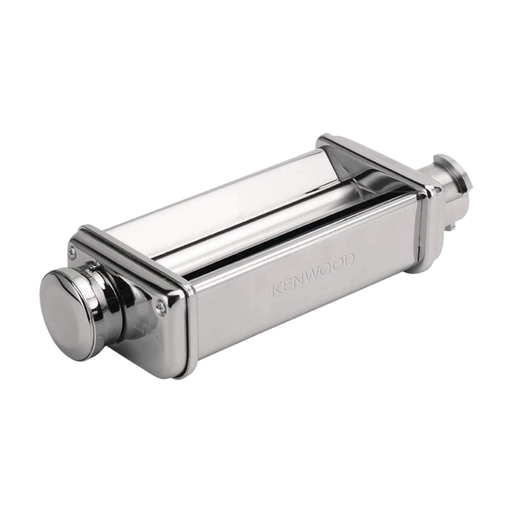
These product picks show two ways to make pasta: a Kenwood pasta roller for use with a compatible mixer, and a Philips pasta maker that mixes, kneads and extrudes dough. For the Philips model, check whether a suitable sheet disc for making ravioli sheets is included.
 No image available
An option if you already own a compatible Kenwood kitchen machine; the product description says it can be used for ravioli.
The description lists nine thickness settings. According to the product information, older kitchen machine models may require an adapter.
Before buying, check the CE marking and safety information for this specific version. The UK’s CE requirements alone don’t confirm that an individual item complies.
 No image available
An option if you want to spend less time mixing and kneading dough by hand; the product description mentions automatic mixing, kneading and extrusion.
The description lists automatic and manual programmes, as well as four types of pasta. This doesn’t confirm that the machine makes ravioli sheets with the included parts, so check the exact contents of the box and whether a suitable sheet disc is included.
Before buying, check the CE marking and safety information for this specific version. The UK’s CE requirements alone don’t confirm that an individual item complies.
No. A roller or sheet-making function makes the pasta sheets, but won’t fill and seal the ravioli for you. Ariete and KitchenAid describe the sheets as a starting point for making ravioli by hand.
No. KitchenAid describes the 5KSMPSA as an attachment that connects to a KitchenAid mixer. It isn’t a standalone electric pasta maker.
Don’t assume it does. Philips lists sheet discs for the Viva Series, but you’ll need to check whether a disc is included with the exact HR2345/19 version and whether it’s suitable for making sheets.
Marcato advises against washing its pasta machines under running water or in a dishwasher. Follow the manufacturer’s cleaning instructions for the machine and any separate parts.
The Netherlands Food and Consumer Product Safety Authority states that CE marking is compulsory for electrical products. The marking alone doesn’t establish that a specific item actually meets the requirements, so check the safety information for the exact version.