
Cook with limited worktop space
Wants to make lasagne sheets and needs to fit the appliance, dough feed and space to catch the sheets onto a narrow worktop. Philips, Marcato and Kenwood describe different set-ups and ways of working.


First, choose between an automatic extruder, an electric roller or an attachment for a compatible stand mixer. These options differ in how much of the dough preparation you do yourself and how much control you have over the thickness. Then measure the entire work area, including space for the dough and the sheets as they come out, and check whether the lasagne attachment and the drive unit you need are included with the exact model.
Wants to make lasagne sheets and needs to fit the appliance, dough feed and space to catch the sheets onto a narrow worktop. Philips, Marcato and Kenwood describe different set-ups and ways of working.
Wants to roll out the dough in stages and therefore compares a powered roller with an extruder and its shaping disc. Marcato and KitchenAid list adjustable thickness settings for their rollers.
Wants to use an existing mixer as the drive and needs to check that the roller attachment is compatible before buying. Kenwood and KitchenAid make rollers for their respective stand mixers.
A good fit if: you want to add the ingredients and let the machine mix, knead and extrude the dough.
Keep in mind: it uses a model-specific shaping disc rather than a roller with adjustable thickness settings, and you’ll need space to catch the sheets.
A good fit if: you make the dough yourself and want to adjust its thickness as you roll it.
Keep in mind: you’ll need space for the motor, your hands and the dough as you guide it through.
A good fit if: you already have a compatible mixer and would rather store a separate attachment.
Keep in mind: the mixer still needs to be on the worktop while you use it; an older Kenwood connection may require an adapter.
| What to consider | What should you check? | Who is this important for? |
|---|---|---|
| Space for the whole set-up | Measure the space for the appliance, motor or mixer, and leave room for the dough to go in and come out. | If my worktop is narrow, I also want room to guide the dough and set the sheets down. Around 36% of consumers prioritise available work and storage space. |
| Shape and thickness of the sheets | Check the lasagne shaping disc or roller for the full model number, the thickness settings and, if relevant, the sheet width. | If you’re making sheets for a particular baking dish, you’ll want to know what shape and thickness your chosen method produces. Around 29% of consumers prioritise this control. |
| How much of the dough preparation you do yourself | Read which steps the machine handles and whether you need to prepare and feed the dough yourself when using an attachment. | If I want to do fewer steps by hand, I need to know whether the machine also mixes and kneads, or simply powers the roller. Around 21% of consumers consider this the main factor. |
| Cleaning and parts required | Check the care instructions and what’s in the box. If you’re choosing a mixer roller, also check the connection and whether you need an adapter. | If you want to spend less time on cleaning after cooking, check the cleaning instructions and any extra parts you’ll need. Around 14% of consumers prioritise maintenance and any additional purchases. |
A roller needs space for you to guide the dough; with an extruder, you’ll also need somewhere to put the sheets as they come out.
Measure the whole working area and allow space for the sheets, not just the appliance itself.
The required parts vary by model and drive type. An extruder uses a shaping disc, while a roller needs a compatible drive.
Check the full model number and what’s in the box. If you’re buying a mixer attachment, check that it fits your stand mixer.
An automatic extruder can mix and knead the dough, while an electric roller only powers the rolling process. You prepare and guide the dough yourself.
Decide in advance which dough-making steps you want to do yourself, then check what the exact model can do.
Philips offers automatic pasta makers with model-specific shaping discs for lasagne. The Dutch product information for the HR2345/19 lists a lasagne shaping disc as standard.
According to Marcato, the Ampiamotor is a powered roller with a lasagne setting.
The KAX980ME is a lasagne roller for a compatible Kenwood stand mixer, not a standalone appliance.
The 5KSMPSA is a pasta roller designed for use with a KitchenAid mixer.
These product picks are for making lasagne sheets with an automatic extruder or a roller attachment for a compatible stand mixer.
 No image available
A good choice if you want the machine to mix, knead and extrude the dough; Philips lists a lasagne shaping disc as standard with the HR2345/19.
The lasagne sheets are made using a shaping disc, not an adjustable roller.
 No image available
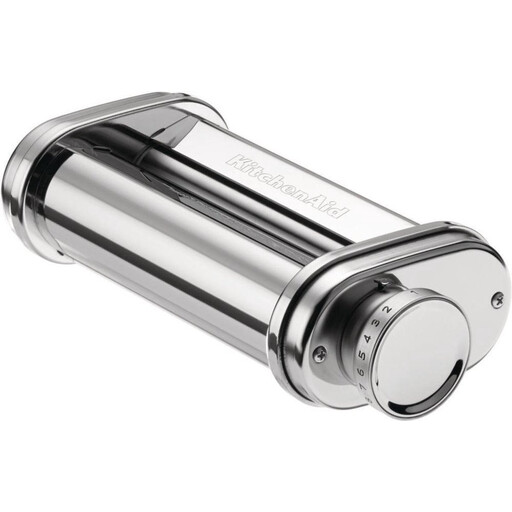
A good choice if you already have a compatible KitchenAid mixer, make your own dough and want to adjust the thickness as you roll it.
KitchenAid lists eight thickness settings; according to the brand, the sheets can be 14 cm wide. The roller doesn’t make the dough itself and requires a mixer to drive it.
No. Philips says the HR2345/19 automatically mixes, kneads and extrudes the dough; the KitchenAid 5KSMPSA rolls dough that you’ve prepared beforehand. Choose according to which steps you want to do yourself.
Measure not only the space for the appliance, but also the room needed to feed in the dough, catch the sheets and set them down. If you’re choosing a roller, include the motor or the stand mixer you’ll need in your measurements.
Only if your compatible older Kenwood mixer has a slot-fit connection: Kenwood specifies adapter KAT001ME for this. Check the connection on your own mixer before buying.
KitchenAid recommends using the brush supplied to remove dried dough, then wiping the roller with a dry cloth. For other models, follow the manufacturer’s care instructions.
The relevant European product safety regulations apply to electrical kitchen appliances. The Dutch government’s business portal states that, after assessment, the manufacturer must affix a CE marking to the appliance; for the exact model, also check the relevant declaration of conformity.