
Ravioli maker who wants to roll out their own sheets
You want to adjust the thickness of your pasta sheets and are considering taking a standalone electric roller with you. Marcato and EMGA describe rollers designed for this purpose.


Choose a machine that is specifically designed to make pasta sheets: Marcato describes the Atlasmotor+ as a standalone motorised roller, while the KitchenAid and Kenwood rollers require a compatible mixer. An automatic pasta maker can take care of mixing and kneading, but check that the exact version includes a suitable sheet-making disc; filling and shaping the ravioli are still separate steps. Also check the power supply, workspace and instructions for use in the holiday cottage.
You want to adjust the thickness of your pasta sheets and are considering taking a standalone electric roller with you. Marcato and EMGA describe rollers designed for this purpose.
You want to check in advance whether the machine, any mixer and the necessary accessories will fit in the holiday cottage. Marcato, KitchenAid and Kenwood describe different setups.
You prioritise convenience when mixing and kneading, but also want to check that your chosen version can make pasta sheets. Philips describes the Pasta Maker 7000 as automatically mixing and kneading, among other functions.
Choose this option if: you want to roll out pasta sheets without taking a separate mixer with you. Marcato describes the Atlasmotor+ as a motorised roller that can be used on a flat surface without a table clamp.
The trade-off: you prepare the dough yourself and will also need tools to fill and shape the ravioli.
Choose this option if: a compatible mixer is already available at your destination. KitchenAid and Kenwood describe rollers powered by a separate mixer.
The trade-off: the attachment won’t work on its own. Check that the connection is compatible and, for certain older Kenwood connections, whether you need adapter KAT001ME.
Choose this option if: you want to do less mixing and kneading yourself. Philips describes the HR2665/96 as having ten shaping discs and lists lasagne as one possible pasta shape.
The trade-off: an extruder works differently from an adjustable roller, so check that the exact version includes a suitable disc for making pasta sheets.
For ravioli, first check that the machine really does make pasta sheets. Then check that the complete setup will fit in the holiday cottage kitchen.
| What to consider | What should you check? | Who is this important for? |
|---|---|---|
| Pasta sheets and thickness | Check whether the version has a roller or a suitable sheet-making disc, and what thickness settings it offers. | If usable, adjustable ravioli sheets are my top priority, I want to check the sheet-making function on the exact model. Around 36% of consumers give this function top priority. |
| Setup in the cottage | Check the available workspace and plug socket, and whether a mixer is provided at your destination. | If space is limited, I want to know whether I can use one appliance or also need to bring a mixer. Around 29% of consumers prioritise having a setup that works as a whole. |
| How much work the dough takes | Compare making and rolling out the dough yourself with automatic mixing and kneading. If you’re considering an extruder, check for a sheet-making disc. | If I want to spend less time mixing and kneading by hand, I also want to be sure I can make pasta sheets. Around 21% of consumers give reducing the work involved in preparing dough top priority. |
| Complete set | Check which drive, adapters and tools are included with the version, and which ones you already have. | If I’m putting together equipment for the holiday cottage, I want to know whether I’ll also need a compatible mixer or shaping tools. Around 14% of consumers first look at the complete set and compatible parts. |
Without the right mixer, a separate roller has no drive, so you won’t be able to roll out pasta sheets in the holiday cottage.
Before buying, check which mixer model is available at your destination and whether the connection is compatible. For certain older Kenwood connections, Kenwood specifies adapter KAT001ME.
An attachment may mean you also need to bring a compatible mixer; some connections also require an adapter.
A roller makes pasta sheets, but that doesn’t mean the machine will also fill them or shape them into ravioli.
Check separately whether the machine makes pasta sheets and what tools you’ll need to fill and shape them.
You may need separate tools for filling and shaping.
The specific version and the connection in the holiday cottage both matter when it comes to using the appliance.
Compare the information on the rating plate and in the instructions with the situation at your destination. According to the NVWA, CE marking is compulsory for electrical consumer products sold in the Netherlands; check the marking on the exact version.
Marcato describes the Atlasmotor+ as a standalone motorised roller for anyone who wants to roll out pasta sheets without using a separate food mixer.
EMGA describes the Pasta Presto as a standalone electric roller.
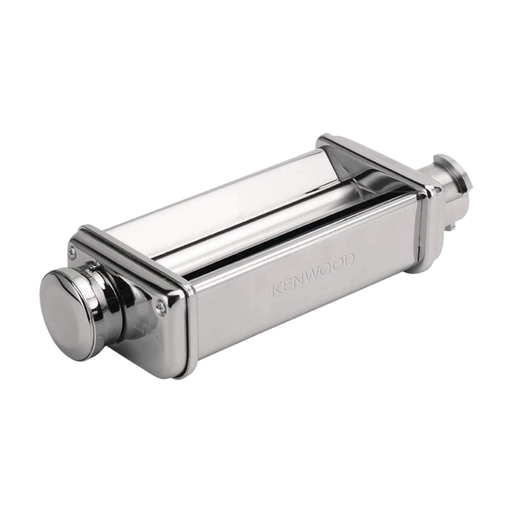
Kenwood describes the KAX980ME as a lasagne roller for use with a compatible Kenwood food mixer.
KitchenAid describes the 5KSMPSA as a pasta roller for use with a KitchenAid mixer.
Philips describes the Pasta Maker 7000 as an automatic option for mixing, kneading and extruding.
Joybuy products associated with electric pasta-making and making pasta sheets. Check that each version has the sheet-making function you need.
 No image available
The product name mentions a dough mixer and food processor with pasta maker; check whether the exact version includes a suitable disc for ravioli sheets.
The product name lists a 4.5 L stainless steel bowl, 1300 W and speed 6+.
Before using it in the Netherlands, check the electrical specifications and CE marking on the exact version.
 No image available
This version could be a good fit if you want to spend less time preparing dough; check whether the box includes a disc for making ravioli sheets.
Joybuy’s product description says that the machine mixes, kneads and extrudes automatically.
 No image available
This attachment could be suitable if you can use a compatible Kenwood food mixer at your destination; it doesn’t have its own drive.
Kenwood describes the KAX980ME as a lasagne roller. For certain older connections, Kenwood specifies adapter KAT001ME.
Before buying, check the connection on your mixer and whether this version will meet your needs for making ravioli sheets.
No. Check whether the version you choose rolls out pasta sheets or includes a suitable disc for making them. A cutting roller for ribbon pasta and tools for filling ravioli are separate parts.
Follow the instructions for your chosen model. For the 5KSMPSA, KitchenAid recommends feeding the dough through on a wide setting first, then gradually rolling it thinner; the brand suggests starting with setting 4 or 5 for ravioli. For this model, KitchenAid recommends using a brush to remove dried dough, followed by a dry cloth.
In the Netherlands, you’re entitled to a product that conforms to the sales agreement. According to the Dutch government, there’s no fixed statutory warranty period; what you can expect from a product depends, among other things, on the product and the information provided at the time of sale. If there’s a fault, contact the seller.
Yes. According to the NVWA, CE marking is compulsory for electrical consumer products sold in the Netherlands. Check the marking on the exact version; the requirement itself doesn’t confirm that a particular item complies.
Check the plug socket, the appliance’s electrical specifications and the instructions. The Dutch Fire Service advises fully unwinding any cable reel in use; this advice doesn’t confirm that a particular machine will work with a specific connection.