
Home cook making ravioli for a special occasion
Wants to roll evenly sized sheets of dough time after time, and adjust the thickness as they prepare them. Ariete and Marcato describe motorised rollers for rolling out dough.


For homemade ravioli sheets, a motorised roller is a straightforward choice if you want to control the thickness yourself. Ariete and Marcato describe standalone rollers, but these do not automatically turn the sheets into filled ravioli. If you already have a suitable KitchenAid mixer, the 5KSMPSA may be all you need for rolling. An automatic pasta machine takes more of the work out of preparing the dough, but check which shapes and accessories are included with each model.
Wants to roll evenly sized sheets of dough time after time, and adjust the thickness as they prepare them. Ariete and Marcato describe motorised rollers for rolling out dough.
Already has a compatible mixer and is looking for a roller to fit it, but also checks whether separate tools are needed to shape the ravioli. KitchenAid describes the 5KSMPSA as a pasta roller for its mixers.
Primarily wants help with mixing and kneading, and checks which pasta shapes the included accessories can actually make with each machine and model. Philips describes automatic preparation and pasta shapes across its range.
Suitable for: anyone who wants to roll out sheets of dough without using an existing mixer for power.
Keep in mind: preparing the dough, filling it and shaping the ravioli are still separate steps. Marcato states that the Pastadrive does not power the Atlas ravioli attachment.
Suitable for: anyone who already has a compatible KitchenAid mixer and mainly wants to roll out sheets of dough.
Keep in mind: without a compatible mixer, the roller is not a standalone machine; separate tools may be needed for filling and shaping.
Suitable for: anyone who wants to automate mixing and kneading, and is happy to check the exact shaping disc and how to use it.
Keep in mind: a shaping disc and an adjustable roller work in different ways; a reference to ravioli across a product range does not mean every model includes the relevant accessory.
| What to consider | What to check before buying | Who is this most important for? |
|---|---|---|
| Ravioli sheets and thickness control | Check whether the model has a smooth, powered dough roller, how many thickness settings it offers and whether a ravioli mould is included. | If I want to fill my own ravioli sheets, I want to be able to control the thickness without mistaking a cutter for pasta strips for a roller; around 36% of consumers give top priority to usable sheets and thickness control. |
| Preparing food for several guests | Find out which step the motor powers and whether the manufacturer specifies a running time; do not take this as a measured number of portions. | When preparing a special meal, I want to be able to make sheets one after another without assuming the motor also kneads the dough or fills the ravioli; around 29% of consumers prioritise being able to keep going when cooking for a group. |
| Existing appliances and storage space | Compare the exact model codes and connections. For older Marcato parts, also check when the machine and motor were made. | If I already have a suitable mixer at home, I want to make use of it rather than store another complete machine; around 21% of consumers prioritise using appliances they already own. |
| Cleaning and extra tools | Check what is included in the box, whether any shaping tools are sold separately, and the cleaning instructions for the model you choose. | After cooking for guests, I want to know how many parts I need to clean and whether I need an extra shaping tool; around 14% of consumers prioritise maintenance and additional tools. |
A smooth roller makes sheets of dough; filling and shaping are separate steps. A reference to a pasta shape does not prove that the required ravioli mould is in the box.
Check what is included with the exact model and whether the shaping attachment you want works with the chosen drive.
You may need a separate shaping tool if you do not want to cut and seal the ravioli by hand.
An automatic press can combine mixing and kneading with pressing the dough, while a roller spreads the dough between rollers. You cannot assume they offer the same shapes or the same control over sheet thickness.
Choose a roller if adjustable sheets of dough are your main priority. For an automatic machine, check which shaping discs are included with each model and how they work.
The KitchenAid 5KSMPSA uses a mixer for power. Marcato also describes generation-specific compatibility between certain Atlas machines and Pastadrive motors.
Compare the full model code and, for older Marcato parts, check the production period against the manufacturer's compatibility information.
The brands below offer different ways to roll out sheets of dough or process pasta dough; features and accessories vary by product range and model.
Ariete presents the Pastamatic 1593/00 as a standalone electric dough roller for rolling out fresh pasta.
According to Marcato, Atlasmotor+ combines an Atlas roller with the included Pastadrive motor.
The 5KSMPSA is a pasta roller attachment for anyone who already has a suitable KitchenAid mixer.
Imperia describes the Electric Imperia iPasta Classic as a standalone motorised roller with a PastaFacile motor.
Across its range, Philips describes automatic preparation and a variety of pasta shapes for its pasta makers.
These Joybuy products range from standalone rollers to mixer attachments and an automatic pasta machine. Check that the accessories included with each model are suitable for making ravioli sheets.
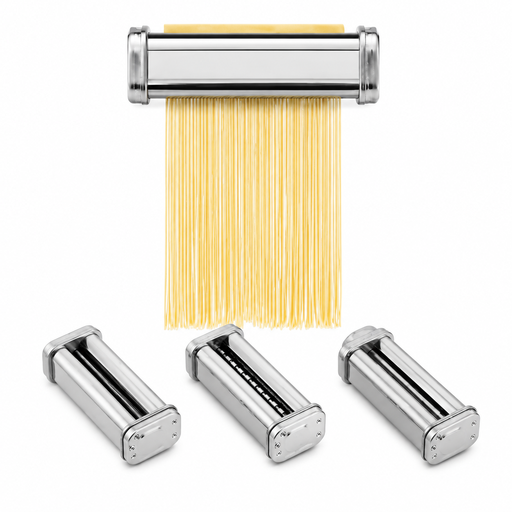 Image unavailable
Suitable if you already have a compatible KitchenAid stand mixer and want to use rollers for different types of pasta.
According to the product description, the set includes rollers for lasagne sheets, fettuccine and spaghetti. Requires a KitchenAid stand mixer.
 Image unavailable
Suitable if you are looking for a standalone electric roller and want to set the dough thickness yourself.
The product information lists seven thickness settings, a 60 W motor and two cutters for pasta strips. The description does not mention a ravioli mould.
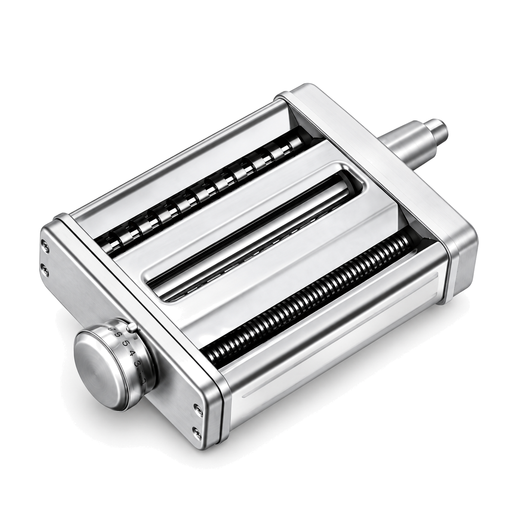 Image unavailable
Suitable if you have a compatible KitchenAid stand mixer and want to use it to make sheets of dough and pasta strips.
According to the product information, the roller has eight thickness settings and the attachment includes cutters for spaghetti and fettuccine. Requires a KitchenAid stand mixer.
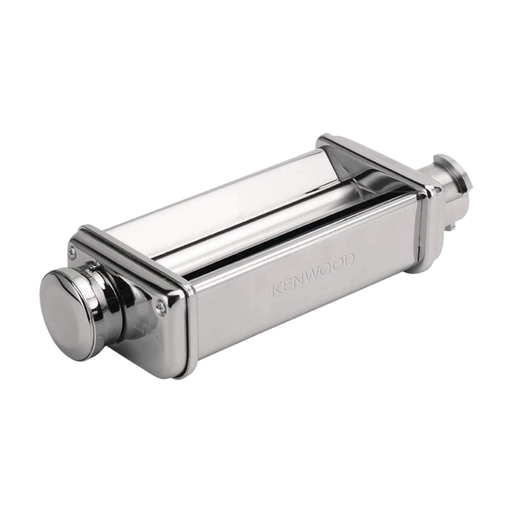 Image unavailable
Suitable if you have a compatible Kenwood stand mixer and want to roll out dough to different thicknesses.
The product information lists nine thickness settings. For older models, the product information says you may need the KAT0001 adapter.
 Image unavailable
Suitable if you want to combine mixing, kneading and pressing in an automatic pasta machine.
The product information lists four types of pasta, as well as automatic and manual programmes. If you want to prepare dough for ravioli, check which shapes are included with this model.
No, the rollers mentioned make sheets of dough first; filling and shaping are separate steps. You can use hand tools or a suitable separate attachment for this. Marcato states that the Pastadrive motor does not power the Atlas ravioli attachment.
No, a mixer attachment needs a compatible mixer to power it. According to KitchenAid, the 5KSMPSA is suitable for its mixers; check the connection and model compatibility before choosing a roller.
For the 5KSMPSA, KitchenAid recommends feeding the dough through on the widest setting first, then adjusting the thickness step by step. For this model, KitchenAid lists a cleaning brush and a dry cloth; follow the instructions for other models.
The NVWA states that CE marking is mandatory for electrical products and lists kitchen appliances as electrical equipment. Check the marking and product information for the actual item being offered; a model name alone does not prove that an individual item complies.
Voedingscentrum advises keeping highly perishable food in a fridge at 4 °C and not leaving it out of the fridge for more than two hours. Apply this to perishable ingredients and filling; how long prepared ravioli can be stored also depends on the ingredients.