
Vandaag of morgen in huis

Kwaliteit gegarandeerd

Welkomstaanbiedingen ontgrendelen: GRATIS bezorging | Tot 80% korting | Gratis 30 dagen JoyPlus-proefperiode
Download de app
An electric oven can be a practical addition to a student room, flat or family kitchen. However, making a quick choice is not always wise. A compact mini oven may seem convenient, for example, but could be too small for a standard oven dish. A spacious freestanding oven may not fit on your worktop. With a built-in oven, just a few millimetres’ difference can cause installation problems.
This buying guide explains what to look out for before you buy an oven. The selection is based on verifiable product specifications, such as capacity, dimensions, features, power and cleaning method.
An oven with lots of programmes sounds appealing, but features you never use add little value. For everyday baking, top and bottom heat are often more important than a long list of automatic programmes. For pizza, bread and several baking trays, a fan oven may be more useful.
Also check exactly what each function means. “Turbo fan”, “3D hot air” and “convection” may be described differently from one model to another. Always check the official specifications rather than relying solely on the marketing name.
A 65-litre oven has more internal space than a 35-litre model, but the external dimensions and interior layout determine whether your baking trays will actually fit. Pay attention to:
A 10-litre oven, such as the Rommelsbacher BG 950, is designed for small portions and baking trays up to 20 cm. That makes it practical for toast, muffins or a small pizza, but not for a family meal.
An oven with a self-cleaning function still requires maintenance. Pyrolysis heats up residue intensely, after which you need to remove the ash. Hydrolytic or steam cleaning loosens dirt with water, but you will usually still need to wipe the interior by hand afterwards. An enamel or non-stick coating can make cleaning easier, but it does not prevent grease and food residue from building up.
A compact oven takes up little space and is suitable for students, single-person households and use as an additional oven. Pay particular attention to the temperature control, timer, door insulation and included baking tray. A grill oven with top and bottom heat may already be suitable for toast, small oven dishes and snacks.
A freestanding oven sits on a stable, heat-resistant worktop and can be moved. Models with a capacity of 35 to 45 litres offer more room for oven dishes and pizzas. An oven with a grill function and fan setting is suitable for baking, roasting and browning. Beforehand, check that the socket and ventilation space are suitable for the stated power rating.
An oven with a capacity of 60 to 70 litres is worth considering for larger meals, batch cooking and preparing several portions at once. According to the product specifications, the 65-litre Wiggo models have six cooking functions, five shelf positions and a power rating of 2000 watts. Do check the external dimensions: 60 cm wide, 49 cm deep and 40 cm high.
A built-in oven is installed in a kitchen cabinet. The standard size is often around 60 cm, but the niche height, width and depth must be checked precisely. The Bosch HBA571BB4, for example, has a niche height of 59.5 cm, a niche width of 56.8 cm and a niche depth of 55 cm.
Also consider the connected load. Built-in ovens rated at around 3,000 to 3,600 watts may have specific installation requirements. If in doubt, have the connection checked in accordance with local electrical regulations.
Use this guide as a starting point:
Capacity alone does not tell you everything. Also compare the dimensions of the included baking tray and the available shelf positions.
A multifunction oven may offer different combinations of:
An oven with fan cooking distributes hot air using a fan. This can be useful when cooking on several levels, but always follow the recommended temperature and cooking time in recipes. An oven with a grill function is suitable for browning dishes and grilling smaller portions.
Compare the energy label for built-in ovens and check the energy consumption per cycle where this information is available. The Bosch HBF133BR0, for example, states 0.98 kWh per cycle in conventional mode and 0.79 kWh in fan-assisted mode. Figures like these are more useful than general claims about energy efficiency.
Also check the cleaning method:
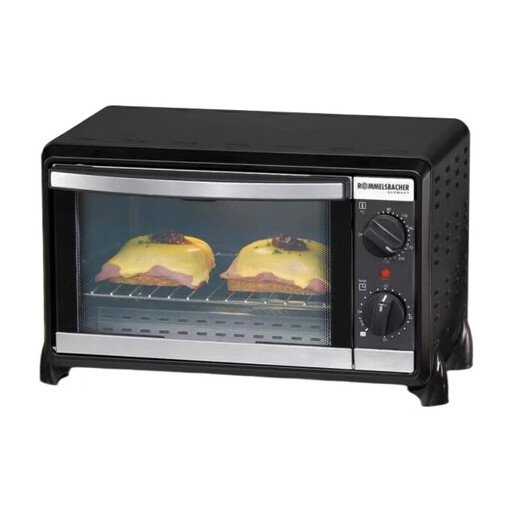
Why it suits this profile: With a 10-litre capacity and compact dimensions, this model is suitable for small portions and limited worktop space.
The stated capacity and maximum baking tray size of 20 cm make it clear what this compact oven is and is not designed for.
Temperature range of 80–230 °C, top and bottom heat, 30-minute timer and a removable crumb tray.
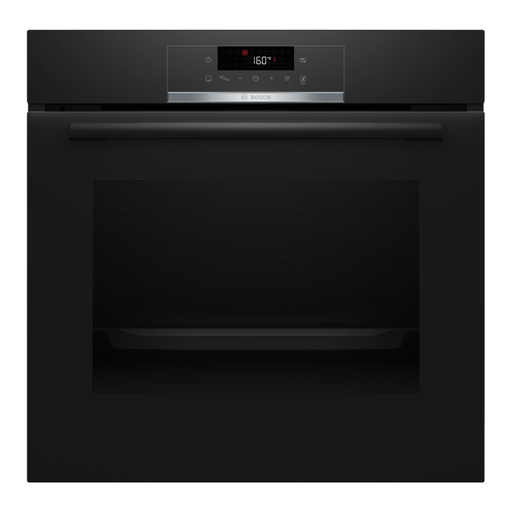
Why it suits this profile: This 71-litre built-in model combines fan cooking, a grill, a partial steam function and a broad temperature range.
The product specifications list both the niche dimensions and the cleaning method, allowing you to check installation and maintenance requirements in advance.
71-litre capacity, Air Fry function, steam function, pyrolytic cleaning and telescopic rails according to the product specifications.
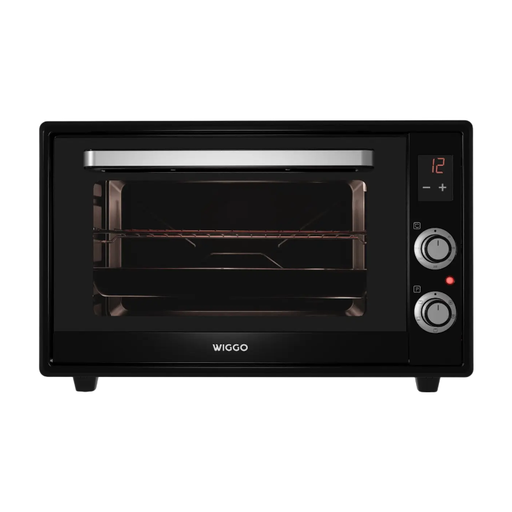
Why it suits this profile: This spacious freestanding oven is designed for large meals, pizzas and multiple portions without requiring permanent built-in installation.
The external dimensions of 60 × 49 × 40 cm and the power rating of 2000 watts mean that you must check the worktop, ventilation and socket in advance.
65-litre capacity, six cooking functions, turbo fan, five shelf positions and an enamelled interior.
We have put together a complete, up-to-date list of products that fully meet these strict selection criteria and the applicable European safety regulations.
For a small family, 35 to 45 litres is often sufficient. If you regularly prepare large oven dishes, pizzas or several dishes at once, consider a model with a capacity of 60 to 72 litres. In addition to capacity, check the dimensions of the baking tray and the available shelf positions.
Consumption depends on the power rating, preheating time, cooking temperature and duration of use. A 2000-watt oven does not use its maximum power continuously because the heating element switches off intermittently. For built-in models, compare the stated consumption per cycle and, where possible, use the oven fully loaded.
Only if the worktop is stable, level and heat-resistant, and the ventilation openings remain unobstructed. Maintain the clearance specified in the manual. Do not place the appliance close to curtains, paper or other flammable materials, and never leave a hot oven unattended.
