
Vandaag of morgen in huis

Kwaliteit gegarandeerd

Welkomstaanbiedingen ontgrendelen: GRATIS bezorging | Tot 80% korting | Gratis 30 dagen JoyPlus-proefperiode
Download de app
An electric nose trimmer may seem like a simple purchase, but not every model is suitable for every use. Some devices are designed only for stray nose and ear hairs, while others also include an eyebrow trimmer, facial trimmer or detail head. Also pay attention to how brands present their features: a high speed does not automatically mean greater comfort, and “waterproof” can refer to different levels of protection.
A waterproof nose trimmer is useful because you can rinse the head under the tap. However, you should check exactly what the manufacturer states. According to the usual IP rating system, an IPX7 rating means that the device can be temporarily immersed in water under certain conditions. This does not automatically mean that prolonged use in the shower is recommended.
Also check whether only the detached trimming head can be rinsed or whether the entire housing is washable. With some models, the motor unit must not get wet.
A 3-in-1 trimmer with heads for the nose, ears, eyebrows and sideburns can be practical. However, extra accessories are only useful if you actually use them. Check:
A simple nose hair trimmer with one good precision head may make more sense for anyone who only wants to tidy unwanted hairs in the nose and ears.
Brands sometimes specify a motor speed of, for example, 6,500, 7,800 or 8,500 rpm. This is a verifiable specification, but it does not give a complete picture of the trimming experience. Rounded blades, the shape of the head and the way you use the device also play a part.
Claims such as “no pulling” or “without irritation” should be treated as statements from the brand’s product description, not as a guaranteed result for every user.
For hygienic use, a detachable and washable trimming head is practical. A fully washable housing makes maintenance easier, but always follow the instructions. Allow components to dry thoroughly after cleaning and fit the dust cap when one is supplied.
If you are looking for a waterproof nose trimmer, check for a stated IP rating, such as IPX7. Also confirm whether the trimmer is intended for both wet and dry use.
A battery-powered nose trimmer often uses one AA battery. This is convenient when travelling: you do not need a charging cable, but you should take a spare battery with you. A rechargeable nose trimmer saves on disposable batteries in the long run and may feature a charging indicator. On the other hand, you need to remember to charge the device in good time.
Do not compare just the stated operating time; also consider the charging time and the type of connection. For many users, a USB-C cable is more convenient than a proprietary charging connector.
A round, rounded head is designed to move carefully along the inside of the nose or around the ears. For eyebrows and facial contours, a narrower precision trimmer is usually more practical. If you also want to tidy sideburns or small areas of facial hair, a model with interchangeable detail heads may be more suitable.
Always use a nose trimmer gently and without applying pressure. Do not insert the head deeply into the nose or ear canal, and stop if you experience pain, redness or any other discomfort.
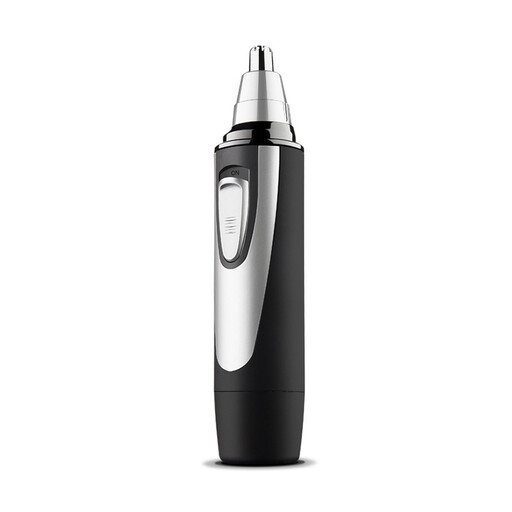
Why it suits this profile: This battery-powered model is designed for nose and ear hair and runs on one AA battery. That makes it a straightforward choice for anyone who wants to get started without a charging cable.
The product description clearly states that it uses one AA battery, has IPX7 water resistance and a detachable trimming head. This makes the power supply and maintenance requirements clear in advance.
Steel blades, IPX7 according to the product information, a cleaning brush and dust cap. The stated operating time is up to 30 days with one use per day.
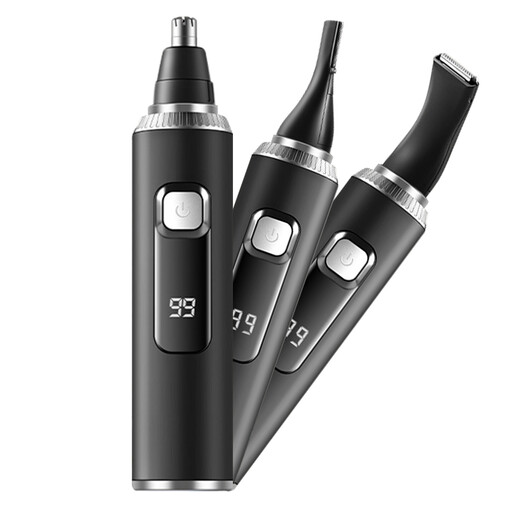
Why it suits this profile: This model combines nose and ear hair trimming with heads for eyebrows and sideburns. The rechargeable design is well suited to regular use at home.
The features are linked to specific components: three heads, a charging indicator, a detachable head and a stated IPX7 rating. This makes its versatility easy to verify.
Type-C charging, a 600 mAh battery, a stated operating time of up to 120 minutes, 8,500 rpm according to the product data and a digital battery indicator.
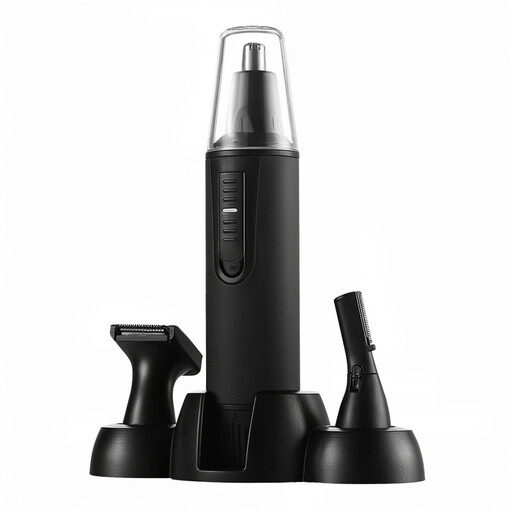
Why it suits this profile: The three interchangeable heads are designed for the nose, eyebrows and sides of the face. The supplied storage stand and dust cap are practical for everyday use and travel.
The product description specifies the function of each head and states that the design is detachable and washable. This means you do not have to rely solely on the term “multifunctional”.
Battery power, LED lighting, 6,500 rpm according to the product data, an IPX7 rating and a stated operating time of up to 120 minutes.
We have put together a complete, up-to-date list of products that fully meet these strict selection criteria and the applicable European safety regulations.
Do not automatically use a facial trimmer or eyebrow head inside the nose or ears. The correct rounded nose and ear head is designed for this purpose.
An electric nose trimmer is generally faster and has a protected cutting head. Scissors require more manual control. With either method, it is important to work carefully. Do not trim too deeply; nose hair also serves a natural filtering function.
This depends on use, cleaning, storage and the quality of the blades. Clean the head after every use, remove any accumulated hairs and store the device in a dry place. With a battery-powered model, removing the battery when you do not use the device for an extended period can help.
With a battery-powered model, you occasionally pay for a new AA battery. A rechargeable model uses electricity and may need a replacement battery over time. So do not look only at the purchase price; also consider the stated charging time, battery capacity and availability of accessories.
