
Livraison le jour même et le lendemain

Qualité garantie

Débloquez vos offres de bienvenue: Livraison GRATUITE | Jusqu'à -80 % | 30 jours d'essai gratuits à JoyPlus
Téléchargez l'application
An electric mobility vehicle can make shopping trips, short journeys and commuting easier. However, the choice is extensive: from an electric bicycle and an electric scooter for adults to an electric mobility scooter, electric three-wheeled scooter or electric four-wheeler.
The biggest purchasing mistakes are usually not caused by the motor, but by unrealistic expectations. A vehicle may appear powerful and portable on paper, yet be too heavy to move in practice, feel insufficiently stable or require additional registration before it can be used on public roads.
A manufacturer may, for example, quote a range of 75, 80 or 100 kilometres. Such figures often depend on specific conditions. For the Touroll Roamer 2 ST, for instance, the maximum range of 100 kilometres is linked to factors including a load of 70 kg, a constant speed of 15 km/h, flat asphalt, mild temperatures and little wind.
In the Netherlands, headwinds, low temperatures, bridges, tyre pressure, luggage and the selected assistance level all affect the actual range. So don’t just compare the claimed distance. Also consider:
A 25 km/h electric vehicle is not automatically an electric bicycle. A type-approved electric scooter or three-wheeler may fall into a vehicle category that requires RDW registration, a number plate, third-party liability insurance and a driving licence.
Before buying, check that the exact version on offer matches the documentation. Pay attention to the vehicle type, maximum construction speed, VIN and Certificate of Conformity, also known as the CoC.
A 3-wheel mobility scooter can be manoeuvrable in confined spaces. A 4-wheel mobility scooter generally provides a wider support base, but may need more room when turning and parking. Seat height, wheelbase, tyres, suspension and weight distribution also affect how a vehicle feels.
Where possible, take a test ride on your own route. A vehicle for flat shopping streets has different requirements from a model intended for cobblestones, slopes and longer recreational journeys.
An electric scooter with a lithium battery is often more practical if you want to charge the battery indoors. Lithium batteries are relatively light, and some models have a removable battery. However, check the voltage, capacity and charger. A 60V 20Ah battery has different specifications from a 36V 15.6Ah battery; chargers are not interchangeable.
Store a lithium battery in a dry place and do not leave it completely discharged for long periods. Its range may decrease in low temperatures. Always follow the manufacturer’s instructions for charging, storage and maintenance.
The stated motor power is not the same as the speed or hill-climbing ability in all conditions. According to the product specifications, the Chunlai models have a 1.0 kW electric motor and a certified maximum construction speed of 25 km/h. The Touroll bicycle has a 250W rated power output, 45 Nm of torque and pedal assistance up to 25 km/h.
A powerful motor does not automatically make a vehicle suitable for every slope. Also consider the total weight, maximum load, tyre type and how the drive system is operated.
For everyday use, easy access, seating position, suspension and turning circle are often more important than additional power. An electric bicycle with a step-through frame is useful if you want to get on and off easily. A folding electric scooter can save space, but check its own weight: “folding” does not always mean easy to carry.
Also measure your storage space, doorway and lift. Check the maximum load, including shopping, bags and other luggage.
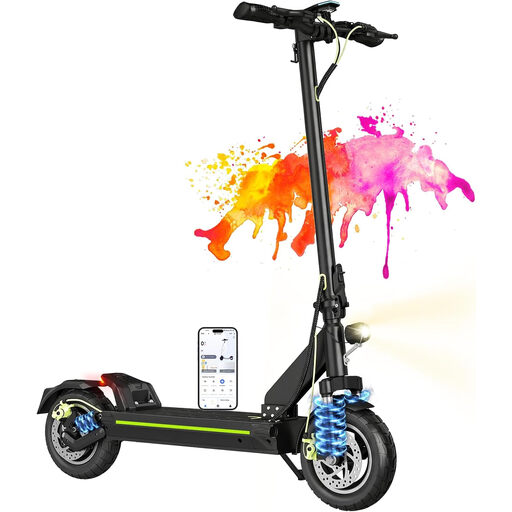
Why it suits this profile: This folding electric scooter is designed for adults looking for a portable solution for short journeys. The product specifications list a 48V 18.2Ah battery, a 500W motor and a stated range of 75–80 km.
The product information warns that use on public roads, cycle paths and pavements may be restricted locally. Check the Dutch regulations first rather than assuming that you can use it freely on the road.
Folding design, dual suspension according to the product listing and relatively powerful drive for short city journeys.
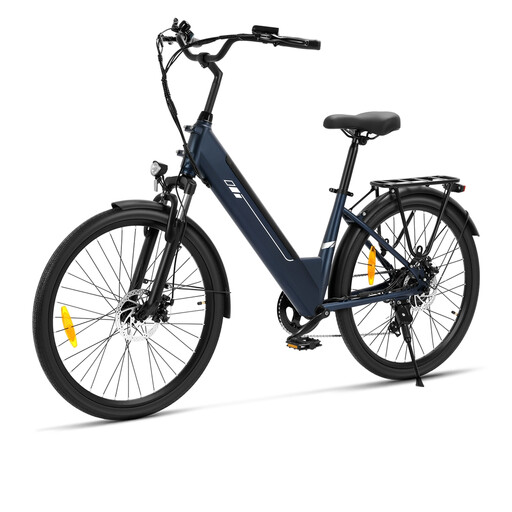
Why it suits this profile: This step-through electric bicycle is ideal for cyclists who value a comfortable riding position, a luggage carrier and a removable battery for everyday use.
The stated range is given together with the test conditions. This makes it clear that the actual range depends on weight, wind, temperature, terrain and assistance level.
36V 15.6Ah removable battery, 250W rated motor power, 7 gears, front and rear brakes, and a maximum load of 120 kg.
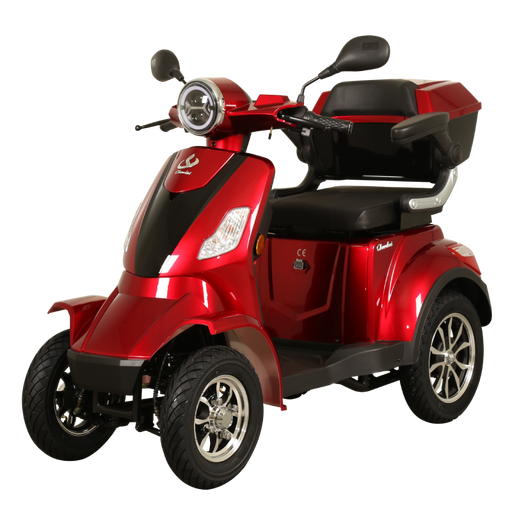
Why it suits this profile: This electric four-wheeler is intended for users looking for a seat, reverse function, suspension and a stable four-wheel platform for short daily journeys.
This version is listed as an EU type-approved L6e-A vehicle. For use on public roads, the CoC, RDW registration, insurance and driving licence are still required.
1.0 kW electric motor, 60V 20Ah lithium battery, reverse function, suspension and a stated maximum construction speed of 25 km/h.
The Chunlai CL-06Z and CL-30ZR-60 are listed as having European type approval. This is useful documentation, but it does not replace Dutch registration. Before your first journey, check the following:
According to the supplied product specifications, the CL-06Z is an L2e-P three-wheeled moped. The CL-30ZR-60 is listed as an L6e-A light quadricycle. The final Dutch classification and requirements must be checked with the RDW and the Dutch government. Do not modify a type-approved vehicle: changes to the motor, controller, lighting, brakes or maximum speed may affect its approval and insurance.
When choosing a mobility scooter or electric bicycle, look for:
A 3-wheel mobility scooter is often suitable for anyone looking for manoeuvrability. A 4-wheel mobility scooter may be the more sensible choice when a wider support base is more important. Don’t choose based solely on price or motor power.
We’ve compiled a complete, up-to-date list of products that fully meet these strict selection criteria and the applicable European safety regulations.
No, it depends on the vehicle category and registration. An ordinary electric bicycle with pedal assistance is subject to different rules from a type-approved electric scooter or three-wheeled moped. For a motorised vehicle, check the RDW classification and the required driving licence category.
This depends on the battery capacity, electricity price and charging losses. You can estimate the cost using: battery capacity in kWh × electricity price. Actual consumption per kilometre varies according to speed, weight, wind, tyre pressure and hills.
Its lifespan depends on charging cycles, temperature, storage and use. Use the original charger, avoid prolonged deep discharge and store the battery according to the instructions. During long-term storage, checking it regularly is preferable to leaving the battery completely empty for months.
