
Vandaag of morgen in huis

Kwaliteit gegarandeerd

Welkomstaanbiedingen ontgrendelen: GRATIS bezorging | Tot 80% korting | Gratis 30 dagen JoyPlus-proefperiode
Download de app
An electric mobility scooter with a top speed of 25 km/h may seem easy to choose at first. However, there are important differences in vehicle classification, stability, battery and registration. A low price means little if the required documents are missing or the vehicle isn’t suitable for the way you want to ride.
These are the main pitfalls for older people, people with limited mobility and carers:
An EU type-approved mobility scooter isn’t the same as a standard, unregistered mobility scooter. According to Chunlai’s product information, the models below fall under Regulation (EU) No 168/2013. The CL-06Z is listed as L2e-P, an electric three-wheeled moped. The CL-30ZR-60 is listed as L6e-A, a light four-wheeled quadricycle.
That doesn’t automatically mean you can ride it on the road straight away. For use in the Netherlands, the version supplied must match the Certificate of Conformity (CoC). Check, among other things:
A mobility scooter intended for public roads must then be registered with the RDW in accordance with the applicable Dutch procedure. A number plate, third-party liability insurance and the correct driving licence may be required. The precise rules depend on the classification shown on the Dutch registration certificate. So, before buying or using one, check the latest information from the RDW and the Dutch government.
A vehicle with a number plate is therefore more than just a marketing term. Check that the seller will supply the correct CoC for the exact version. Don’t use the vehicle on public roads until registration and insurance are in place.
A 3-wheel electric mobility scooter is generally manoeuvrable and can be comfortable at low speeds, for example in a courtyard, a spacious hall or on short journeys that involve lots of turning. Check the turning circle and how you’ll handle corners. A three-wheeler needs to be steered carefully, especially on a slope or uneven ground.
A 4-wheel electric mobility scooter has a wider support base. This may appeal if stability is important to you or you often travel on less even roads. On the other hand, a four-wheeler often needs more space for parking and turning.
Don’t just look at the number of wheels. Also check:
According to the product descriptions, the models listed have suspension, a seat with a backrest and armrests, and a reverse function. These are product specifications you can check; actual comfort depends on your build, the surface you ride on and your personal preference.
According to the product specifications, a mobility scooter with a lithium battery rated at 60V 20Ah has a nominal battery capacity of 1,200 Wh. This helps you compare batteries, but it doesn’t guarantee a particular number of kilometres.
The actual range is affected by factors including:
If you’re considering a 60V 20Ah mobility scooter, check whether the battery is removable. This means you can charge it without parking the entire vehicle next to a socket. Also ask about charging time, battery weight and the availability of a compatible replacement battery.
If you’d like to compare batteries for other uses, you can also browse the 60v 20ah battery range. Always check the voltage, plug type, dimensions and charging technology before ordering a replacement part.
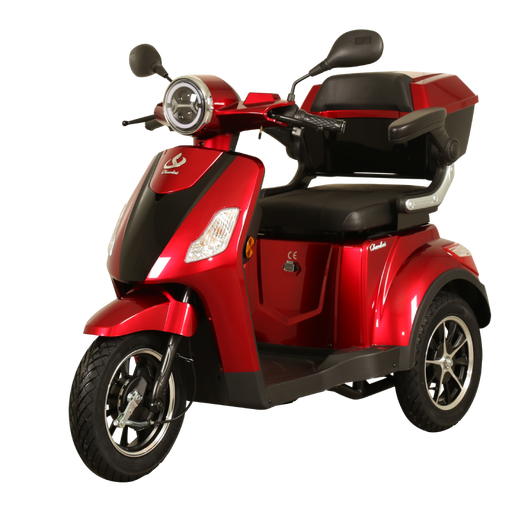
Why it suits this profile: The three-wheel design is intended for short journeys and manoeuvring at low speeds. With a top speed of 25 km/h, a 1,000W motor and a 60V 20Ah lithium battery, its specifications are easy to compare if you’re buying for the first time.
The stated L2e-P type approval, type-approval number and CoC requirement make it clear that you need to check the registration and documents.
Three wheels, reverse function, digital display, suspension and 60V 20Ah lithium battery.
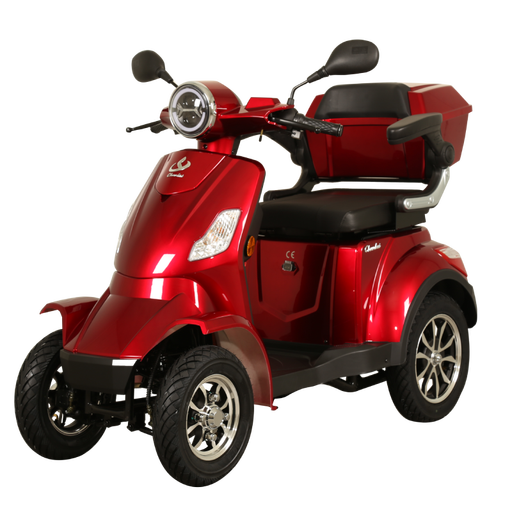
Why it suits this profile: The four-wheel configuration is suited to riders who value a wide support base and a comfortable seating position for everyday short journeys.
The L6e-A classification and its CoC highlight the need to check registration, driving licence requirements and insurance in advance.
Four wheels, suspension, armrests, reverse function and a removable 60V 20Ah lithium battery, according to the product information.
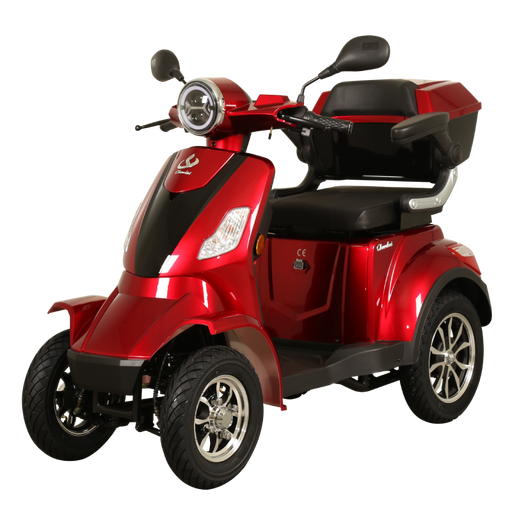
Why it suits this profile: This version is aimed at users looking for a registered electric mobility vehicle for regular short journeys, with a particular focus on stability and ease of use.
A stated maximum speed of 25 km/h doesn’t mean that traffic rules don’t apply. The product information therefore refers to RDW registration, third-party liability insurance and vehicle classification.
1,000W motor, four-wheel chassis, suspension, reverse function and a stated maximum design speed of 25 km/h.
We’ve put together a complete, up-to-date list of products that meet these strict selection criteria and the applicable European safety requirements.
That depends on the vehicle’s official Dutch classification. If a model is registered as a moped or similar vehicle, you may need an AM driving licence. A valid A or B driving licence generally also includes AM entitlement, but always check your own licence and the vehicle registration certificate. Registration, third-party liability insurance and any helmet requirements must also be taken care of before use.
There’s no reliable distance in kilometres without information about factors such as load, temperature, speed and route. The CL-06Z is listed with a 60V 20Ah lithium battery. For the CL-30ZR-60, the product information refers to the specific CoC version for its certified range. So, ask about the range in conditions that reflect your everyday journeys.
Charging costs depend on your electricity tariff and actual energy use. A 60V 20Ah battery has a nominal capacity of around 1,200 Wh, but charging losses and conditions of use affect consumption. You should also budget for insurance, registration, maintenance, tyres and possible battery replacement. Avoid extra costs by not modifying the original type-approved configuration.
