
Vandaag of morgen in huis

Kwaliteit gegarandeerd

Welkomstaanbiedingen ontgrendelen: GRATIS bezorging | Tot 80% korting | Gratis 30 dagen JoyPlus-proefperiode
Download de app
An electric meat slicer can cut bread, cold meats, cheese, vegetables and charcuterie into even slices. It’s handy for home cooks, families and keen cooks who regularly want to prepare several slices at a time. However, an inexpensive electric slicer can sometimes look more suitable on paper than it proves to be in practice.
The difference often comes down to more than just wattage. An unstable casing, awkward slice thickness adjustment or a blade that’s difficult to clean can make a slicer less pleasant to use. Below, you’ll find the key things to check, followed by a selection of products for different needs.
A higher wattage doesn’t automatically mean an appliance is better suited to your kitchen. The drive type, carriage construction and the way the blade is powered also play a part. A motor with gear drive, for example, may be worth considering if you plan to slice several portions in a row.
Also check the recommended operating time. The product information for the Fritel SL 3710, for example, states that it can be used continuously for up to 10 minutes, followed by a 30-minute cooling period. This makes it suitable for controlled slicing sessions, but perhaps less suited to prolonged, continuous use.
A serrated blade is an obvious choice for crusty bread and hard crusts. For fine slices of cold meats, cheese or soft vegetables, a smooth blade may be more practical. Some appliances come with one blade, while other models offer two blade options.
So, check the blade description. According to the product information, the Severin AS 3915 comes with a smooth blade and a serrated blade. The Fritel SL 3710 has a universal blade, while the Fritel SL 3655 uses a serrated stainless steel blade.
A meat slicer has a sharp blade that moves quickly. A food holder or pusher is therefore an essential accessory, especially as a piece of food gets smaller. Also check whether the blade and carriage are removable, and whether the feet provide enough grip.
Use the machine on a flat, dry surface. Set the slice thickness to zero before plugging it in, use the pusher, and always unplug the machine before removing or cleaning the blade.
A range of 0-20 mm gives you more flexibility than a setting of 0-15 mm. Thin slices are useful for carpaccio-style dishes and cold meats, while thicker slices can work well for bread or firm vegetables. Don’t just look at the maximum range; check how the setting is adjusted, too. A continuously adjustable setting is handy if you use a variety of thicknesses.
The blade diameter affects how much room you have to slice larger pieces of bread or meat. The Fritel SL 3710 has a 190 mm blade. The Fritel SL 3655 uses a 170 mm blade. This difference alone doesn’t indicate quality, but it’s a practical point to consider if you’ll be slicing larger items.
A smooth blade is generally designed for fine, even slices of cold meats and cheese. According to product descriptions, a serrated blade may be suitable for bread and firmer charcuterie. If you regularly prepare both types of food, it may be better to choose a model with two blades or check whether an alternative blade is available.
A metal casing or metal stop plate can contribute to a sturdy construction, but always check the full product specifications. Also look out for:
A kitchen slicer often takes up more space than you might expect. Measure your worktop and storage space in advance.
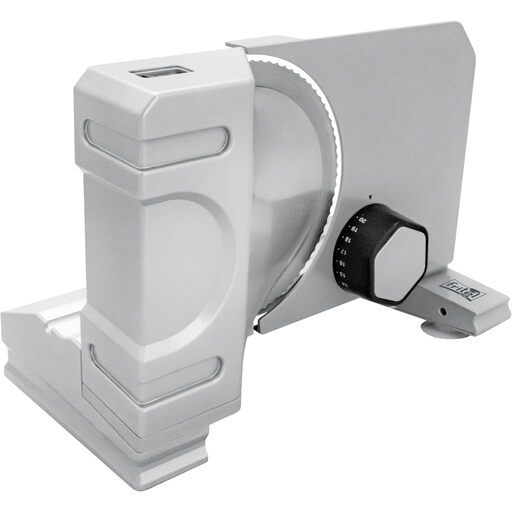
Why it suits this type of user: This model combines a slice thickness of 0-20 mm with a 190mm blade. According to the product information, it’s designed for bread, cheese, charcuterie, vegetables and meat.
The adjustable dial means you’re not restricted to one fixed slice thickness. The included food holder helps you avoid pushing small pieces towards the blade by hand.
0-20 mm slice thickness, 190mm blade, 15° tilted carriage, metal construction and non-slip feet.

Why it suits this type of user: According to the product information, this model has a metal construction, a slice thickness of up to 23 mm, a blade for bread and a smooth blade for cold meats and cheese.
The two blade options reduce the need to use one blade for every type of food. The electronic speed setting offers extra adjustment options, according to the product description.
All-metal construction, 24cm cutting path, collection tray, two blades and slice thickness of up to 23 mm.
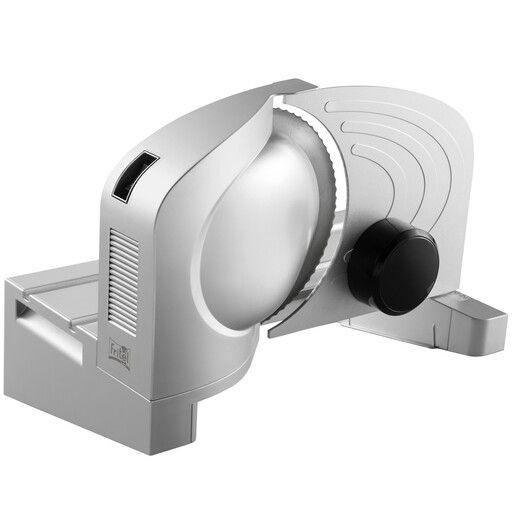
Why it suits this type of user: The metal casing, metal stop plate and gear drive make this a good fit for people who regularly slice bread, cheese, meat and vegetables.
The serrated stainless steel blade is clearly specified for foods such as bread and firm charcuterie. According to the product information, the carriage is removable.
160 watts, 0-20 mm slice thickness, 170mm blade, metal casing and a 15° tilted carriage.
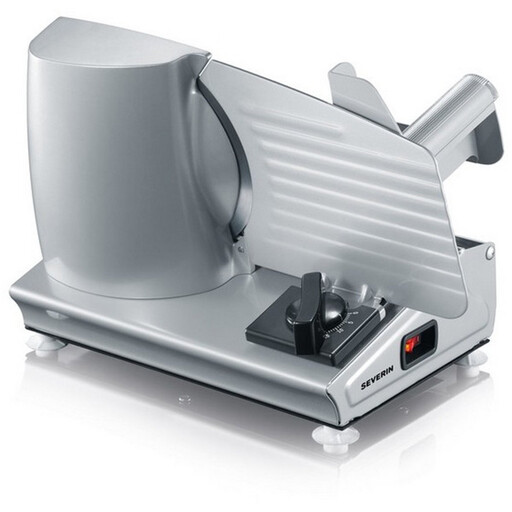
Why it suits this type of user: According to the product information, this model is designed for bread, cheese, cold meats and vegetables, and comes with two blades.
Choosing between a smooth and serrated blade means you don’t have to use the same blade shape for bread and cold meats. Rubber feet help keep the slicer stable.
180 watts, 0-15 mm slice thickness, two blades, stainless steel carriage and a 131 cm cable.
We’ve put together a complete, up-to-date list of products that meet these strict selection criteria and the applicable European safety regulations.
Yes, many models are designed as bread and meat slicers. Just make sure you check the blade. Product descriptions may recommend a serrated blade for bread with a hard crust, while a smooth blade is often suggested for cold meats and cheese. Always use the pusher and follow the instructions for your chosen model.
It varies by model. Many appliances in this selection offer 0-20 mm, while the Severin AS 3915 and some compact models, for example, go up to 15 mm. A wider range is especially useful if you want to make both thin slices of cold meat and thicker slices of bread or vegetables.
Energy use depends on the wattage and how long you use the appliance for. A 150-watt appliance that runs for a short time uses relatively little electricity per slicing session. The total cost of ownership also includes the purchase price, cleaning and any replacement blades. So, check whether parts are removable, along with the warranty and recommended cooling time.
