
Vandaag of morgen in huis

Kwaliteit gegarandeerd

Welkomstaanbiedingen ontgrendelen: GRATIS bezorging | Tot 80% korting | Gratis 30 dagen JoyPlus-proefperiode
Download de app
An electric meat slicer can be useful for cold meats, bread, cheese and certain vegetables. However, not every electric slicer is suitable for everyday use. Some models have a limited slicing thickness, a blade that’s difficult to clean or a plastic body that feels less stable.
If you only look at the wattage or a low price, you could end up buying a machine that disappoints in practice. Before ordering a meat slicer, look out for these common pitfalls.
A higher wattage doesn’t automatically mean a machine will slice better. The drive mechanism, blade and carriage all affect how steadily it works. A 160 W slicer with a metal drive can be more practical in the kitchen than a more heavily advertised model with a basic plastic transmission.
You’ll need a different setting for thin slices of roast beef or cheese than you will for bread. Check whether the thickness can be adjusted continuously or in fixed steps. A range of 0-20 mm gives you plenty of flexibility, but also check that the stop plate is sturdy and won’t shift while you’re slicing.
A smooth blade is often suitable for softer foods, while a serrated stainless steel blade is better suited to crusty bread and firmer cold meats. Check whether the blade can be removed, too. Otherwise, leftover food can be difficult to reach. Always follow the instructions when cleaning, and unplug the machine before removing the blade.
The blade diameter affects which foods you can slice easily. A 17 cm blade is a common size for home use. Stainless steel is a practical choice because it’s easy to maintain, but the blade still needs to be cleaned after use and dried thoroughly.
A serrated blade is particularly useful if you also want to use the machine as a bread slicer. The results may differ from a smooth blade when slicing cold meats very thinly and evenly. So think about what you’ll use it for most, rather than focusing on the material alone.
A metal body and gear drive can help create a stable construction. This may make a model more suitable for regularly slicing bread, cheese and cold meats than a very lightweight machine designed mainly for occasional use.
Check the dimensions, too. A machine measuring around 40 cm long and 30 cm deep will take up noticeable space on a kitchen worktop. Think about where you’ll store it and whether you want to put it away after every use.
A food holder helps keep your hands away from the blade. An on/off switch and the option to choose between momentary and continuous operation give you more control while slicing. Place the machine on a stable, dry surface and guide the food gently towards the blade. Don’t use loose pieces that are too small to hold safely with the food holder.
Legal compliance and the guarantee are important, too. For consumers in the EU, faulty products are covered by the legal guarantee under the applicable consumer protection rules. The Fritel model mentioned here comes with a minimum two-year guarantee, in line with Directive (EU) 2019/771. Keep your proof of purchase and contact the seller if you have a problem.
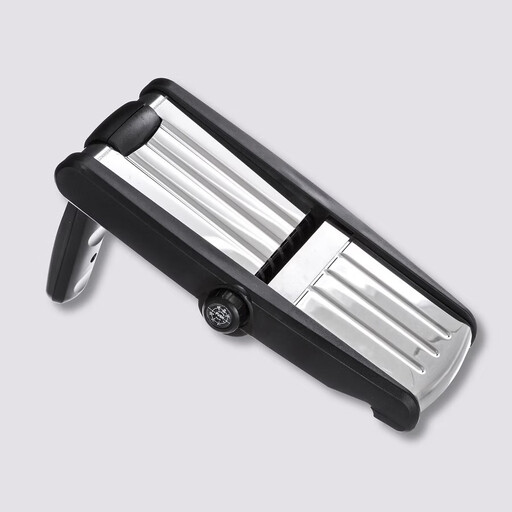
Why it suits this profile: If you only occasionally slice vegetables or simple ingredients and don’t need an electric machine, this is a compact manual option.
There’s no motor or complex drive mechanism to maintain. Please note: this isn’t an electric meat slicer and it doesn’t have an adjustable slicing thickness of 0-20 mm.
Three stainless steel blades, a compact size of 23.5 x 13 x 5 cm and a weight of 360 grams.
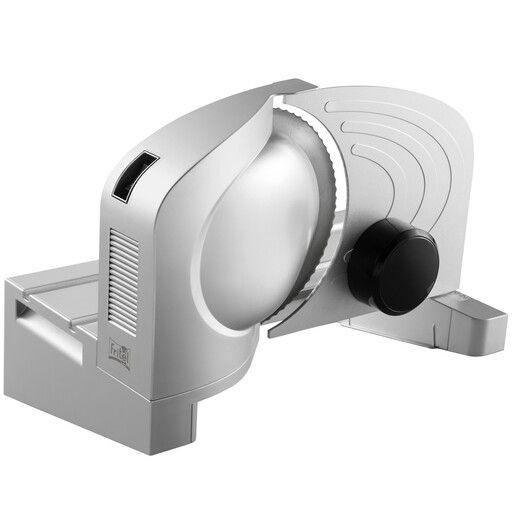
Why it suits this profile: This electric slicer is a good fit for households that regularly slice bread, cold meats, cheese and vegetables to different thicknesses.
The slicing thickness adjusts continuously from 0-20 mm. Its metal body and gear drive are verifiable features suited to regular use.
160 W power, a 17 cm serrated stainless steel blade, a carriage set at a 15° angle and a food holder.
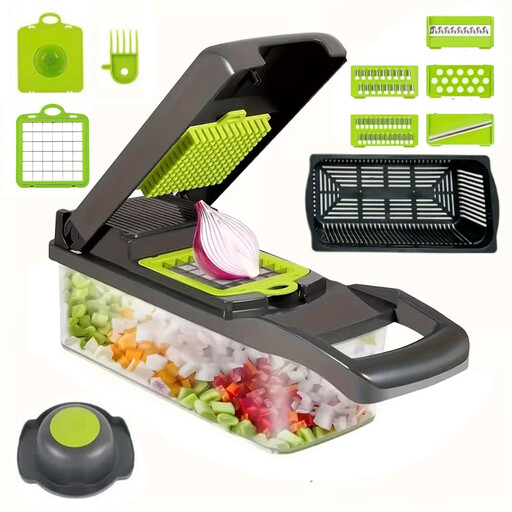
Why it suits this profile: Designed for people who mainly want to slice, grate or shave vegetables, and don’t need an electric meat slicer for every meal.
You choose a tool based on how you’ll actually use it. This model shouldn’t be compared with an electric meat slicer for cold meats or bread.
Multifunctional design for slicing, grating and shaving vegetables; a useful companion to an electric slicer.
We’ve put together a complete, up-to-date list of products that meet these strict selection criteria and the applicable European safety regulations.
That depends on the product specifications and the instructions. A standard domestic slicer is generally designed for thawed or chilled food. Don’t slice hard-frozen products unless the manufacturer specifically allows it. Doing so could put strain on the blade, motor or drive mechanism.
Switch off the machine, unplug it and remove only the parts that the instructions say can be detached. Wipe the body with a slightly damp cloth and clean the blade carefully. Never immerse the motor housing in water. Dry all the parts before putting the machine away.
Actual energy use depends on how long you use it. A 160 W appliance theoretically uses 0.16 kWh during one hour of continuous operation. In a typical kitchen, a slicer is usually only used for short periods, so it uses relatively little electricity per session. As well as the power rating, consider its stability, controls and suitability for the foods you want to slice.
