
Vandaag of morgen in huis

Kwaliteit gegarandeerd

Welkomstaanbiedingen ontgrendelen: GRATIS bezorging | Tot 80% korting | Gratis 30 dagen JoyPlus-proefperiode
Download de app
Making your own burgers, mince, sausages or chopped vegetables can be handy, but an electric meat mincer isn’t automatically right for every kitchen. A compact appliance for the occasional small batch works differently from a powerful mincer for processing several kilos at a time. So don’t focus only on the wattage or the number of accessories.
A product may list a high peak power while its rated power is lower. For example, the Monsga G100 has a motor power of 300 watts and a maximum power of 1200 watts. That maximum figure doesn’t guarantee the appliance can run at that load for an extended period.
So also check:
An electric meat chopper with a lower power rating may be enough for small batches, while frequent users may prefer a robust model with clear operating limits.
A mincer with a sausage stuffer, kibbeh attachment, blender and vegetable chopper sounds versatile. In practice, you’ll need to store, assemble and clean all the parts. Check too that the accessories are compatible with the specific model.
A standalone mincer is often simpler if you mainly want to mince meat. A multifunctional food processor can save space if you also want to knead dough, make sauces or chop vegetables. On the other hand, it may be larger and heavier.
Raw meat can leave residue on the mincing plates, blades and feed tube. Parts that are difficult to take apart can make an appliance impractical for everyday use. Check for:
Never immerse the motor housing in water. Always follow the manufacturer’s instructions.
For a mincer for home use, the amount you process at a time matters more than the maximum wattage alone. A household that occasionally processes 500 grams of meat has different needs from someone making burgers and sausages for a large family.
Check the capacity of the feed tray and collection bowl. According to the product information, the Kenwood PRO MG700 has a power rating of 2000 watts, a 3-litre bowl and a stated processing capacity of 3 kg per minute. The same product information says the appliance should not run continuously for more than 10 minutes and must then be allowed to cool.
Use these specifications as a guide, not as a promise for every preparation. Tough, sinewy or insufficiently chilled meat can put more strain on the motor.
A meat mincer with fine, medium and coarse mincing plates gives you more control over the result. Finely minced meat, for example, works well in a smooth filling, while coarsely minced meat may suit burgers or certain sausage recipes.
Check whether the plates are made of stainless steel and whether the cutting blades can be removed. If you want to process vegetables, fish or hard cheese, check that the manufacturer explicitly approves this use. According to the product information, the plates supplied with the KitchenAid 5KSMMGA are suitable for meat, fish, vegetables and hard cheese, among other ingredients.
An attachment isn’t the same as a standalone electric meat mincer. The KitchenAid 5KSMMGA attaches to the accessory hub of a compatible KitchenAid stand mixer. So check that your mixer is compatible before you buy.
A large machine takes up space on your worktop. Measure its width and depth as well as its height, and check how much clearance you’ll need above it. Also consider the weight: a model weighing over 7 kg is less easy to move around than a compact chopper.
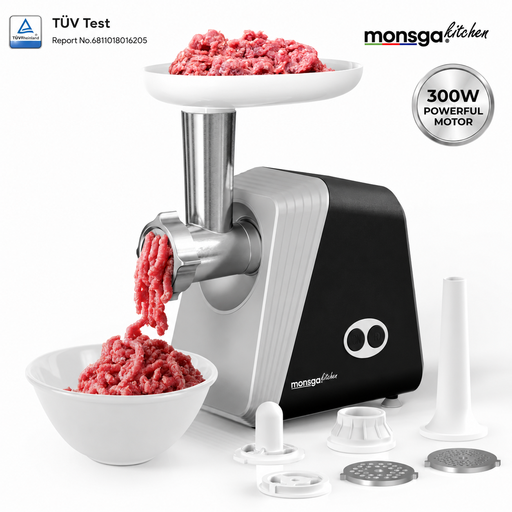
Why it suits this profile: This model is designed for home use and combines three mincing plates with attachments for sausages, kibbeh and biscuits. It’s a good fit for beginners who want to try different preparations without immediately investing in a large food processor.
The product information lists a rated motor power of 300 watts alongside a maximum power of 1200 watts. This makes clear that the two figures are different. The parts must be washed by hand.
Three mincing plates, a reverse function and attachments for sausages and kibbeh; according to the product information, it also has overload and overheat protection.
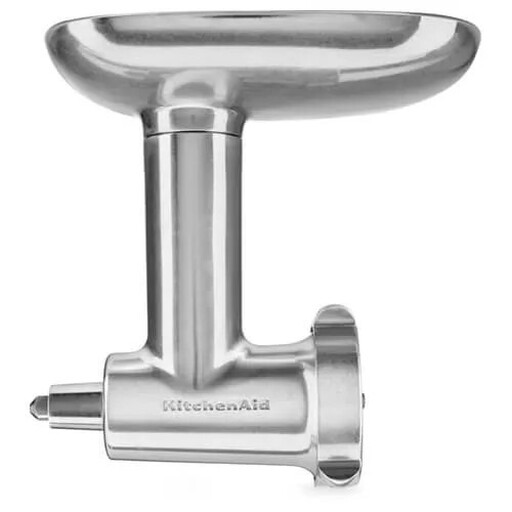
Why it suits this profile: If you own a compatible KitchenAid, this metal attachment lets you process meat, fish, vegetables and hard cheese. It’s particularly appealing if you already have a mixer and don’t want a separate motor base taking up space.
Compatibility is an important part of installation: the attachment is designed for the accessory hub of a compatible stand mixer. Check this in advance rather than assuming it’s universal.
All-metal construction according to the product description, three mincing textures and two sausage-filling tubes.
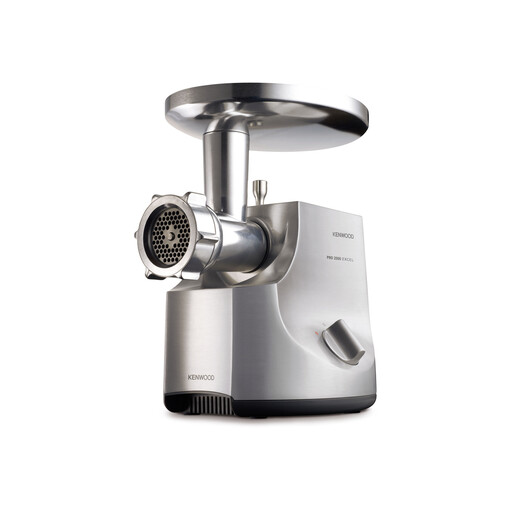
Why it suits this profile: This model is a good fit for households that regularly process larger amounts of meat and need different textures for burgers, mince, sausages or kibbeh.
The product information states a maximum continuous operating time of 10 minutes. This helps prevent high capacity from being mistaken for unlimited use.
2000 watts according to the product specification, three stainless-steel mincing plates and included attachments for sausages and kibbeh.
We’ve put together a full, up-to-date list of products that meet these strict selection criteria and current European safety regulations.
Cut the meat into pieces that fit into the feed opening and remove bones, tough sinew and any other unsuitable parts. Use only the pusher supplied; never put your fingers or kitchen utensils into the opening while the motor is running.
Switch off the machine, unplug it and wait until all moving parts have stopped before removing an attachment. Wash the mincing plates, blades and feeding components according to the manual. Dry metal parts straight away to reduce the risk of moisture damage and discolouration.
That depends on the motor, permitted operating time, quantity per cycle and how easy it is to clean. Above all, check the manual. An appliance designed for household use isn’t automatically suitable for prolonged, professional use.
A compact chopper may be enough for small batches. If you regularly process larger amounts, look for a more robust motor, several mincing plates and clear cooling or rest-period guidance. Always compare the rated power with the maximum peak power.
Energy use depends on the power rating and how long the appliance runs. A 2000-watt appliance running for 5 minutes would theoretically use about 0,167 kWh. In practice, a motor doesn’t always run continuously at maximum power. Use short cycles and don’t process more than the permitted quantity.
