
Vandaag of morgen in huis

Kwaliteit gegarandeerd

Welkomstaanbiedingen ontgrendelen: GRATIS bezorging | Tot 80% korting | Gratis 30 dagen JoyPlus-proefperiode
Download de app
Mincing meat yourself gives you control over the type of meat, the ratio of fat to lean meat and the texture you want. An electric meat grinder can therefore be useful for burgers, meatballs, sausages and kibbeh. However, not every appliance marketed as a “meat grinder” or food processor is suitable for the same tasks.
Pay particular attention to three common pitfalls:
For making mince regularly, you need a motor that feeds raw meat evenly through the mincing head. With a 1200-watt meat mincer, you should check whether 1200 watts refers to maximum or rated power. For example, the Monsga G100 is listed with a motor power of 300 watts and a maximum of 1200 watts. This is useful information, but it does not mean that the appliance can run indefinitely at maximum load.
Higher power can help with larger quantities or firmer meat, but also pay attention to:
An appliance with clear operating instructions is more practical than a model with only a high wattage displayed on the packaging.
A meat grinder for home use is more versatile when you can choose between fine, medium and coarse mincing. Fine mince, for example, works well in sauces and meatballs, while a coarser mince is often suitable for burgers.
Check the diameter, material and how the plates are fitted. Stainless steel is commonly used for blades and grinding plates, but sharp components require careful maintenance. Do not use a blunt blade, hard bones or other items that the instructions do not specify as suitable for the appliance.
If you want to do more than simply mince meat yourself, look for a sausage stuffer, kibbeh attachment and biscuit maker. A meat grinder with accessories saves space when you want to perform several kitchen tasks with one appliance.
A meat mincer with reverse function can help when meat or other permitted food becomes stuck. Only use the reverse function according to the instructions and after switching the appliance off. A stable base, pusher, cord storage and overheating protection are also useful details for everyday use.
An electric meat mincer with grinding plates is designed to feed raw meat through a mincing head. This generally gives you more control over the grind and is better suited to larger quantities of mince or filling sausages.
An electric food chopper uses blades in a bowl. It is often compact and suitable for small portions of meat, onions, herbs, nuts and cooked ingredients. The result depends more on the pulsing time and the amount in the bowl. For making mince occasionally, such an appliance may be sufficient; for burgers, sausages and multiple portions, a proper meat grinder is usually the more sensible choice.
Also consider the bowl capacity. A 500 to 830 ml bowl is mainly suitable for small portions. Models with a capacity of 1 to 2 litres offer more room, but should still be used according to the maximum fill line.
The options below are linked to verifiable product specifications and their intended use. A food chopper is clearly distinguished from a traditional meat grinder here.
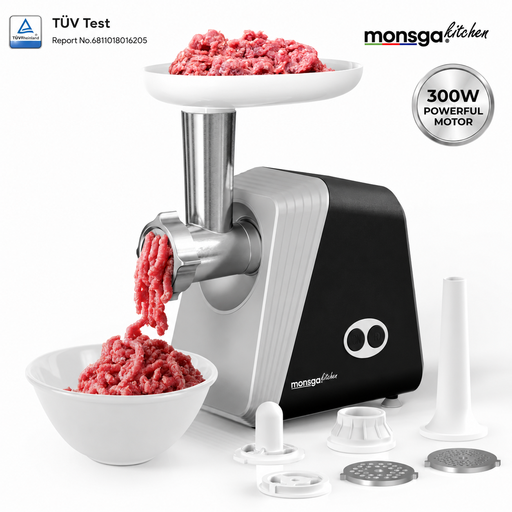
Why it suits this profile: This model combines a stated motor power of 300 watts with a maximum of 1200 watts, three grinding plates and accessories for sausages and kibbeh. This makes it a practical introduction to making mince at home.
The product information lists both rated and maximum power, so you do not have to confuse the two. The supplied fine, medium and coarse plates allow you to adjust the texture.
Three grinding plates, reverse function, cord storage, sausage stuffer and kibbeh accessories.
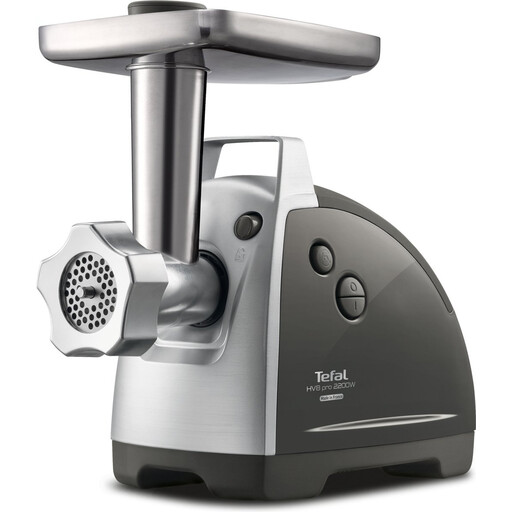
Why it suits this profile: The HV8 is aimed at users looking for multiple functions and a higher processing capacity. The product specification states a maximum power of 2200 watts, three grinding plates and additional slicing and grating accessories.
According to the product description, the reverse function has a safety system that prevents the direction of rotation from being changed accidentally. Before buying, however, check the current instructions and the parts included.
Three texture plates, sausage accessories, cord and accessory storage, and multiple cutting functions.
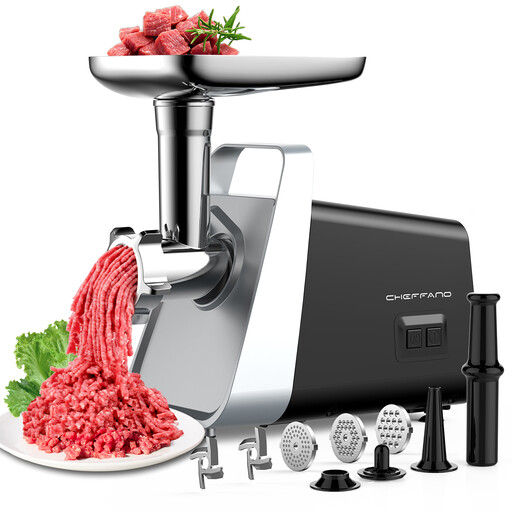
Why it suits this profile: This model is designed for home cooks who want to prepare sausages and kibbeh as well as mince. The product information lists two blades, three grinding plates and three sausage tubes.
The accessories are listed specifically rather than being described simply as “multifunctional”. This allows you to check in advance whether the set suits your recipes.
Three grinding plates for fine, medium and coarse mince, two blades, a sausage stuffer and kibbeh kit.
We have put together a complete, up-to-date list of products that fully meet these strict selection criteria and the applicable European safety regulations.
Clean components that come into contact with raw meat after every use. Dismantle the mincing head, auger, blade, plate, hopper and any sausage or kibbeh attachments. Wash them according to the instructions using warm water and mild washing-up liquid, then dry them thoroughly before storing them.
The motor housing, plug and cord must not be immersed in water. Wipe them with a slightly damp cloth. Take care around the sharp edges of blades and plates. Only use a dishwasher if the manufacturer explicitly states that the parts are dishwasher-safe.
Cut meat into smaller pieces beforehand and remove bones, tough sinews and other parts not intended for use with the appliance. Work in batches and observe the stated resting time. This helps reduce unnecessary strain on the motor. Store accessories in a dry place and regularly check the blade and grinding plates for damage.
That depends on the motor, capacity and specified operating time. For a family, a model with several grinding plates and a sturdy mincing head can be useful. Use the appliance in short batches and always follow the instructions.
There is no single wattage that suits every user. Alongside maximum power, look at rated power, overheating protection and the recommended quantity per batch. High peak power alone does not indicate how much meat you can process continuously.
The electricity cost per use usually depends on the power and the short operating time. More important to the overall cost are the purchase price, the accessories supplied, maintenance and the availability of replacement parts. So do not compare wattage alone; also consider functionality and how often you will use the appliance.
