
Vandaag of morgen in huis

Kwaliteit gegarandeerd

Welkomstaanbiedingen ontgrendelen: GRATIS bezorging | Tot 80% korting | Gratis 30 dagen JoyPlus-proefperiode
Download de app
An electric kitchen grinder can take a lot of work off your hands. You can grind meat for burgers, chop vegetables for soup, process nuts, or grind coffee beans and spices. Yet many appliances look similar, even though they’re designed for different tasks. A coffee grinder isn’t automatically suitable for meat, and a mini chopper won’t replace an electric mincer with a sausage-making attachment.
Most disappointing purchases come down to three common misconceptions:
Read on to find out which specifications matter and which type of food grinder suits different needs.
For small quantities of coffee, pepper or dried herbs, a motor of around 150 to 200 watts is often enough. A blade coffee grinder usually works in short bursts. The longer you grind, the finer the result, but it may become less even.
For vegetables, nuts and meat, the combination of motor power, blade design, grinding plates and maximum operating time is especially important. An electric chopper rated at 300 to 400 watts is suitable for many everyday kitchen tasks, while an electric mincer with a feed screw and metal grinding plates works differently from a mini food processor.
Look out for terms such as “max power”. For example, the Monsga G100 is listed as having 300 watts, with a maximum power of up to 1200 watts. Don’t compare this directly with an appliance that only lists its rated power.
Check the operating time, too. Some models can only run continuously for 30 seconds or one minute. The motor needs time to cool down between cycles. This helps prevent unnecessary strain and follows the appliance’s safety instructions.
Choose a bowl based on what you actually plan to prepare:
A large bowl doesn’t mean you should fill it to the top. Cut large ingredients into smaller pieces first, and process hard ingredients in batches. A glass bowl is easy to check, and according to the Severin KM 3867 product description, it’s less likely to absorb smells and stains than some plastic bowls.
A coffee grinder with an adjustable grind setting gives you more control than a basic model where you simply hold the button for longer or shorter. For example, the Ollygrin BG705 lists 14 grind settings and a dose for 2 to 12 cups. The De’Longhi KG210 has three grind settings according to the product information, while models such as the Cecotec TitanMill 200 don’t have an adjustable grind setting.
Several grinding plates are useful for meat. Fine, medium and coarse plates let you adjust the texture for meatballs, burgers or fillings. A mincer with a sausage-making attachment is a good option if you also want to make sausages or kibbeh. Check in advance that the accessories are included, rather than just shown in a general product image.
Cleaning is another practical factor to consider. Blades and grinding plates are sharp, so remove them carefully. Never put the motor housing in water. Some models have bowls and parts that are dishwasher-safe; check each product, as this doesn’t automatically apply to every part.
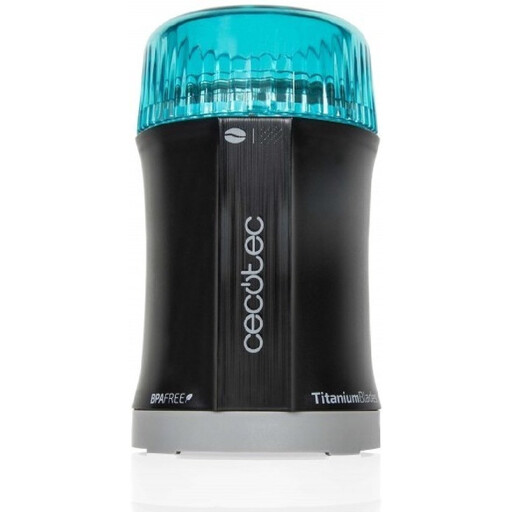
Why it suits this type of user: This compact model is designed for small quantities of coffee and spices. It’s easy to use with short bursts, and has a capacity of 50 grams according to the product specifications.
Its limited capacity makes it clear that this isn’t an all-purpose kitchen chopper. The instructions also specify a maximum continuous operating time of one minute, followed by a cooling break.
200 watts, a 50-gram capacity and a locking lid, according to the product details.
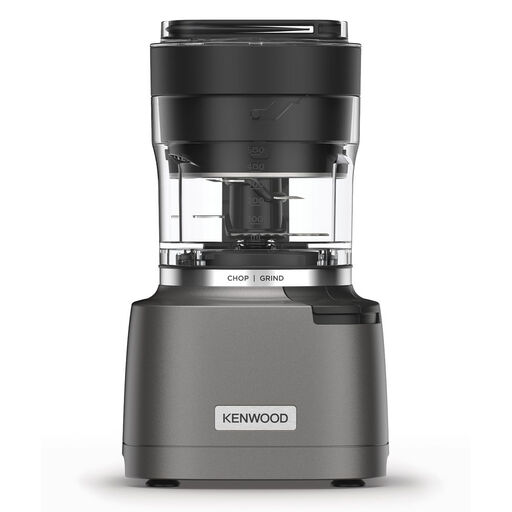
Why it suits this type of user: Ideal if you want one compact appliance for chopping and grinding, without having to keep two separate devices on your worktop.
The functions are kept separate with a chopping bowl and a grinding cup. This makes it clearer which part is intended for coffee, spices or vegetables.
800 watts, two speeds and dishwasher-safe parts according to the product information.
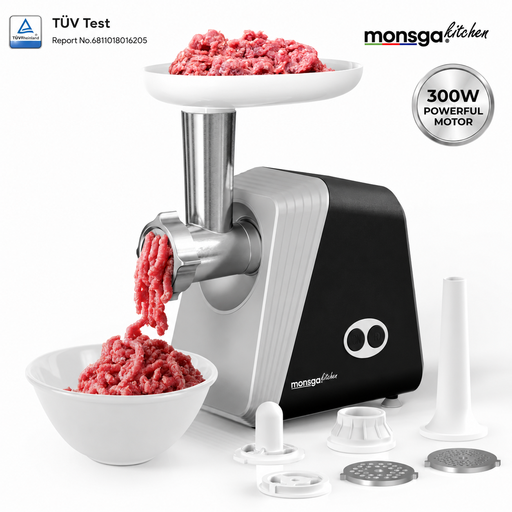
Why it suits this type of user: A sensible choice for home cooks who mainly mince meat and also want to use attachments for making sausages, kibbeh or biscuit dough.
It has a more specialised purpose than a mini food processor. The included items listed are three grinding plates, a sausage-making attachment, a kibbeh attachment and a reverse function.
Rated power of 300 watts, up to 1200 watts according to the product description, and three mince textures.
We’ve put together a complete, up-to-date list of products that meet these strict selection criteria and current European safety requirements.
Only if the manufacturer explicitly says it can and supplies the right accessories. A blade coffee grinder isn’t automatically suitable for raw meat. Smells and residue can also transfer between ingredients. A food processor with a grinder or a 2-in-1 appliance may be more practical, as long as the bowls and blades are clearly intended for those uses.
Lifespan depends on how often you use it, the ingredients you process and how well you maintain it. Work in short bursts, don’t overfill the bowl and follow the recommended cooling time. Wash removable parts after use and wipe the motor housing with a slightly damp cloth only. The product information for several of the appliances mentioned lists a statutory guarantee of at least two years under EU consumer law. This is separate from normal wear and tear or damage caused by incorrect use.
Electricity use per preparation is generally low, as the motor only runs for a short time. The difference in energy costs between 150 and 400 watts depends mainly on how long you use the appliance. Capacity, replacement or included parts, and cleaning time are more important considerations. In practice, an appliance that you use often and can clean easily may offer better value than one with features you rarely need.
