
Vandaag of morgen in huis

Kwaliteit gegarandeerd

Welkomstaanbiedingen ontgrendelen: GRATIS bezorging | Tot 80% korting | Gratis 30 dagen JoyPlus-proefperiode
Download de app
An electric kettle may seem like a simple appliance, but differences in capacity, materials and controls determine how much convenience it delivers every day. For a household, student room or office, the wrong choice can mean unnecessarily long waiting times, heavy limescale build-up or a kettle that is difficult to clean.
As a Joybuy Product Recommendation Officer, I filter product information based on verifiable specifications. Pay particular attention to these three common pitfalls:
Choose the capacity based on your usual needs. A model holding 1.5 to 1.7 litres is well suited to families, shared homes and offices. It allows you to prepare several cups of tea or coffee in succession. For a student room or a single user, 1.25 litres may be sufficient.
Also check the minimum and maximum fill markings. Too little water can activate the boil-dry protection; too much increases the risk of boiling over and splashing. Ideally, boil only the amount you need. This shortens the waiting time and limits unnecessary energy consumption.
A fast kettle often has a power rating of around 2,000 to 3,000 watts. For example, the product description for the Tefal KI240D10 lists 3,000 watts with a 1.7-litre capacity. For a 1.7-litre, 2,200-watt model, Midea states that a full kettle can boil in under five minutes. These are product specifications and manufacturer claims; actual performance depends on the amount of water, its starting temperature and your electrical connection.
A 3,000-watt appliance can place a relatively high load on a circuit shared with other powerful devices. Use the kettle in accordance with the instructions and do not automatically share the socket with appliances such as a microwave or air fryer.
A stainless-steel kettle has a metal housing and is a good choice if you want a robust appearance and an exterior that is easy to wipe clean. Check, however, whether the handle and outer casing may become hot. A double-walled model is designed to make the exterior feel less hot, but steam and boiling water still present a burn hazard.
A temperature-control kettle is practical for users who want to select different temperatures. Midea’s product information, for example, lists six settings from 40 to 100 °C, while other Midea models offer seven settings from 45 to 100 °C. A kettle with a keep-warm function can then maintain the selected temperature for up to one hour, according to the relevant product description.
At a minimum, look for:
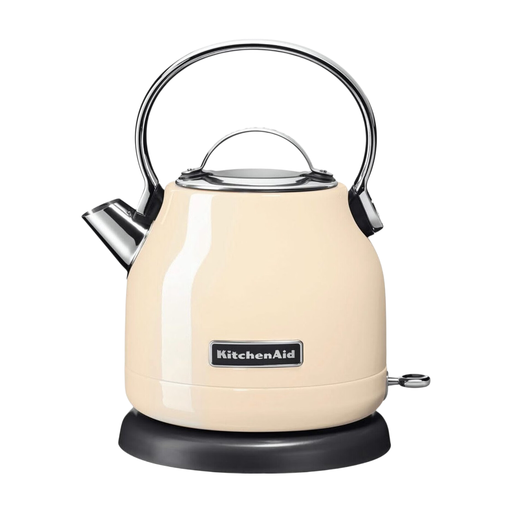
Why it’s a good fit: The 1.25-litre capacity is suitable for a small kitchen, student room or household where only a few cups are usually prepared at a time.
The specifications list automatic switch-off and boil-dry protection. Its capacity helps prevent you from routinely heating more water than necessary.
Stainless-steel housing, 2,000 watts, 360° swivel base and removable limescale filter.
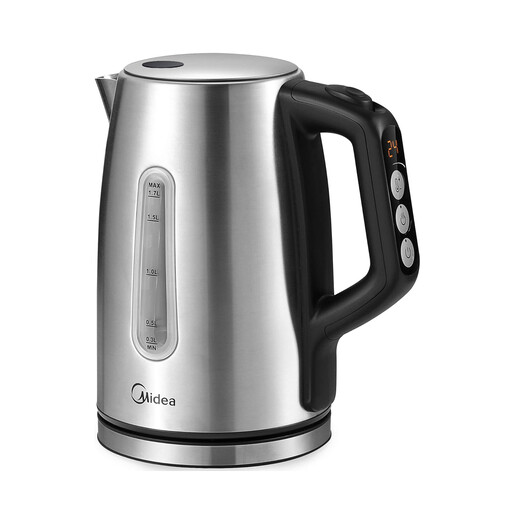
Why it’s a good fit: Six temperature settings from 40 to 100 °C offer greater control for different types of tea, coffee and hot beverages.
You can select the temperature rather than simply boiling the water. The product information also lists automatic switch-off, boil-dry protection and a limescale filter.
1.7-litre capacity, 2,200 watts and a keep-warm function for up to 60 minutes, according to the product description.
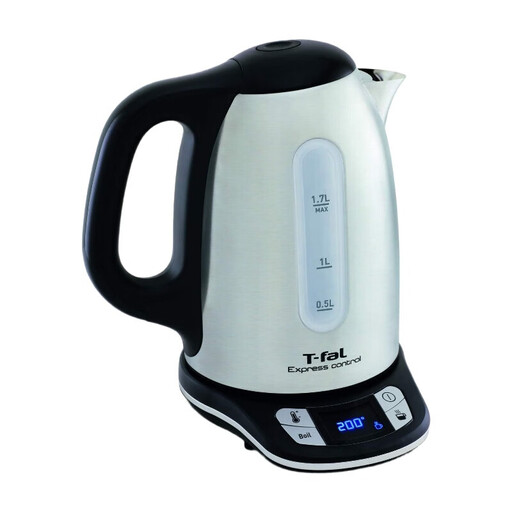
Why it’s a good fit: The generous capacity and stated 3,000-watt output suit multiple users and repeated use throughout the day.
The concealed heater is easier to wipe clean than an exposed element. Automatic switch-off and boil-dry protection are listed among its features.
360° cordless base, water-level indicator, stainless-steel housing and limescale filter.
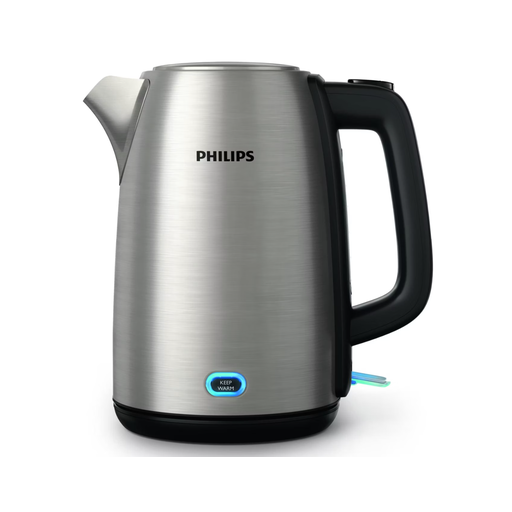
Why it’s a good fit: Convenient for households where several people prepare tea, coffee or instant meals at different times.
The description lists a keep-warm function, a concealed stainless-steel heater and a removable micro-mesh limescale filter.
1.7-litre capacity, food-safe stainless steel, 360° cordless base and integrated cord storage.
Descale the kettle as soon as you notice a visible layer of limescale, a longer boiling time or increased noise. Follow the manufacturer’s instructions and avoid aggressive cleaning agents that could damage the material. Clean the exterior and base with a slightly damp cloth; never immerse the kettle, base or plug in water.
You can calculate energy consumption using this simple formula:
power in watts × usage time in hours ÷ 1,000 = kilowatt-hours
A 2,200-watt kettle running for approximately five minutes theoretically uses around 0.183 kWh per full boil. Actual costs depend on your energy tariff and the amount of water boiled.
Explore a current selection of metal electric kettles with different capacities, power ratings and features for everyday use in the Netherlands.
Often, yes. A 1.7-litre capacity is practical when several people drink tea or coffee one after another. Fill the kettle only with the amount of water needed to avoid unnecessary consumption.
Its lifespan depends on usage, maintenance, limescale build-up and the quality of its components. A removable filter, concealed heating element and regular descaling can make day-to-day maintenance easier. When buying, also check the warranty terms; several of the models mentioned come with the EU statutory minimum warranty of two years.
Not automatically. Its advantage is that you do not always need to heat water to 100 °C when a lower temperature is sufficient. Consumption depends primarily on the amount of water, the selected temperature and how often you use the keep-warm function.
