
Vandaag of morgen in huis

Kwaliteit gegarandeerd

Welkomstaanbiedingen ontgrendelen: GRATIS bezorging | Tot 80% korting | Gratis 30 dagen JoyPlus-proefperiode
Download de app
An electric kettle with temperature control is useful if you make different types of tea, coffee or hot drinks. However, you may end up paying for features you rarely use. A digital kettle can also be bulky, difficult to clean or slower than its product name suggests.
So don’t just look for terms such as ‘fast’, ‘smart’ or ‘safe’. Check the technical specifications, temperature settings and how the keep-warm function works. Read on to find out what to look for and which models suit different needs.
Some models only show the current water temperature. That’s not the same as a kettle with adjustable temperature settings. Check:
A temperature-control kettle with several settings is handy for green tea, black tea, instant coffee and hot water for other uses. The right setting depends on your recipe and personal preference; claims that it will improve flavour aren’t a guaranteed outcome.
A power rating of 1,800 to 3,000 watts can help heat water quickly, but the actual time also depends on the amount of water, its starting temperature and the power supply. So a fast kettle won’t necessarily be as quick when full as it is when boiling water for one cup.
For one or two cups, filling the kettle with a smaller amount is more efficient than heating 1.7 litres every time. Check the minimum fill mark, too. Too little water may trigger the boil-dry protection or put unnecessary strain on the heating element.
A kettle with a keep-warm function maintains the water at or around a selected temperature for a specified period. The duration varies by model: product specifications may list 30, 60 or 120 minutes, for example. This doesn’t mean the water will stay hot all day.
Also consider energy use. If you’re making several cups in quick succession, keeping the water warm can be handy. If you only use the kettle occasionally, reheating the water may be a simple alternative.
A 1.5-litre kettle is suitable for a smaller household, home office or kitchen with limited worktop space. A 1.7-litre kettle is a better fit for families or several people making drinks one after another. Bear in mind that a larger kettle takes up more room and is heavier to pour when full.
Don’t just look at the maximum capacity. Also check for:
A stainless steel kettle often has a metal interior or outer casing. Check which parts actually come into contact with the water. According to product descriptions, the outside of double-walled models often stays cooler than that of single-walled kettles. This can be helpful in a household with children, but hot steam and the lid can still pose a risk.
Glass models make it easy to see the water level, while plastic models are often lighter. Choose based on how easy it is to clean, the weight and the space available. No material can prevent limescale completely, so regular descaling is still necessary, especially in hard-water areas.
A kettle with automatic shut-off should switch off when it reaches the selected temperature or boiling point. Other useful features include:
Use the kettle for water only, unless the manufacturer specifically says otherwise. Unplug it before cleaning, and never immerse the base, plug or cord in water.
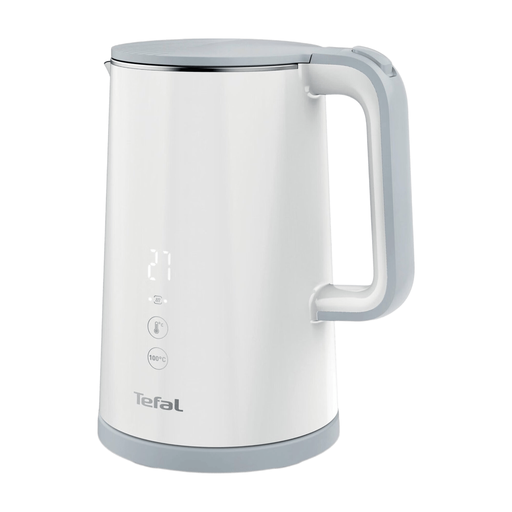
Why it suits this profile: Its 1.5-litre capacity and five temperature settings, from 40 to 100 °C, offer a straightforward starting point without too many extra features.
The display shows the water temperature, and the available settings are clearly specified. According to the product information, the keep-warm function runs for up to 30 minutes.
1.5-litre capacity, touchscreen controls, double-walled casing and automatic shut-off.
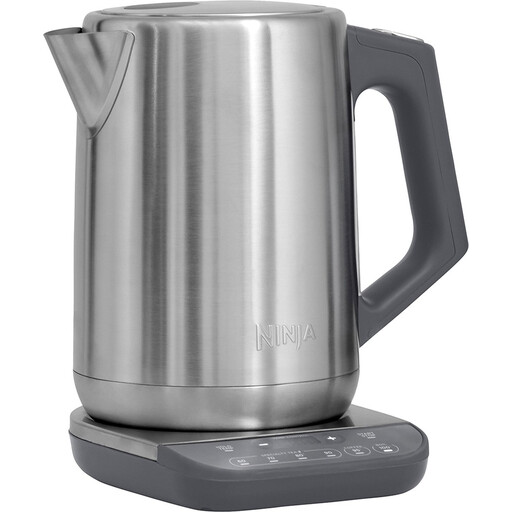
Why it suits this profile: This 1.7-litre digital kettle is a good fit for tea and coffee lovers who want plenty of control over the temperature.
The product description lists six preset temperatures and manual adjustment in 5 °C increments. The keep-warm function is specified for up to 30 minutes.
3,000 watts, live temperature display and adjustable settings from 40 to 100 °C, according to the product details.
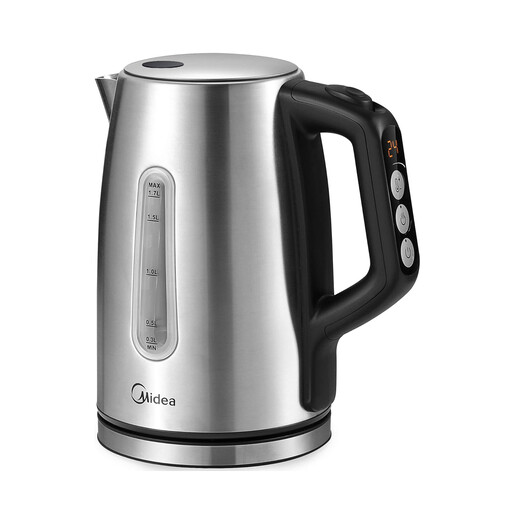
Why it suits this profile: Its generous capacity and longer keep-warm time are handy for families, shared offices or making drinks throughout the day.
The specifications list six temperature settings from 40 to 100 °C, automatic shut-off, boil-dry protection and a keep-warm function for up to 60 minutes.
1.7-litre capacity, 2,200 watts, limescale filter and, according to the product description, a full kettle boils in under five minutes.
We’ve put together a complete, up-to-date list of products that meet these strict selection criteria and current European safety requirements.
It depends on the type of tea and how you prepare it. Models with settings between 40 and 100 °C offer more choice than a standard kettle that only heats water to boiling point. Always check the instructions for your tea or recipe, and use the temperature control as a way to set the heat, not as a guarantee of a particular flavour.
A keep-warm function uses electricity for as long as the appliance is trying to maintain the temperature. The cost depends on the power rating, how long the function runs and your electricity tariff. Use it only if you’ll need the water again soon. For one cup, heating just the amount you need is generally more practical than keeping a full kettle warm.
Its lifespan depends on how often it’s used, limescale build-up, maintenance and the quality of its components. Descale the kettle according to the instructions, don’t leave water in it for long periods, and don’t use it below the minimum fill mark. Consumers in the EU are entitled to a minimum two-year legal guarantee; any additional manufacturer’s guarantee varies by brand and model.
