
Vandaag of morgen in huis

Kwaliteit gegarandeerd

Welkomstaanbiedingen ontgrendelen: GRATIS bezorging | Tot 80% korting | Gratis 30 dagen JoyPlus-proefperiode
Download de app
A kettle seems like a simple purchase, until your model starts leaking after a few months, your tea has a plastic aftertaste, or the appliance consumes an unnecessary amount of electricity. Many marketing claims sound appealing but hide design flaws that only become apparent after you buy. Before you choose a new electric kettle, it's wise to know what to look for.
We've listed the most common pitfalls and provide practical advice, so you can choose a model that suits your needs without overpaying for features you don't require.
Manufacturers often advertise how quickly their kettle boils. A fast-boil kettle is convenient, but its speed depends on the ratio between power (wattage) and capacity (liters). A 2400-watt model will boil water faster than a 1500-watt one, but the difference is often minimal when you fill the entire jug. Using high wattage for just one cup of tea can be an unnecessary energy drain. Therefore, don't just focus on the promised speed, but on a power level that matches the amount of water you typically boil.
A low price is tempting, but it often comes at the expense of material quality. Inexpensive plastic models can impart a chemical taste to the water over time. A stainless steel kettle or a glass kettle is often a better choice, but even here, there are differences. Look for specifications like food-grade stainless steel (type 304) and borosilicate glass. These materials are more durable, easier to clean, and ensure your water's taste remains pure.
Automatic shut-off and boil-dry protection are standard nowadays, but their reliability varies. A poorly designed lid can leak hot steam, and a hot exterior can cause burns, especially in a household with children. Check if the kettle has a cool-touch exterior, stands firmly on its base, and has a securely closing lid.
Before making a choice, it's helpful to understand three core specifications. These determine the performance, durability, and ease of use of your new kettle.
The capacity of a kettle typically ranges from a small kettle of 0.8 liters to large 1.7-liter models.
The material of the housing and interior is crucial for taste and longevity.
Modern kettles offer more than just boiling water.
Based on objective specifications, we have selected a few models that suit different users.

Why This Fits Their Persona: With its compact 1-liter capacity and powerful 2400W rating, this model is ideal for a small kitchen or dorm room. It boils water quickly for one or two people without taking up unnecessary space.
The stainless steel housing prevents a plastic aftertaste. The one-cup indicator helps save energy, debunking the myth of the 'fast but inefficient' kettle.
Capacity: 1 liter. Power: 2400 W. The combination of a compact size and high power makes it highly efficient for small quantities.
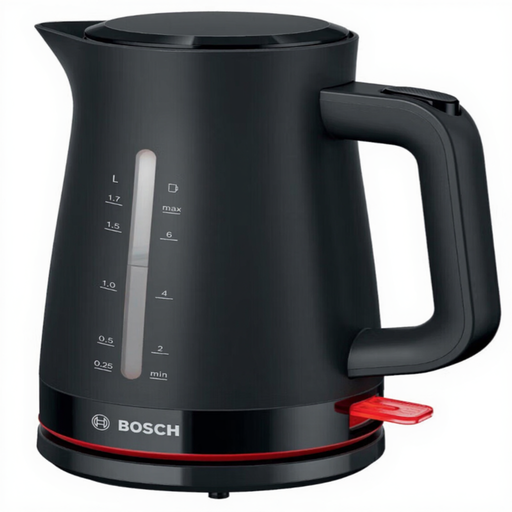
Why This Fits Their Persona: With a 1.7-liter capacity and 2400W power, this model is well-suited for family use. The focus is on ease of use and safety, featuring an ergonomic design and a clear water indicator.
This model addresses the safety pitfall with a triple safety system: automatic shut-off, boil-dry protection, and lift-switch-off. The concealed heating element prevents limescale buildup.
Capacity: 1.7 liters. Power: 2400 W. The water level indicator is suitable for both left- and right-handed users, and the lid opens with the push of a button.
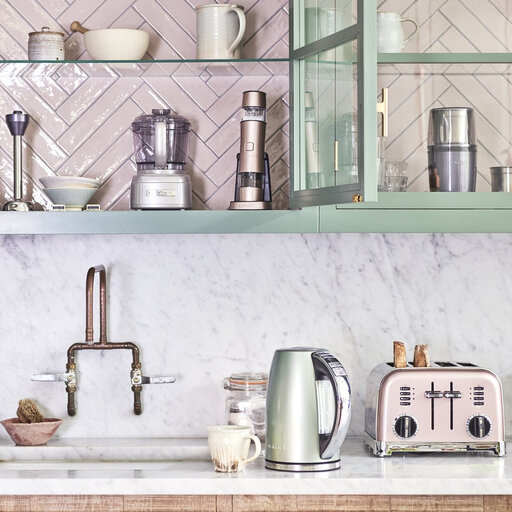
Why This Fits Their Persona: This is a designer kettle for those who want more than just boiling water. The adjustable temperature (from 85°C) is perfect for different types of tea. The stainless steel housing and striking color make it a statement piece in the kitchen.
This model offers genuinely functional extras instead of gimmicks. The temperature control provides tangible value. Its extremely high power of 3000W fully delivers on the 'fast boil' promise.
Capacity: 1.7 liters. Power: 3000 W. The key feature is the kettle with temperature control, combined with a very powerful heating element.
We have compiled a complete, up-to-date list of products that fully meet these strict selection criteria and safety regulations.
The frequency depends on the water hardness in your area. In areas with hard water, it is advisable to descale your kettle every 1 to 2 months. With soft water, once every 3 months is sufficient. Regular descaling extends the lifespan and ensures the appliance remains efficient.
A kettle with a higher wattage (a 'fast' kettle) consumes more power per minute but finishes sooner. A model with a lower wattage takes longer but consumes less power per minute. For boiling the same amount of water, the total energy consumption is nearly identical. You make the biggest difference in consumption yourself: only boil the amount of water you need.
Both materials have pros and cons. A stainless steel kettle is generally more durable, does not impart any taste, and is easy to clean, but the exterior can get hot. A plastic kettle is lighter, often cheaper, and its exterior stays cooler. If you choose plastic, always opt for a BPA-free model. The choice depends on your priorities: durability and taste (stainless steel) or weight and price (plastic).
