
Vandaag of morgen in huis

Kwaliteit gegarandeerd

Welkomstaanbiedingen ontgrendelen: GRATIS bezorging | Tot 80% korting | Gratis 30 dagen JoyPlus-proefperiode
Download de app
An electric kettle may seem like a simple appliance, but the differences between models are noticeable in everyday use. One that is too small can be inconvenient for a family, a glass model requires different care from a stainless steel kettle, and a high wattage does not automatically mean that every quantity of water will boil equally quickly.
If you only consider price or design, you may overlook some common pitfalls. Below, you’ll find out which specifications really matter and which models suit different usage scenarios.
A 3,000-watt model, such as the Morphy Richards Accents Pyramid, has a powerful heating element on paper. However, the actual boiling time and energy consumption also depend on the amount of water, its starting temperature and the temperature selected.
A fast kettle is most practical when you do not boil more water than you need. A water-level indicator can help with this. For one cup of tea, boiling a full kettle is usually unnecessary.
A 1.7-litre kettle is useful for families, guests or making several cups of coffee. However, a larger kettle takes up more space and takes longer to heat its full capacity than a smaller amount of water.
Also check the minimum fill level. A model that only works effectively from a relatively high minimum level may be less suitable for one person. For a small household, 0.8 to 1.5 litres may be more practical.
A kettle with temperature control and a keep-warm function is useful for different types of tea, filter coffee or occasions when you need hot water several times in a row. If you only use your kettle for boiling water, extra buttons, programmes and displays may add unnecessary complexity.
Also check whether a claim comes from the product information. A brand’s own research may, for example, state a particular boiling time, but that result will not automatically be the same in every kitchen or for every quantity of water.
Choose the capacity based on the size of your household:
Check the dimensions of the base and the height of the kettle. A large kettle will not always fit beneath kitchen cupboards or next to other appliances.
A stainless steel kettle often has a sturdy metal interior. However, pay attention to the outside, as it can become hot during boiling. A double-walled model is designed to keep the exterior cooler, but the handle, lid and spout may still become hot.
A glass kettle makes the water level visible and works well in a modern kitchen. Borosilicate glass is mentioned in various product descriptions because of its resistance to temperature changes. However, glass remains breakable and requires care when moving and cleaning the kettle.
With a BPA-free kettle, check the specifications to see which parts are BPA-free and which materials come into contact with the water. The designation does not automatically apply to every part of the appliance.
A kettle with temperature control can be useful for tea and coffee. For example, the Midea models in the selection offer several preset temperatures. The 1.7-litre version has six settings ranging from 40 to 100 °C; the manufacturer also describes a keep-warm function lasting up to 60 minutes.
A kettle with a keep-warm function may use electricity for longer than a model that switches off immediately. Use the function only when you find it practical.
At a minimum, look for:
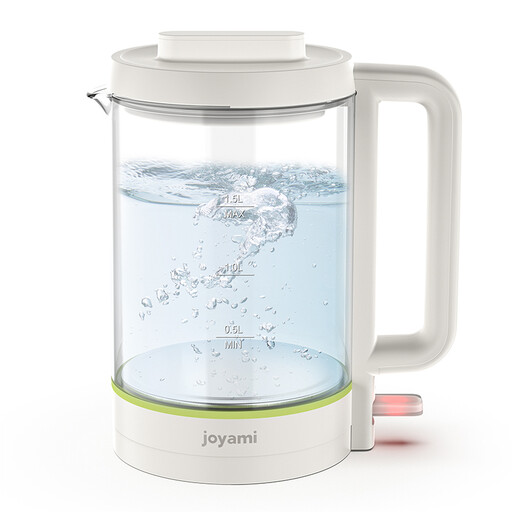
Why it suits this profile: The 1.5-litre capacity is suitable for everyday use in a small household or flat. The glass design makes the water level immediately visible.
The visible water level helps prevent you from heating a full kettle by default. Before buying, check which safety features and filters are included with this model.
1.5-litre capacity, glass jug and stainless steel elements according to the product name.
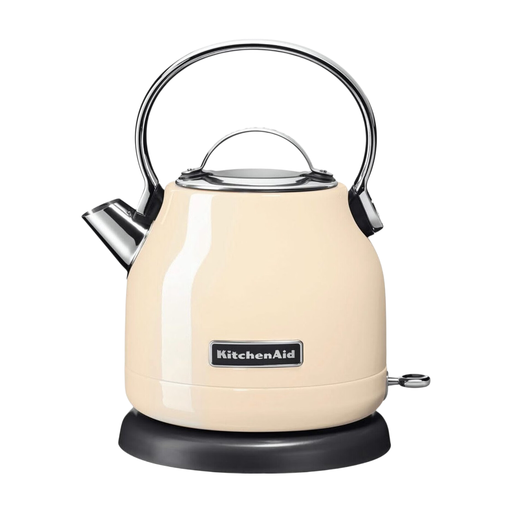
Why it suits this profile: If you value a classic kitchen style and a metal casing, you get a compact 1.25-litre kettle for everyday use.
The specifications list automatic switch-off, boil-dry protection and a removable limescale filter. The capacity is smaller than 1.5 litres, so you are less likely to boil too much water.
2,000 watts, 1.25-litre capacity, 360° rotating base and a minimum two-year legal guarantee according to the product information.
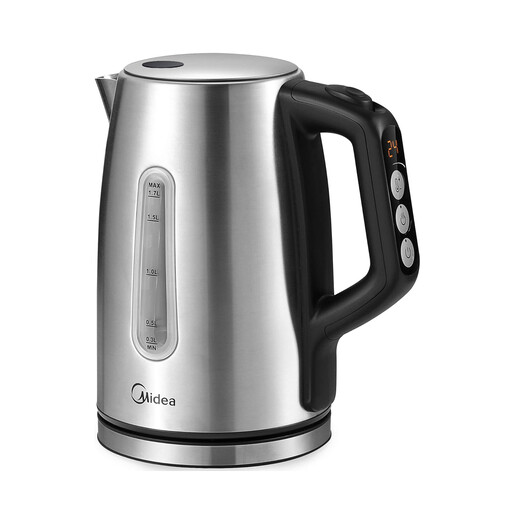
Why it suits this profile: This model is aimed at households that prepare several cups at once and need different temperatures for tea and coffee.
The six temperature settings from 40 to 100 °C reduce the need to heat water by guesswork each time. Automatic switch-off, boil-dry protection and a limescale filter are listed in the product description.
1.7 litres, 2,200 watts, six temperature settings and a keep-warm function lasting up to 60 minutes according to the manufacturer.
Descale the kettle when you notice limescale or when heating noticeably takes longer. A kettle with a limescale filter catches loose limescale particles, but does not prevent limescale from building up inside the appliance. Remove and clean the filter according to the instructions for use.
Always fill the kettle between the MIN and MAX markings. Use the appliance only for clean water unless the manufacturer explicitly states that it has other functions. With a model that has tea or cooking programmes, pay extra attention to cleaning, odours and residue in an infuser.
For lower energy consumption:
For household use, power ratings of around 1,500 to 3,000 watts are common. Higher power can speed up heating, but the amount of water and the selected temperature remain decisive. Also check that the socket and circuit are suitable for simultaneous use with other high-wattage appliances.
Its lifespan depends on how frequently it is used, water hardness, maintenance and the quality of components such as the switch and heating element. Regular descaling and avoiding switching the kettle on when empty helps to reduce unnecessary strain. Keep the manual and check the warranty terms when buying.
It can be, especially if you regularly prepare different types of tea, instant coffee or filter coffee. A tea and coffee kettle with multiple settings gives you more control than a standard model that only heats water to boiling point. If you only need boiling water, a simpler model is often sufficient.
We have put together a complete, up-to-date list of products that fully meet these strict selection criteria and the applicable European safety regulations.
