
Vandaag of morgen in huis

Kwaliteit gegarandeerd

Welkomstaanbiedingen ontgrendelen: GRATIS bezorging | Tot 80% korting | Gratis 30 dagen JoyPlus-proefperiode
Download de app
An electric kettle may seem like a simple purchase, but differences in capacity, material and controls determine how convenient it is to use every day. A 1-litre model can be useful for one person, while families are more likely to choose a 1.7-litre kettle. Tea lovers often look for temperature control, whereas coffee drinkers tend to prioritise speed and precise pouring.
When comparing models, do not focus only on terms such as “rapid boil” or “premium design”. The product specifications reveal more about how the kettle performs in real-world use.
A fast-boiling kettle with 2,200 or 3,000 watts can heat water quickly, but boiling time also depends on the amount of water. If you fill the kettle with 1.5 litres to make one cup, you use more energy and wait longer than necessary. Check that the kettle has a clearly marked minimum level and a water-level indicator.
A 1.7-litre kettle is suitable for several cups of tea, coffee or instant meals. However, a smaller model may take up less workspace and be more efficient in a student room or one-person household. Also check the minimum fill level: some models should not be used with less than 0.5 litres of water.
A kettle with temperature control is useful for different types of tea or hot drinks that are not prepared with boiling water. A keep-warm function is particularly handy when several people drink at different times. If you only boil water for coffee or pasta, a model with automatic shut-off and boil-dry protection may be all you need.
Choose the capacity based on the number of users:
Many models have a power rating of between 1,500 and 3,000 watts. Higher wattage can speed up heating, but it also increases momentary electricity consumption. Only fill the kettle with the amount of water you need.
A glass kettle makes the water level immediately visible. Borosilicate glass is used in several models; according to the relevant product descriptions, this material is designed for use with temperature changes. Check the manual and stop using a glass housing if you notice any cracks or damage.
A stainless-steel kettle is generally less transparent, but can be a sturdy choice. With double-walled models, pay attention to the outside temperature: according to the product specifications for certain models, the double wall helps retain heat and keeps the exterior cooler. This is a product specification, not a guarantee that touching the kettle is always risk-free.
Plastic models are often lightweight. Check whether the manufacturer states that the material is BPA-free, and inspect the interior, lid and spout. These parts all affect how easy the kettle is to clean.
A kettle with automatic shut-off should switch off when the water boils. Boil-dry protection is designed to switch off the heating element when there is too little or no water in the kettle. Do not allow this safety feature to activate repeatedly without good reason.
A kettle with a limescale filter can catch loose limescale particles when you pour. The filter does not remove all limescale from the water. Clean the filter and interior regularly according to the manual. In hard-water areas, you may need to descale the kettle more frequently.
A cordless kettle is usually a jug that lifts away from a 360° base; the base remains connected to the socket. Check the cable length, plug, cable storage and the stability of the base.
The choices below are based on verifiable information from the product details. Claims about speed, materials or ease of use are based on product specifications or, where applicable, the brand’s own information.
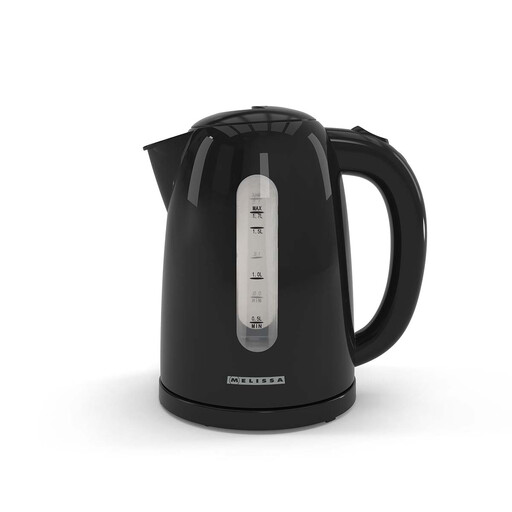
Why it suits this profile: The 1.7-litre capacity is useful for families, shared student houses and everyday use. Operation remains simple, with an on/off switch and indicator light.
The water-level indicator helps prevent you from boiling more water than necessary. The product specifications state that it has automatic shut-off and boil-dry protection.
1.7-litre capacity, 2,200 watts, 360° base, limescale filter and cable storage in the base.

Why it suits this profile: This model is designed for users who prepare tea and coffee at different temperatures and are looking for a compact jug.
You are not paying solely for a rapid-boil function: the integrated temperature display lets you check the selected settings. According to the product information, there are five settings from 40 to 100 °C.
Temperature control, 30-minute keep-warm function, double-walled housing, automatic shut-off and removable limescale filter.
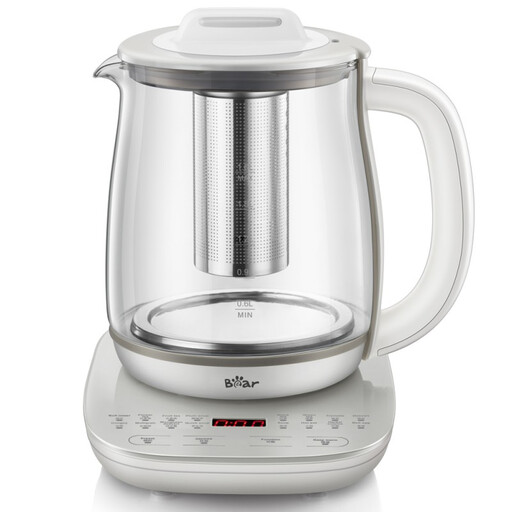
Why it suits this profile: The combination of a 1.8-litre capacity, 16 presets and an adjustable timer suits users who prepare tea, soup and other hot foods as well as boiling water.
The functions are clearly listed in the product information: a rotary dial, 16 programmes and an adjustable timer. Before buying, check that you will genuinely use these options.
1.8-litre capacity, glass housing, stainless-steel interior, tea strainer and 360° base.
We have put together a complete, up-to-date list of products that fully meet these strict selection criteria and the applicable European safety regulations.
Fill the jug with the required amount of water, staying below the MAX mark. Place the appliance on a level surface, close the lid and keep your hands and face away from the steam. Never get the base, plug or cable wet.
You can estimate electricity consumption using:
power in kilowatts × usage time in hours = consumption in kilowatt-hours
A 2,200-watt kettle that heats for approximately four minutes theoretically uses around 0.147 kWh per boil. The actual figure depends on the amount of water, starting temperature and appliance. Boiling only the amount you need therefore remains a simple way to save energy.
This depends on usage, limescale build-up, materials and maintenance. Descale the jug according to the manual, clean the filter and do not use the appliance empty. Also check that information about parts, the warranty and repair options is clearly provided.
Not necessarily. Glass makes the water level visible and can be easy to inspect, but limescale and dirt can build up there too. The design of the lid, opening and filter is at least as important when it comes to ease of cleaning.
Yes, if you regularly use different temperatures. If you only need boiling water, a simpler model will often be sufficient. Pay particular attention to whether the temperature settings are clearly marked and whether a keep-warm function suits your routine.
