
Vandaag of morgen in huis

Kwaliteit gegarandeerd

Welkomstaanbiedingen ontgrendelen: GRATIS bezorging | Tot 80% korting | Gratis 30 dagen JoyPlus-proefperiode
Download de app
An electric kettle may seem like a simple kitchen appliance, but the differences between models can be significant. A low price may be appealing, while an awkward spout, limited capacity or missing safety feature can cause frustration later. You may also end up paying extra for functions you hardly use.
For UK households, the key questions are: how much water do you boil at a time, do you want to set different temperatures, and how easy is the appliance to clean? The points below help you compare models based on verifiable specifications rather than marketing copy.
A fast-boiling kettle with 2.100 or 2.200 watts can heat water quickly, but the actual result also depends on the amount of water. There is no need to boil a full large jug for a single cup. A 1.5-litre kettle is often better suited to a small household, while a 1.7-litre kettle is useful for making several cups of tea or coffee.
Also pay attention to the information provided. A stated boiling time usually applies to a specific amount of water and particular conditions. According to the product description, the Midea heats 1.7 litres of water using 2.200 watts in less than five minutes. This is a product specification, not a guarantee for every usage situation.
With a stainless-steel kettle, it is important to check which parts actually come into contact with the water. A model may have a plastic exterior and a metal inner wall. For a BPA-free kettle, it should also be clearly stated which plastic components are BPA-free and whether they come into contact with the water.
Glass makes the water level easy to see, but a glass kettle requires care when it comes to drops, knocks and cleaning. Borosilicate glass is mentioned in various product descriptions as a material that can withstand temperature changes. Also check that the housing, lid and base remain safely protected from water.
A kettle with temperature control is useful for green tea, coffee or other drinks where you do not always want to use boiling water. However, without a need to choose different temperatures, it is better not to pay for an advanced control panel you will not use.
A kettle with a keep-warm function can be practical when several people are having a drink one after another. However, check how long this function lasts. Some Midea models specify a keep-warm period of up to 60 minutes. A multifunctional kettle with programmes for tea, soup or other preparations is a different type of appliance from a standard kettle. Only use the functions and ingredients permitted by the instructions.
A capacity of 1.5 litres is suitable for around six 250 ml cups. A 1.7-litre model holds approximately seven cups of the same size. Do not automatically fill the jug to the top if you only need one or two cups: using less water generally means a shorter wait and lower energy consumption.
Also check the minimum and maximum markings. An overfilled jug may boil over, while too little water can put strain on the heating element. A water-level indicator on the outside makes measuring easier.
Power is measured in watts. Models of around 1.500 to 2.200 watts are common for household use. Higher wattage can reduce heating time, but always consider the stated capacity and boiling time together.
For tea lovers, a tea kettle with temperature control is worth considering. According to their product specifications, the Midea models in this selection offer six or seven temperature settings respectively. The exact ranges vary by model, for example 40–100 °C or 45–100 °C. This makes it possible to heat water precisely without having to estimate the temperature each time.
At a minimum, look for:
Descale the kettle regularly according to the instructions. Always unplug it before cleaning, and never immerse the base, plug or cable in water.
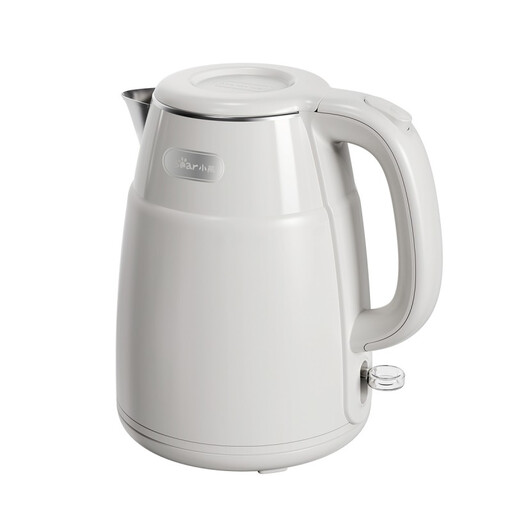
Why it suits this profile: The 1.5-litre capacity is suitable for everyday use without an unnecessarily large jug. One-button operation keeps things simple.
The product specification lists automatic switch-off and boil-dry protection. This means two essential safety features are included, even in a simple model.
1.5-litre capacity, stainless-steel interior, 1.500–1.750 watts and automatic switch-off.
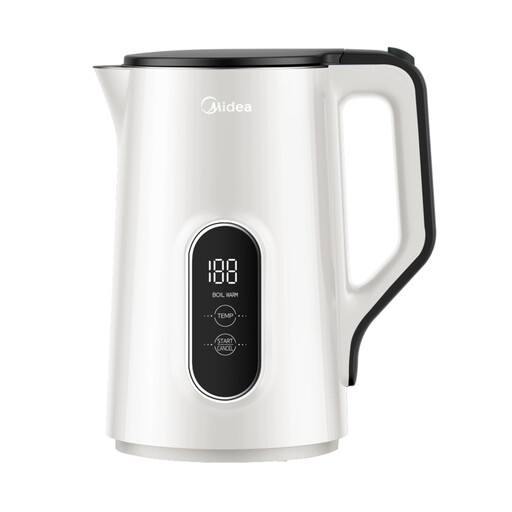
Why it suits this profile: If you regularly make tea or coffee, you get temperature selection, a display and a keep-warm function in one appliance.
According to the product specification, the temperature can be set from 45 to 100 °C across seven settings. This means you do not have to use boiling water for every drink.
2.200 watts, digital temperature display, double-wall construction and keep-warm function for up to 1 hour.
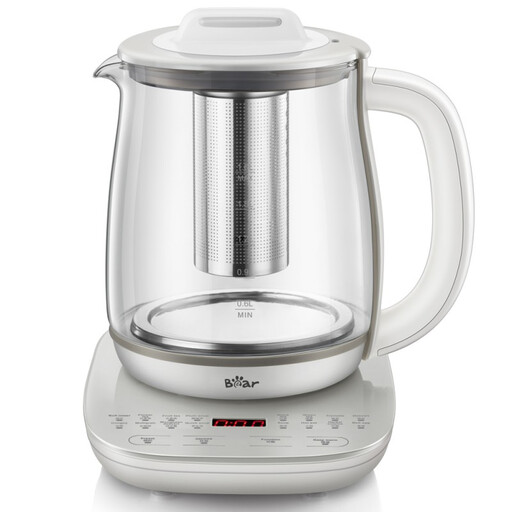
Why it suits this profile: This model is aimed at users who want to use various tea and cooking programmes as well as boiling water.
The functions are clearly specified: 16 programmes, an adjustable timer and a capacity of 1.8 litres. However, check whether you genuinely need these programmes.
1.8-litre capacity, glass housing, stainless-steel interior and 16 preset programmes.
We have put together a complete, up-to-date list of products that fully meet these strict selection criteria and the applicable European safety regulations.
For normal household use, power is often between 1.500 and 2.200 watts. Higher wattage can heat water more quickly, but also consider the amount of water and the stated boiling time. Use a suitable socket and, preferably, do not share it with another high-wattage appliance.
Its lifespan depends on usage, water hardness, maintenance and the quality of its components. Descaling regularly helps to limit limescale build-up. Stop using the kettle if the cable, plug, jug or base is damaged. The statutory guarantee in the EU is separate from the practical lifespan, and your rights may vary depending on the circumstances.
That depends on the amount of water, the wattage and the appliance’s efficiency. Only boil the amount you need and use the water-level indicator. A keep-warm function can be useful, but reheating uses energy again, so switch it off when you do not need it.
