
Vandaag of morgen in huis

Kwaliteit gegarandeerd

Welkomstaanbiedingen ontgrendelen: GRATIS bezorging | Tot 80% korting | Gratis 30 dagen JoyPlus-proefperiode
Download de app
An electric kettle may seem like a simple kitchen appliance, but the differences between models are noticeable in everyday use. Consider how much water you actually need, how long it takes to reach boiling point, limescale build-up and the risk of boiling dry. For a household in the Netherlands, water hardness, daily use and the amount of available worktop space are particularly important.
A fast kettle with a high power rating can heat water quickly, but the actual boiling time also depends on the amount of water and its starting temperature. A 3,000-watt model, for example, is mainly worthwhile if you often boil larger quantities. For a single cup of tea, it can be more economical to fill the kettle with only the amount of water you need.
Always check:
A 1.5-litre kettle is sufficient for many households. A 1.7-litre kettle provides extra capacity for several cups of tea, coffee or instant meals, but it often takes up more space too. A kettle that is too large may also encourage you to boil more water than necessary.
As a guide, choose around 1.25 litres for one or two people, 1.5 litres for everyday family use and 1.7 litres when several people need hot water at the same time. Also consider the appliance’s dimensions and weight, particularly if you have a narrow kitchen worktop.
An electric kettle with a limescale filter catches loose limescale particles as you pour. However, the filter does not prevent limescale from settling on the base or heating element. This can happen more quickly in areas with hard water.
Look for a removable filter and a wide opening. This makes the appliance easier to clean. Always follow the instructions for descaling and use the kettle for water only.
The capacity determines how many cups you can fill each time you boil the kettle. For a 250 ml mug, allow for around six cups with 1.5 litres and almost seven cups with 1.7 litres. Do not automatically fill to the maximum mark if you only need one cup.
Power ratings in the range, for example, from 1,500 to 3,000 watts. Higher power can reduce heating time, but energy use per boiling cycle is mainly determined by the amount of water and the temperature increase. A fast kettle is therefore not necessarily the most economical choice if you keep heating too much water.
A stainless-steel kettle generally has a metal interior or housing. Check the product specifications to see which component is actually made from stainless steel. On some models, only the inner container is stainless steel, while the exterior is plastic.
A glass kettle makes the water level easy to see, while a plastic model is often lighter. If you want to limit contact between the water and plastic, look for a BPA-free kettle. Check whether the BPA-free claim appears on the product page and which components it applies to.
An electric kettle with temperature control is useful if you prepare different types of tea or coffee. Models with multiple settings give you more control than a standard kettle that only heats water to boiling point.
An electric kettle with a keep-warm function can maintain the set temperature for a certain period. This is handy when preparing several cups one after another, but the function does use electricity for longer. Check how long the keep-warm setting lasts and whether you can set the temperature yourself.
An electric kettle with boil-dry protection switches off, according to the product specifications, when there is too little or no water inside. Automatic switch-off after boiling is another important basic feature. Also look for:
A double-walled kettle can make the exterior less hot than a single-walled metal model. The spout, lid and steam remain hot. Keep the appliance out of children’s reach and avoid touching the housing unnecessarily during and immediately after boiling.
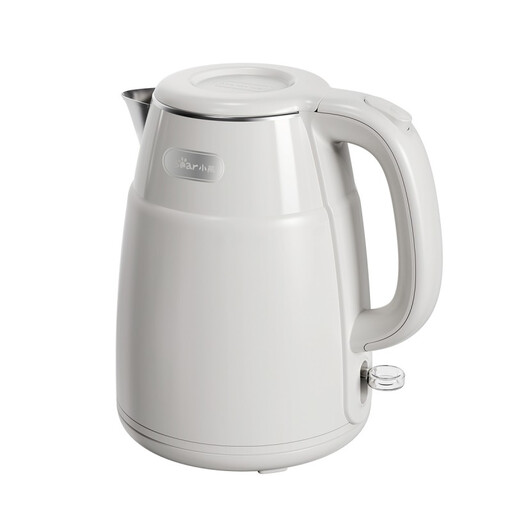
Why it suits this profile: The 1.5-litre capacity is well suited to everyday use in a small household. The controls consist of a single on/off button.
According to the product description, this model has automatic switch-off and boil-dry protection. The water-level indicator helps you avoid boiling more water than necessary.
1.5-litre capacity, 1,500–1,750 watts, stainless-steel interior and cable storage in the base.
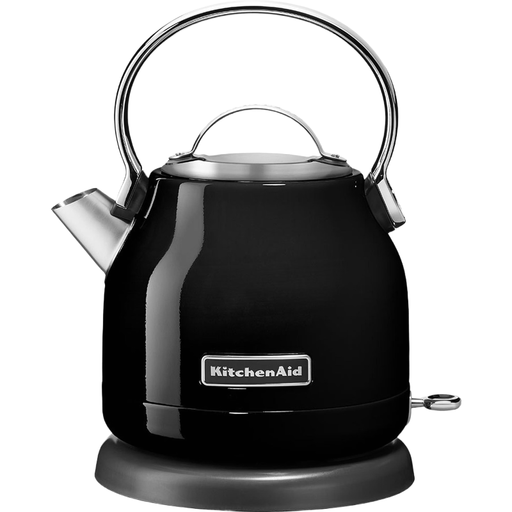
Why it suits this profile: The 1.25-litre capacity and ergonomic handle are ideal for buyers who pay close attention to finish, pouring and compact dimensions.
The product information mentions a 360-degree base, automatic switch-off and a removable lid. This makes filling and positioning possible from different angles.
1.25-litre capacity, 2,200 watts, cordless use via a rotating base and a spout for precise pouring.
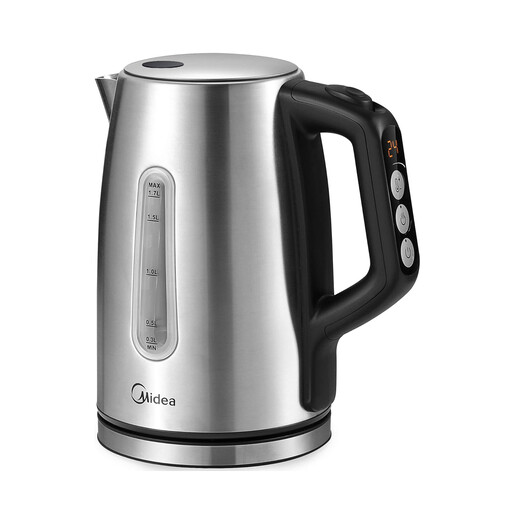
Why it suits this profile: With six temperature settings from 40 to 100 °C and a keep-warm function, this model is designed for tea, coffee and multiple users throughout the day.
The temperature control means you do not have to bring the water fully to the boil for every drink. According to the product description, it also has automatic switch-off, boil-dry protection and a limescale filter.
1.7-litre capacity, 2,200 watts, six temperature settings and up to 60 minutes of keep-warm time.
Do not leave leftover water in the kettle for long periods after use. Do not rinse the appliance under the tap and never immerse the base, plug or cable in water. Clean the limescale filter regularly and descale the interior according to the manufacturer’s instructions.
A cordless kettle usually means that the kettle can be lifted off its power base. Check that the base is stable and that the cable is not hanging over the edge of the worktop. Fill the kettle between the minimum and maximum marks and close the lid before switching it on.
We have put together a complete, up-to-date list of products that fully meet these strict selection criteria and the applicable European safety regulations.
For normal household use, the power rating is often between 1,500 and 3,000 watts. Higher power can reduce heating time, but also check the capacity and only boil the amount you need.
Its lifespan depends on usage, water hardness, cleaning and the quality of its components. Regular descaling, not allowing the kettle to boil dry and handling the lid and base carefully can help prevent unnecessary wear.
Consumption mainly depends on the amount of water and how often you boil it. A full 1.7-litre kettle uses more energy than a single 250 ml cup. A visible water gauge helps you fill it more accurately.
