
Vandaag of morgen in huis

Kwaliteit gegarandeerd

Welkomstaanbiedingen ontgrendelen: GRATIS bezorging | Tot 80% korting | Gratis 30 dagen JoyPlus-proefperiode
Download de app
An electric kettle might seem straightforward, but models vary widely in capacity, controls, materials and safety features. A small kettle can be handy in a student room, whereas a family or office is often better served by a 1.7 litre kettle. Features such as temperature control, keep-warm function and a limescale filter can also affect your daily use.
Pay particular attention to marketing claims that don't always tell the full story. A "fast kettle", for example, doesn't depend solely on wattage. The amount of water, the starting temperature and the heating element all play a part.
A power rating of 2,200 or 3,000 watts sounds impressive, but it doesn't tell you exactly how quickly a full kettle will boil. A 1-litre model has less water to heat than a 1.7 litre kettle. Always check the power rating together with the capacity.
A fast kettle is especially practical if you regularly make several cups of tea, coffee or instant meals. For one person, a smaller model can be more efficient because you're less likely to boil too much water.
A large kettle isn't automatically more convenient. A 1.7 litre kettle takes up more space and can be heavier when full. For a multi-person household, that capacity is certainly useful. Students or home workers who typically make just one or two cups may find 0.8 to 1 litre sufficient.
Also check the MIN and MAX markings. Too little water can trigger the boil-dry protection on some models, while too much water can lead to splashing or hot water coming out of the spout.
A kettle with temperature control is handy for different types of tea, coffee or other drinks where you don't always want boiling water. If you don't need that function, a simpler model can be more affordable and easier to use.
A kettle with a keep-warm function can be practical when several people are using it one after another. Bear in mind that keeping water warm uses more energy than boiling once and switching off.
Use the cup markings when they are present. According to the product information, the Philips 3000 Series models have cup-level indicators, so you don't have to fill the whole kettle every time.
A stainless steel kettle often has a sturdy interior and a neutral look. On models with a plastic exterior, the outside may feel different from the inside. Check which parts actually come into contact with water.
A glass kettle makes the water level clearly visible and may have a clear boiling indicator, such as LED lighting. Glass and metal parts can become hot during and after use. A heat-resistant borosilicate glass body is mentioned on several models, but always follow the manufacturer's safety instructions.
If you want to limit plastic contact with water, look for a BPA-free kettle. This should be stated in the product specifications or description. BPA-free material is mentioned for the Philips HD9318/00, Philips HD9318/20 and Russell Hobbs Purity. That is a product specification, not a medical claim.
At a minimum, look for:
A cordless kettle is not completely wireless: the kettle sits separately on the base, while the base remains connected to the mains. Descale regularly according to the instructions. In hard water areas, limescale can build up more quickly and affect heating.
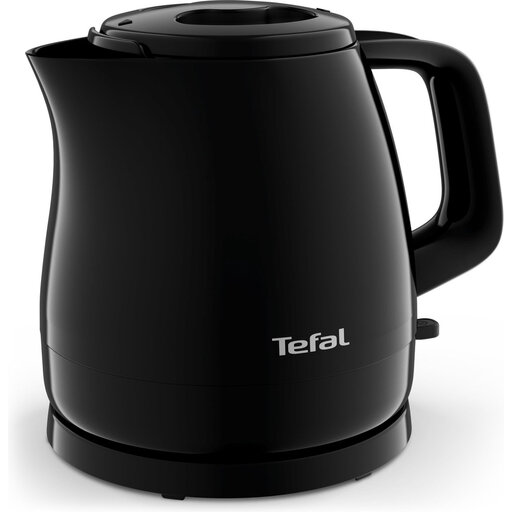
Why this fits the profile: The 0.8 litre capacity suits one or two users and takes up little worktop space.
The water level indicator helps with filling just the right amount. Automatic shut-off and boil-dry protection are present according to the product information.
2,400 watts, 360° base, concealed heating element and removable washable filter.
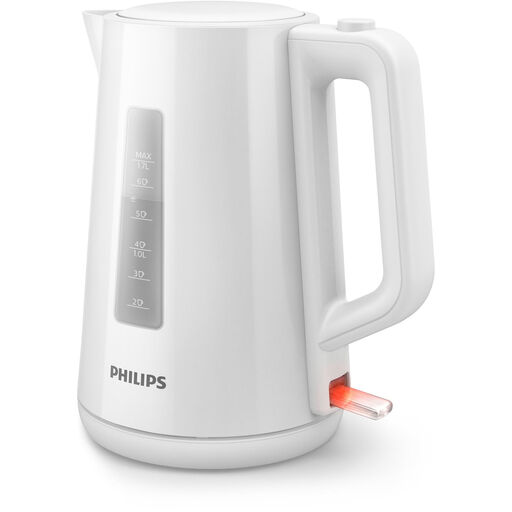
Why this fits the profile: The family capacity, cup markings and wide opening are practical for everyday use.
The flat concealed heating element and removable anti-scale filter focus on easy maintenance. Automatic shut-off and boil-dry protection are listed in the specifications.
1.7 litres, 1,850–2,200 watts, BPA-free plastic body and 360° cordless base.
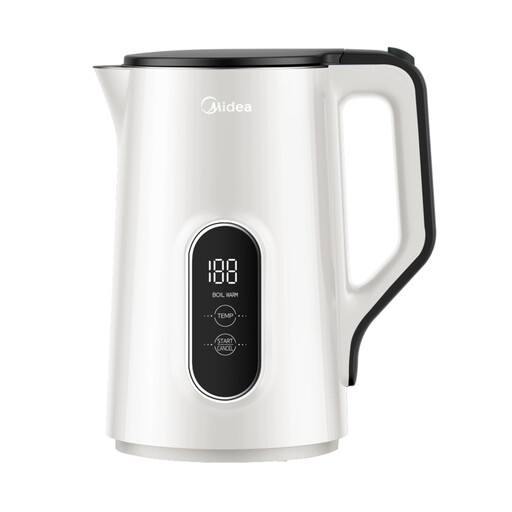
Why this fits the profile: The adjustable temperature and keep-warm function suit tea, coffee and multiple drinking moments during a working day.
You don't have to use boiling water every time: the product description mentions seven settings from 45 to 100 °C and up to one hour of keep-warm.
1.5 litres, 2,200 watts, double wall, digital temperature display and BPA-free parts that, according to the description, do not come into contact with water.
We've put together a full, up-to-date list of products that fully meet these strict selection criteria and comply with current European safety regulations.
For normal household use, the power rating is often around 1,850 to 2,400 watts. A higher wattage can support faster heating, but the actual speed also depends on the amount of water and the heating element. Only boil the amount you need.
The lifespan depends on usage, water hardness, maintenance and the quality of the components. Descale the kettle when you see limescale build-up, clean the filter and don't leave the kettle on keep-warm for unnecessarily long periods. Consult the manual for the recommended cleaning method.
A glass model makes the water level visible, while a stainless steel kettle is often chosen for its metal interior and appearance. With both types, look for a limescale filter, automatic shut-off, boil-dry protection and a well-sealing lid. The right choice depends on your space, how often you use it and your preference for maintenance.
