
Vandaag of morgen in huis

Kwaliteit gegarandeerd

Welkomstaanbiedingen ontgrendelen: GRATIS bezorging | Tot 80% korting | Gratis 30 dagen JoyPlus-proefperiode
Download de app
An electric kettle may seem like a simple purchase, but you’ll notice the differences between models after using them every day. An unclear water-level indicator, a short keep-warm time or an exterior that gets hot can quickly become irritating. Some features can also amount to little more than marketing if the specifications behind them aren’t provided.
So, look out for these three common pitfalls:
A 1.5-litre kettle is suitable for making several cups of tea or coffee and often works well in a smaller kitchen. A 1.7-litre kettle offers more capacity for families or a shared workspace. Also check the maximum power:
You don’t need to fill the kettle to the maximum every time. Cup markings or a clear water-level indicator help you heat only the amount you need.
A kettle with temperature control is useful if you prepare different types of tea or coffee, or hot water for things such as baby formula. Check whether you can choose from preset temperatures or set the temperature freely.
A kettle with a temperature display gives you more control: you can see the current or selected temperature, rather than just an on/off light. Also check the keep-warm function. Some models keep water at the selected temperature for around 30 minutes, while others claim to do so for up to 60 minutes or longer in their product descriptions. A keep-warm function uses electricity for longer, so only use it when you need it.
A stainless steel kettle often has a metal interior or body. Check exactly which parts are made from stainless steel; an exterior made from stainless steel doesn’t necessarily mean that all the parts that come into contact with water are made from the same material.
A BPA-free kettle may appeal if you want to limit contact with certain plastics. Check the specifications to see whether this applies to all parts that come into contact with water. A double-walled kettle can help keep the exterior cooler, but the steam and lid can still get hot.
At a minimum, look for:
In the Netherlands, limescale build-up can affect performance and taste, especially with daily use. A removable filter helps with maintenance, but it doesn’t replace regular descaling.
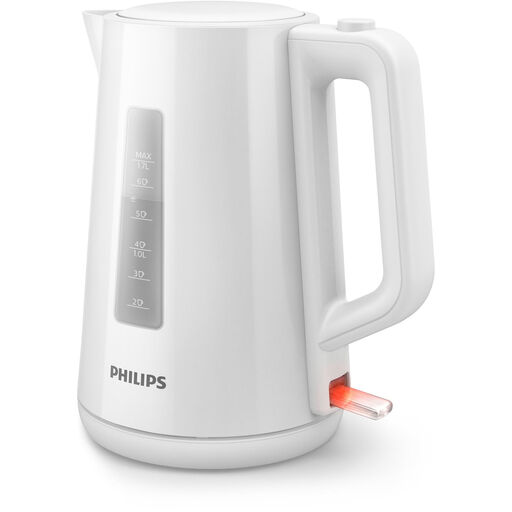
Why it suits this profile: This model offers a generous capacity, simple controls and clear, essential safety features, without temperature programmes you may never use.
The product specifications list a flat, concealed stainless steel heating element, boil-dry protection and automatic shut-off. Cup markings make it easier to fill with just the amount you need.
1.7-litre capacity, 360° base, cord storage, removable limescale filter and a stated power rating of 1,850–2,200 watts.
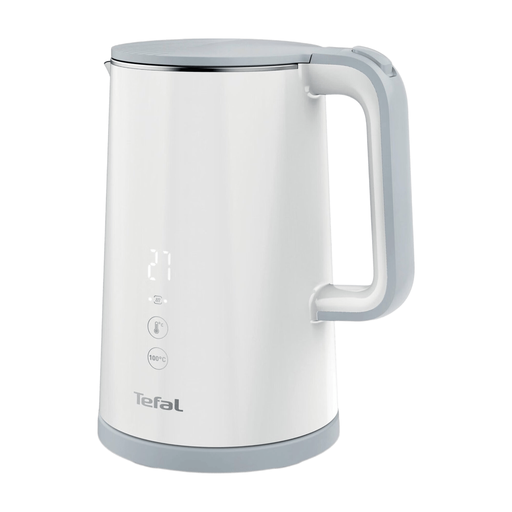
Why it suits this profile: Ideal for tea and coffee drinkers who want to tailor the temperature to their drink and value straightforward controls.
The product information lists five temperature settings, from 40 to 100 °C, and a display that shows the water temperature. This makes the “temperature control” feature easy to verify.
Double-walled body, keep-warm function for up to 30 minutes according to the product description, automatic shut-off and 1,800 watts of power.
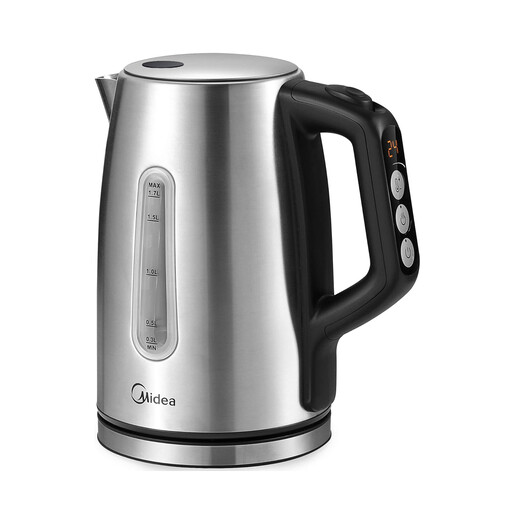
Why it suits this profile: Its generous capacity and choice of temperatures make it a good fit for families, home offices and anyone who makes hot drinks throughout the day.
According to the product information, it has settings of 40, 60, 70, 80, 90 and 100 °C, plus a keep-warm function for up to 60 minutes. That gives you more temperature options than boiling alone.
2,200 watts, double-walled design, BPA-free parts according to the product description, boil-dry protection and an integrated limescale filter.

Why it suits this profile: A generous capacity and fast heating are useful when several people are making tea, coffee or instant meals one after another.
The specifications list a water-level indicator with markings on both sides and automatic shut-off. This makes filling and everyday use easier to manage.
2,400 watts, 1.7-litre capacity, 360° base, cordless operation and a stainless steel and plastic body according to the product details.
We’ve put together a complete, up-to-date list of products that meet these strict selection criteria and the relevant European safety requirements.
For everyday use, a power rating of around 1,800 to 2,400 watts is a good choice. Higher wattage may speed up the time it takes to boil a full kettle, but the actual result also depends on the amount of water, the heating element and the temperature of the tap water.
Not necessarily. Its advantage is that you don’t have to heat water to 100 °C when you don’t need to. This can be useful for certain teas and hot drinks, but energy use depends mainly on the amount of water and how long you use the keep-warm function.
Its lifespan depends on how often you use it, limescale build-up, cleaning and the quality of its components. Descaling it regularly according to the instructions, not letting it boil dry and keeping the base dry all help you look after the appliance. When buying, also check the warranty and information about spare parts or repairs.
