
Vandaag of morgen in huis

Kwaliteit gegarandeerd

Welkomstaanbiedingen ontgrendelen: GRATIS bezorging | Tot 80% korting | Gratis 30 dagen JoyPlus-proefperiode
Download de app
A kettle may seem like a simple appliance, but the differences in ease of use, capacity and safety are significant. A model with a high wattage isn’t automatically right for your household. Features such as temperature control or keep-warm function are only useful if they suit your daily routine.
Pay particular attention to three common pitfalls:
A 1.7-litre kettle is suitable for several cups of tea, coffee or hot water for the household. With a 1.7-litre capacity and a cup size of 250 ml, that’s roughly seven cups. A 1.5-litre model is often enough for a smaller household or an office.
Power is measured in watts. Models around 2,100 to 2,200 W are typically marketed as fast kettles. According to product information from various brands, a full 1.5 to 1.7 litres can be heated in just a few minutes. The exact time depends on the amount of water and the temperature of the tap water. A lower wattage may be fine for a small capacity, but it usually takes longer with a full kettle.
Also check that the kettle is compatible with the UK mains supply: the product information should state a voltage of 220–240 V and a frequency of 50–60 Hz.
A kettle with temperature control is ideal for green tea, coffee, baby formula or other drinks where boiling water isn’t always needed. Look at the number of preset levels and the range. The Midea models in this selection, for example, offer settings from 40 or 45 to 100 °C, depending on the model.
A kettle with a keep-warm function can maintain the chosen temperature for a set period. According to the product description, the Midea models offer a keep-warm duration of up to 60 minutes. This prevents having to reheat when several people are having tea or coffee one after another. Only use this function when you need it; the appliance will continue to use electricity while it’s on.
A stainless steel kettle often has a stainless steel interior, while the exterior may be made of plastic, glass or metal. So check exactly which parts are stainless steel. With a glass kettle, you can see the water level and the boiling process directly. Borosilicate glass is often mentioned in product descriptions for its resistance to temperature changes, but glass remains fragile and requires careful handling.
A BPA-free kettle may be a preference if you want to limit contact between plastic and water. Check whether the claim applies to all parts that come into contact with water or only to specific components.
Important safety features include:
Never fill above the maximum mark and do not let the appliance run without water. The base, plug and cable must not come into contact with water.
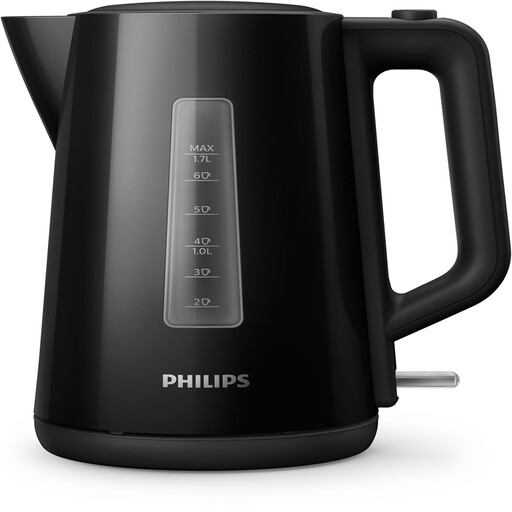
Why this fits the profile: A straightforward choice for daily water boiling without temperature programmes. The 1.7-litre capacity suits families and households that prepare several cups at once.
The product information mentions automatic shut-off, boil-dry protection, a water level indicator and cup markings. This helps you better match the amount to the number of cups.
1.7-litre capacity, 1,850–2,020 W power, concealed flat heating element and removable anti-scale filter.
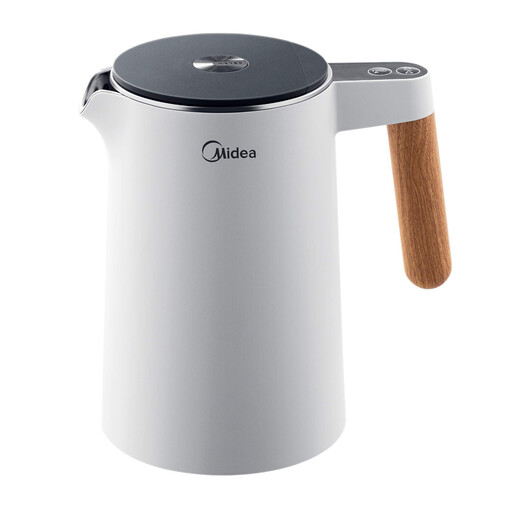
Why this fits the profile: For those who prepare tea and coffee at different temperatures and want a kettle that doesn’t need to be switched on again straight after heating.
The temperature can be set to seven levels from 45 to 100 °C. The digital display shows the selected or current temperature.
2200 W, keep-warm for up to 60 minutes according to the product description, double wall and BPA-free parts that, according to the description, do not come into contact with the water.
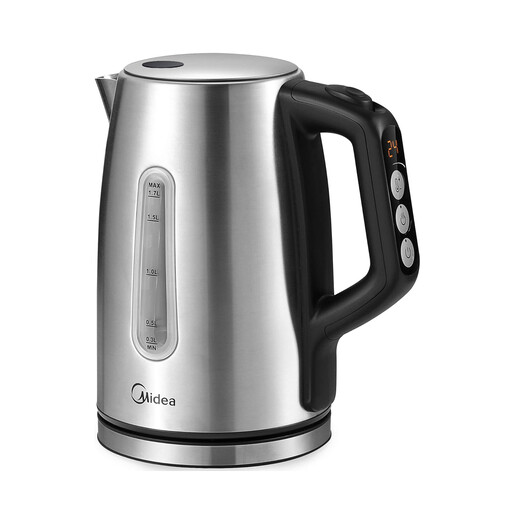
Why this fits the profile: A practical combination for families, frequent tea drinkers and users who want multiple temperature settings alongside a generous capacity.
The six temperature settings from 40 to 100 °C make the choice specific rather than relying on a general boil setting. Automatic shut-off and boil-dry protection are built in, according to the product information.
1.7 litres, 2200 W, keep-warm function for up to 60 minutes according to the product description and an integrated limescale filter.
We’ve put together a full, up-to-date list of products that fully meet these strict selection criteria and comply with current European safety regulations.
For one person, 0.5 to 1 litre may be enough. A household with several people will usually be better off with a 1.5 or 1.7-litre kettle. Use the cup markings where possible and only heat the amount you need.
The consumption mainly depends on the amount of water and the heating time. A 2,200 W model uses more power per moment while heating, but can complete the task more quickly, according to the product specifications. The most practical way to save energy is not to boil more water than you need.
The lifespan depends on usage, limescale build-up, cleaning and the quality of the components. Clean the limescale filter regularly, descale the interior according to the manual and check the cable, lid and base. Only use the kettle for clean water and unplug it when you’re finished.
