
Vandaag of morgen in huis

Kwaliteit gegarandeerd

Welkomstaanbiedingen ontgrendelen: GRATIS bezorging | Tot 80% korting | Gratis 30 dagen JoyPlus-proefperiode
Download de app
A kettle might seem like a simple kitchen appliance, but the differences between models can make a practical difference. You might find the capacity too small for your family, the exterior gets hot, or you barely use the temperature settings. If you only look at wattage or design, you could end up paying for features that don’t suit your everyday needs.
Joybuy Product Recommendation Officer selects products based on verifiable specifications. Before you buy an electric kettle, look out for these common pitfalls.
A fast kettle with 2,200 or 3,000 watts can heat water quickly, but the actual result also depends on the amount of water, its starting temperature and the design of the heating element. A powerful kettle can also be less efficient if you boil more water than you need each time.
So always check the capacity, the minimum fill level and whether there’s a water-level indicator. A 1.7-litre model is handy for several people, but a compact model may be more practical for a single cup of tea.
Automatic shut-off is an important basic feature, but also check whether the product information mentions boil-dry protection. This is designed to switch off the appliance when there isn’t enough water in it. Even so, always fill the kettle between the marked minimum and maximum levels.
A cordless kettle with a 360° base is easy to position, but the base, plug and cable must never come into contact with water. The exterior, lid and glass or metal body may be hot during and after boiling.
A kettle with temperature control can be useful for different types of tea and coffee, but it isn’t essential if you only use boiling water. A keep-warm function can come in handy when several family members have tea one after another. If you rarely use this feature, a simpler model may make more sense.
Also pay attention to brand claims. If a manufacturer describes a product as “faster” or “quieter”, or gives a specific usage time, treat this as a claim from the product description. For example, according to the manufacturer’s own information, the Midea 1.7-litre kettle heats 1.7 litres in under five minutes at 2,200 watts. Actual heating times may vary.
A capacity of 0.4 to 1 litre may be enough for a one-person household or office. Families usually prefer a 1.5- or 1.7-litre kettle. Product information often equates a capacity of 1.7 litres to around six or seven 250 ml cups, depending on how much water you fill it with.
Don’t automatically boil the maximum amount. For one mug, boiling only the water you need is more practical and usually more efficient.
A kettle with temperature control offers preset settings, for example 40, 60, 70, 80, 90 and 100 °C. This can be useful for green tea, instant coffee or drinks that don’t need boiling water. Check how many settings it actually has and whether the temperature is shown on a display.
A kettle with a keep-warm function keeps water at a set temperature for a specified period, according to the product specifications. Midea models keep water warm for up to 60 minutes. However, this function uses electricity for longer than simply heating the water.
A stainless steel kettle often has a metal interior; check whether any plastic parts come into contact with the water. For a BPA-free kettle, check that the product specifications explicitly state that it is BPA-free. For example, the Midea 1.5-litre models list BPA-free parts which, according to the product description, don’t come into contact with the water.
A glass kettle lets you see the water level and may have blue LED lighting. Some product descriptions state that borosilicate glass can withstand temperature changes, but always handle glass with care. A removable limescale filter helps trap limescale particles; it doesn’t replace regular descaling.

Why it suits this profile: A straightforward model for everyday tea and coffee, with a generous capacity and simple controls.
The product information lists automatic shut-off and boil-dry protection. The glass body makes the water level visible.
1.7-litre capacity, 2,200 watts, borosilicate glass and blue LED lighting, according to the product description.
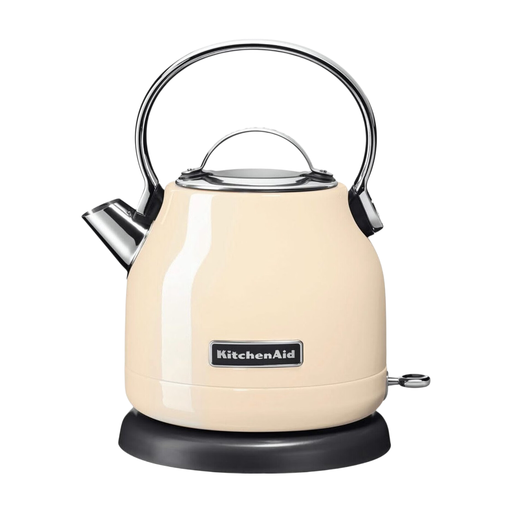
Why it suits this profile: A good fit if you value classic design, a stainless steel body and a branded product with clear, essential features.
The specifications list automatic shut-off, boil-dry protection and a removable limescale filter.
1.25-litre capacity, 2,000 watts, a 360° rotating base and at least two years’ statutory guarantee, according to the product information.
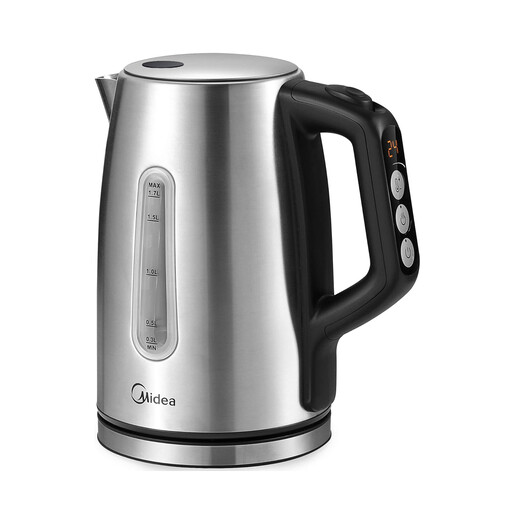
Why it suits this profile: A good choice for families and tea lovers who want a range of temperatures and a keep-warm function.
According to the product specifications, the kettle has six temperature settings, automatic shut-off and boil-dry protection.
1.7 litres, 2,200 watts, keeps water warm for up to 60 minutes, BPA-free parts and a limescale filter, according to the product description.
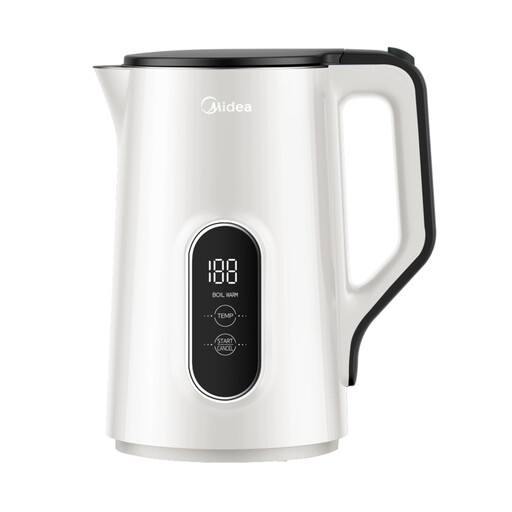
Why it suits this profile: A practical option if you’re looking for temperature settings, a digital display and a double-walled body.
The temperature can be set from 45 to 100 °C, and the product information lists automatic shut-off and overheat protection.
1.5 litres, seven temperature settings, keeps water warm for up to one hour, BPA-free parts and a digital temperature display.
We’ve put together a complete, up-to-date list of products that meet these strict selection criteria and the applicable European safety regulations.
Models with around 2,000 to 2,200 watts are common for everyday use. Higher wattage can reduce heating time, but electricity use also depends on how much water you boil and how often you use the appliance. So, as well as checking the wattage, consider the capacity and only fill it with as much water as you need.
A kettle’s lifespan depends on how it’s used, limescale build-up, cleaning and the quality of its parts. Descale the appliance according to the instructions, don’t use it without water and don’t leave water in the kettle for long periods. You can rinse a removable filter regularly; damaged cables or casing are a reason to stop using the appliance.
Energy use depends on the wattage, heating time and amount of water. A 2,200-watt kettle doesn’t use 2,200 watts continuously: that’s its maximum power while heating. For one cup, boiling only the amount of water you need limits how long the kettle runs and avoids unnecessary reheating.
