
Vandaag of morgen in huis

Kwaliteit gegarandeerd

Welkomstaanbiedingen ontgrendelen: GRATIS bezorging | Tot 80% korting | Gratis 30 dagen JoyPlus-proefperiode
Download de app
An electric kettle may seem like a simple appliance, but differences in capacity, materials and features are noticeable every day. A model may look powerful on paper, yet be too large for one person in practice, difficult to clean or equipped with unnecessary functions.
Pay particular attention to these three common pitfalls:
For one person or a small office, a compact kettle with a capacity of 0.8 to 1 litre may be sufficient. Families and households that make several cups of tea or coffee at once will usually benefit more from a 1.7-litre kettle.
A larger capacity does not automatically mean that you use more energy. Energy consumption is mainly determined by how much water you actually heat. A clear water-level indicator helps you avoid boiling more water than necessary.
Also check the minimum fill level. If the minimum mark is too high, a large kettle can be impractical when making a single cup.
A fast kettle often has a power rating of between 2,000 and 3,000 watts. The Melitta LOOK AQUA II BLACK EU, for example, lists 2,400 watts, while various models from Midea and ochama use 2,100 or 2,200 watts. Morphy Richards models in the range list 3,000 watts.
The difference is noticeable when heating larger quantities of water, but do not look at wattage alone. Also check:
A high power rating draws relatively high current during the short boiling period. For total costs, the amount of water is the main factor. Heating less water than necessary remains the simplest way to limit consumption.
An stainless steel kettle with an inner wall made from food-grade 304 stainless steel is a practical choice for intensive everyday use. However, check which parts actually come into contact with the water. A metal exterior says nothing by itself about the inside.
A glass kettle makes the water level easy to see and is ideal if you want to monitor the boiling process. Borosilicate glass is mentioned in several product descriptions, but the casing and metal components can become hot during and after use. Always keep the appliance out of children’s reach.
If you prepare different types of tea or coffee, you may prefer a kettle with temperature control. Settings from 40 to 100 °C are useful when you do not always need boiling water. A kettle with a keep-warm function keeps the water at temperature for a specified period, according to the product specification. Check how long this function operates: for the models mentioned, it varies from approximately one hour to longer programmable options.
For every model, look for:
A CE marking indicates that the manufacturer declares compliance with the relevant EU requirements. It is not an assessment of boiling performance or durability. You should also keep your proof of purchase; many products are covered by at least the statutory legal guarantee of conformity under EU consumer law.
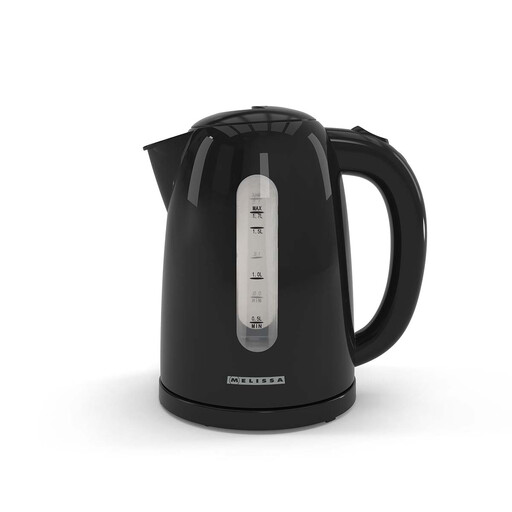
Why it suits this profile: The controls remain simple, while the 1.7-litre capacity is suitable for making several cups of tea or coffee.
The product information lists automatic switch-off, boil-dry protection and a visible water-level indicator, so you do not have to rely solely on marketing claims.
1.7-litre capacity, 2,200 watts, 360° base, limescale filter and BPA-free plastic according to the stated product specifications.

Why it suits this profile: A household that mainly wants boiling water quickly and values simple operation gets a clear, traditional configuration.
The product specification specifically lists 2,400 watts, a double-sided water-level indicator and automatic switch-off when boiling.
1.7-litre capacity, 2,400 watts, cordless pouring and a 360° base. The stated statutory guarantee is at least two years.
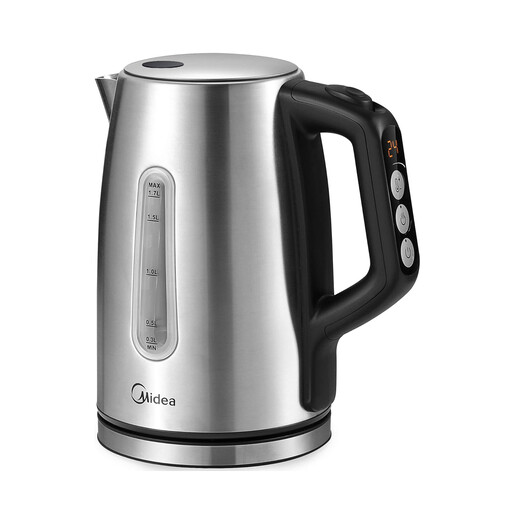
Why it suits this profile: Tea and coffee drinkers who regularly need different temperatures can use the six preset levels.
The temperature settings from 40 to 100 °C, keep-warm function for up to 60 minutes, automatic switch-off and boil-dry protection are listed separately.
1.7 litres, 2,200 watts, six temperature settings, limescale filter and BPA-free parts according to the product description.
We have compiled a complete, up-to-date list of products that fully meet these strict selection criteria and the applicable European safety regulations.
For everyday use, 1,500 to 2,400 watts is common. Higher power can heat a larger quantity of water more quickly, but also check the fill level and stated boiling time. Only heat the amount of water you need.
Its lifespan depends on usage, limescale build-up, cleaning and the quality of the heating element. Clean the limescale filter regularly and descale the inside according to the instructions. Never use a kettle without water, and stop using it immediately if the cord, plug or casing is damaged.
That depends on the amount of water, the power rating and the appliance’s efficiency. An electric kettle often heats a small amount directly in the jug, whereas a hob can also lose heat to the pan and surrounding area. The most practical way to save is always the same: do not boil more water than you need.
