
Vandaag of morgen in huis

Kwaliteit gegarandeerd

Welkomstaanbiedingen ontgrendelen: GRATIS bezorging | Tot 80% korting | Gratis 30 dagen JoyPlus-proefperiode
Download de app
An electric kettle may seem like a simple kitchen appliance, but the differences between models can be significant. A small kettle can be impractical for a family, while a large model takes up unnecessary space in a student room. Terms such as “rapid boiling”, “safe materials” and “keep warm” only tell you something when you check the technical specifications.
Pay particular attention to these three common pitfalls:
By checking the right details, you can choose more confidently for tea, coffee, instant meals or everyday use in the office.
Capacity determines how many cups you can prepare at once. A capacity of 0.8 to 1 litre is well suited to one person, a student room or a small kitchen. For families and shared office spaces, a 1.7-litre kettle is more practical. You can prepare several cups at once without having to refill it halfway through.
Do not automatically fill the jug to the maximum mark. For one cup, a smaller amount of water boils more quickly and generally uses less energy than heating the full capacity.
Power is measured in watts. Models of around 1500 watts are suitable for normal everyday use. A rapid kettle with 2100 to 3000 watts can be useful when several people need hot water one after another.
However, boiling time also depends on the amount of water, its starting temperature and the design of the heating element. A claim such as “ready in minutes” should therefore be viewed as an indication from the product description, not a universal guarantee.
An stainless steel kettle often has a stainless steel interior. Check that this is specifically stated in the product information. For example, the Ochama 1.7-litre kettle is described as having an inner pot made from 304 food-grade stainless steel.
A glass kettle makes the water level visible and is a good choice for users who like to see what is happening inside the jug. Borosilicate glass is mentioned in several product descriptions because of its stated heat resistance. Glass and metal can become hot during and after boiling, so a cool-touch handle or double wall is practical.
These features are relevant for everyday use:
Also look for a removable limescale filter, an easy-to-read water-level indicator and a lid that opens safely. “BPA-free” should be explicitly stated in the product specifications; for the Tefal KO153810, the plastic is listed as BPA-free.
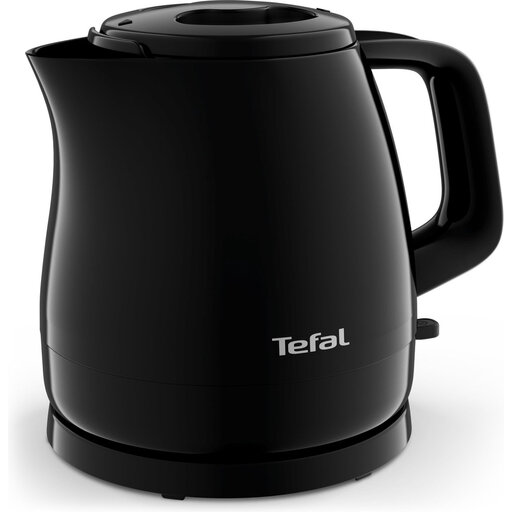
Why it suits this profile: The 0.8-litre capacity is a practical size for one person, a student room or a small workspace.
The smaller capacity prevents you from unnecessarily heating a large amount of water for a single cup. The specifications list automatic shut-off and boil-dry protection.
0.8-litre capacity, 2400 watts, 360° swivel base, removable washable filter and plastic listed as BPA-free in the product information.
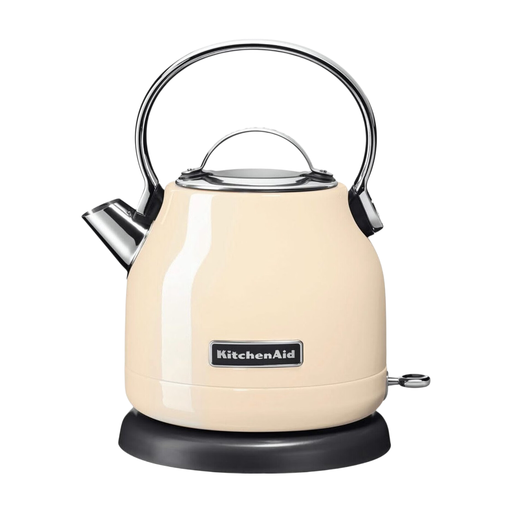
Why it suits this profile: This model combines a 1.25-litre capacity with a stainless steel housing and features designed for convenient everyday use.
The product information lists both automatic shut-off and boil-dry protection. A removable limescale filter is also specified.
2000 watts, 1.25 litres, stainless steel housing, 360° swivel base and a stated two-year warranty period.
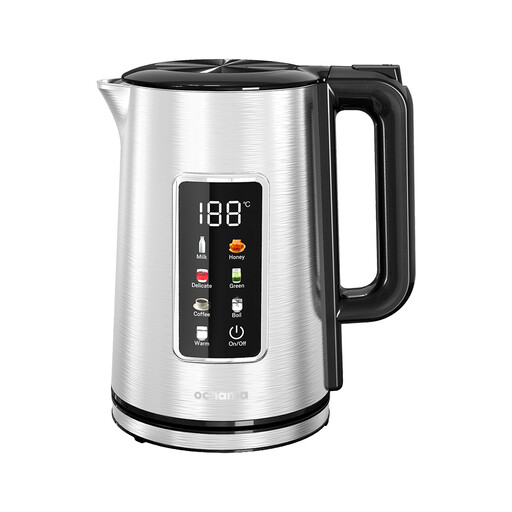
Why it suits this profile: The 1.7-litre capacity and 2100-watt output are well suited to families, shared kitchens and busy mornings.
According to the product description, the double wall is designed for insulation and safer handling. The separate jug switches off automatically to prevent boil-dry operation.
1.7 litres, 2100 watts, double stainless steel wall, seamless interior and automatic shut-off according to the product specifications.
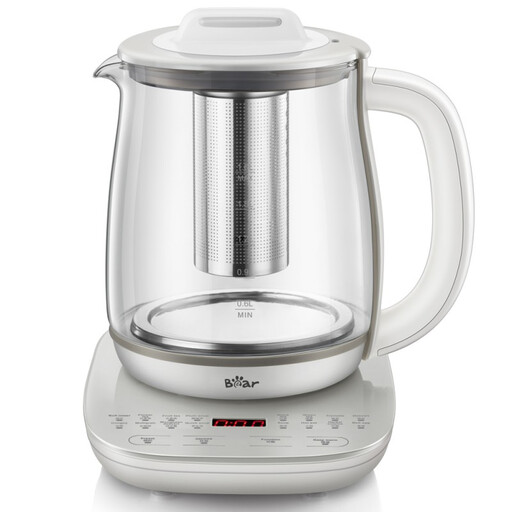
Why it suits this profile: The 1.8-litre glass jug and listed programmes are designed for tea, hot drinks and several preparation methods.
Rather than offering only a boiling switch, the product information lists 16 programmes, a tea strainer and an adjustable timer. However, check whether you really need these features.
1.8 litres, 1000–1200 watts, glass housing, 304 stainless steel interior, tea strainer and 360° swivel base according to the product description.
We have compiled a complete, up-to-date list of products that fully meet these strict selection criteria and the applicable European safety regulations.
For normal use, around 1500 watts is often sufficient. If you want to heat several litres quickly, you could consider a model rated at 2100 to 3000 watts. Energy consumption per boil mainly depends on the amount of water, not just the wattage.
Its lifespan depends on how it is used, maintenance and limescale build-up. Rinse the jug regularly, descale it according to the instructions and do not allow the appliance to boil dry. Also check the lid, base and cord for signs of wear. A longer warranty period may provide additional reassurance, but it is not a guarantee of a specific lifespan.
A glass kettle clearly shows the water level and may be appealing if you mainly use it for tea. A stainless steel kettle often has a robust interior and a less transparent design. Pay particular attention to the internal materials, limescale filter, handle and cleaning options. The most practical choice depends on your kitchen, how often you use the kettle and whether you prefer to see the water level.
