
Vandaag of morgen in huis

Kwaliteit gegarandeerd

Welkomstaanbiedingen ontgrendelen: GRATIS bezorging | Tot 80% korting | Gratis 30 dagen JoyPlus-proefperiode
Download de app
An electric kettle may seem like a simple kitchen appliance, but differences in capacity, materials, speed and safety are noticeable in everyday use. A model that is suitable for one cup of tea may not be the right choice for a family or a busy office.
Pay particular attention to these three common pitfalls:
For a household with several people, 1.7 litres is a common capacity. This allows you to make several cups of tea or coffee, or prepare hot water for instant meals without having to refill the kettle. For a one-person household, a capacity of around 1 to 1.25 litres may be more practical.
Use the water-level indicator and do not automatically fill the kettle to the maximum mark. Boiling too much water takes more time and electricity. Also check the minimum fill level: some kettles do not work properly when they contain only a small amount of water.
A fast-boiling kettle often has a power rating of approximately 1,500 to 3,000 watts. Higher wattage can speed up boiling, but electricity consumption per boiling cycle mainly depends on the amount of water and its starting temperature.
A concealed heating element with a flat metal base is easier to clean than an exposed element. Models such as the Philips HD9353/90 and various stainless steel kettles use a concealed element, according to their product information. Also look for a removable limescale filter at the spout. This helps prevent limescale particles from being poured out with the water, but it does not replace regular descaling.
A stainless steel kettle usually has a metal housing and can withstand daily use. Check, however, whether only the exterior is made of stainless steel or whether the inner reservoir is also made from stainless steel. According to the product information, the Ochama 1.7-litre 1500W model has an inner reservoir made from 304 stainless steel.
A glass kettle lets you see the water level at a glance. Some models use borosilicate glass; according to the product information for the Ochama glass kettle, it has a transparent reservoir and 2200 watts of power. Glass can remain hot during and after boiling, so a good handle and stable positioning are important.
At a minimum, look for:
With a BPA-free kettle, it is sensible to check which parts the claim applies to. “BPA-free” may refer to the plastic components, for example, while the inner reservoir is made from metal or glass. So check the full product specification rather than relying on the title alone.
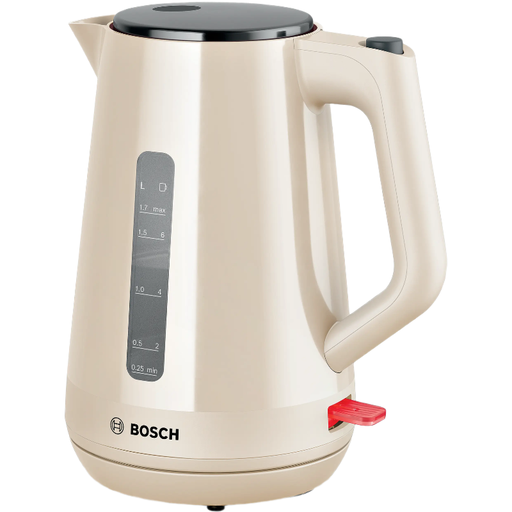
Why it suits this profile: A straightforward 1.7-litre kettle with practical basic features for tea, coffee and instant meals in a household.
The product specification lists automatic shut-off and boil-dry protection, so you do not have to focus solely on the low price.
1.7-litre capacity, stainless steel housing, fast heating according to the product information and a water-level indicator.
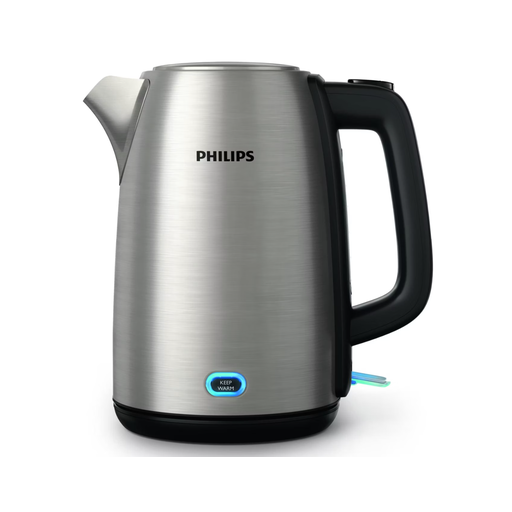
Why it suits this profile: Designed for everyday use where convenient operation, easy cleaning and an additional keep-warm function are important.
The information mentions a concealed flat heating element, a removable micro-mesh limescale filter and a 360° cordless base.
1.7 litres, food-safe stainless steel according to the product description, keep-warm function and integrated cord storage.
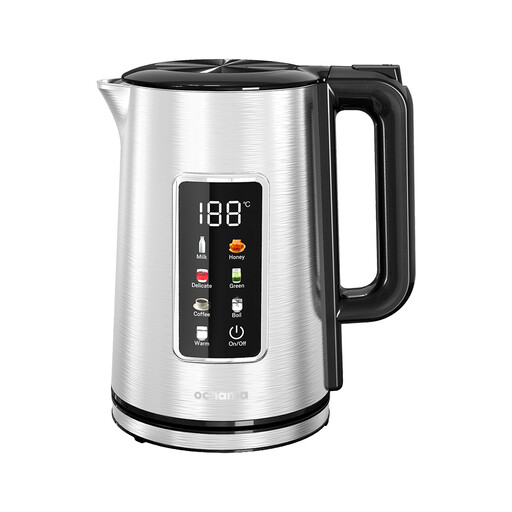
Why it suits this profile: For families or offices where a full kettle is boiled several times a day and temperature information is useful.
The product information mentions a double stainless steel wall, automatic shut-off when boiled dry and a separate base with cord storage.
2,100 watts, 1.7 litres, temperature display and a 304 stainless steel inner reservoir according to the product description.

Why it suits this profile: A good choice if you want to see the water level and like the appeal of a glass reservoir with LED lighting.
The product information lists automatic shut-off and boil-dry protection. The transparent reservoir makes overfilling easier to spot.
Borosilicate glass according to the product information, 1.7-litre capacity, 2,200 watts and blue LED lighting while boiling.
We have put together a complete, up-to-date list of products that fully meet these strict selection criteria and the applicable European safety regulations.
Limescale is common in Dutch households, particularly in areas with hard water. Descale the kettle according to the instructions and clean the filter when water flow or pouring becomes slower. Do not use abrasive products on stainless steel, glass or plastic.
Always fill the kettle between the minimum and maximum marks. Switch the appliance off before removing it from the base if the instructions require this, and keep the kettle and cord out of the reach of young children. A hot housing, steam and boiling water can cause burns.
A kettle with a keep-warm function can be useful when pouring several cups one after another. Check how long the function remains active and whether the temperature is fixed or adjustable. According to the product information, the Ochama 1500W model automatically keeps the water at 55 °C; this is a product specification, not a general guarantee for every usage situation.
For normal home use, models rated at approximately 1,500 to 2,400 watts are common. Higher wattage can heat a full kettle more quickly, but it also uses more power while operating. So consider wattage, capacity and your usual fill level together.
Its lifespan depends on usage, limescale, cleaning and the quality of the switch, lid and base. Descaling regularly and not allowing the kettle to boil dry helps reduce wear. When buying, also check the warranty information; in the EU, statutory consumer protection generally applies in addition to any further terms offered by the seller or manufacturer.
Consumption per boiling cycle is mainly determined by the amount of water and the temperature difference. Only boil as much as you need and use the water-level indicator. For one cup, fully filling a 1.7-litre kettle is usually unnecessary. A keep-warm function can be convenient, but it uses electricity for longer than simply bringing the water to the boil once.
