
Vandaag of morgen in huis

Kwaliteit gegarandeerd

Welkomstaanbiedingen ontgrendelen: GRATIS bezorging | Tot 80% korting | Gratis 30 dagen JoyPlus-proefperiode
Download de app
An electric kettle might seem like a simple appliance, but the differences between models really come through in daily use. A kettle that's too large can waste energy, a metal body can get hot to the touch, and a temperature control function isn't always useful if you only need boiling water.
Use these practical checkpoints to compare models on capacity, material, speed, safety and ease of use. Afterwards, you'll find some popular choices for different households and usage scenarios.
A higher wattage means a kettle uses more electrical power while heating, but it doesn't tell you on its own how quickly the water will boil. The amount of water, the heating element and the construction all play a part. A 2200 W kettle may claim to heat 1.5 to 1.7 litres in a few minutes, but the actual time depends on the starting temperature and how much water you've put in.
So when making a single cup of tea, don't automatically boil the full capacity. A water level indicator or a one-cup marking helps you heat less water.
A 1.7 litre kettle is practical for families, offices or when you have guests. For a single student, a small kitchen or someone working from home who usually makes just one mug, a 1 litre model may be enough. A larger kettle can also take up more space and be heavier when full.
Also pay attention to the minimum fill level. A kettle that only works properly with a relatively large amount of water is less convenient if you usually make just one or two cups.
A stainless steel kettle often has a metal interior or exterior, but check which parts actually come into contact with the water. On some models, the outside is made of plastic or the inside is stainless steel.
Features like automatic shut-off and boil-dry protection are useful technical safeguards. They don't replace the basic rules: don't fill above the MAX mark, don't touch hot surfaces, and don't leave the appliance running unattended.
For most British households, these guidelines are useful:
The power rating on many models falls between roughly 1500 and 3000 W. Check that the appliance is suitable for a UK plug socket and never use a damaged cable or base station.
A stainless steel kettle is generally sturdy and has a neutral, modern look. Metal can get hot on the outside. A double-wall design may keep the exterior cooler according to the product description, but the handle and spout are still worth paying attention to.
Glass makes the water level immediately visible, but limescale shows up more quickly. A plastic body can be lighter. If you live in a hard water area, it's a good idea to look for a removable scale filter, a concealed heating element and easy access for descaling.
A kettle with temperature control suits green tea, coffee or other drinks where you don't always want boiling water. Check how many settings are available and whether the temperature is clearly displayed.
A kettle with a keep-warm function can be handy when several people are having tea or coffee one after another. The Midea models in this selection mention a keep-warm duration of up to 60 minutes. Bear in mind that keeping water warm uses more electricity than boiling it once.
If you mainly want to boil water quickly, features like temperature selection and keep-warm may be less important than clear controls, an easy-to-read water level and simple cleaning.
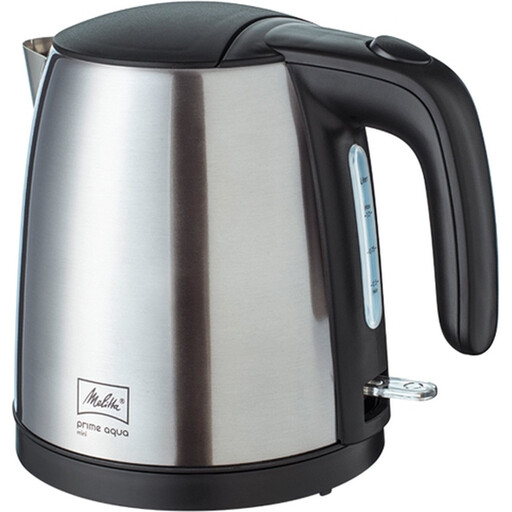
Why this fits the profile: The 1 litre capacity takes up little space and suits students, people living alone and small households. According to the product specifications, this model has 2200 W power, a 360° base and a water level indicator.
The smaller capacity reduces the temptation to boil more water than needed every day. Automatic shut-off and boil-dry protection are listed as features.
1 litre capacity, metal body, indicator light, water level indicator and a swivel base.
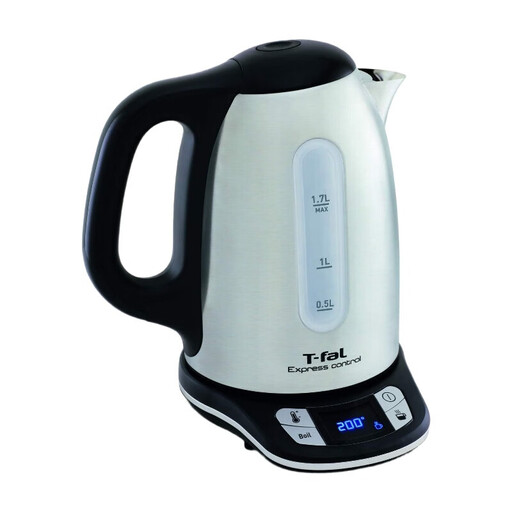
Why this fits the profile: This model combines a 1.7 litre capacity with a stainless steel body, concealed heating element and 360° base. That suits households making several cups at a time who value easy maintenance.
The concealed heater is not directly exposed to the water and can make cleaning easier. The model lists automatic shut-off and boil-dry protection.
1.7 litre capacity, 3000 W rated power, 360° base, water level indicator and stainless steel body.
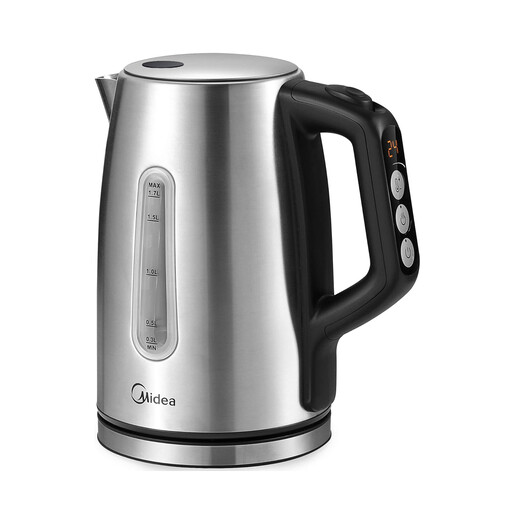
Why this fits the profile: According to the product description, this kettle has six temperature settings from 40 to 100 °C, a keep-warm function for up to 60 minutes and a 1.7 litre capacity. That suits tea and coffee drinkers who regularly use different temperatures.
The temperature control stops you from using the same boil setting for every drink. Automatic shut-off, boil-dry protection and a scale filter are listed as features.
1.7 litres, 2200 W, six temperature settings, keep-warm for up to 60 minutes and an integrated scale filter.
We've put together a full, up-to-date list of products that fully meet these strict selection criteria and comply with current European safety regulations.
A kettle generally remains usable as long as the heating element, lid, switch and base are working properly. Its lifespan depends heavily on how you use and maintain it. Keep these points in mind:
Many household models use around 1800 to 3000 W. A fast kettle doesn't just need enough power; it also needs a suitable heating element and an efficient design. So compare the stated power with the capacity and check whether the manufacturer lists a heating time.
A BPA-free kettle can be relevant if you want to check which plastic parts come into contact with water. Check the product specifications and the manual. For the Midea models mentioned, the product description states BPA-free parts. That's a product specification and not a general guarantee for every model.
The consumption depends on the power, the heating time and how much water you boil. A 2200 W kettle that runs for about five minutes uses roughly 0.18 kWh for that cycle. To work out the actual cost, multiply the consumption in kWh by your current electricity rate. Only boiling the amount of water you need helps keep unnecessary usage down.
