
Vandaag of morgen in huis

Kwaliteit gegarandeerd

Welkomstaanbiedingen ontgrendelen: GRATIS bezorging | Tot 80% korting | Gratis 30 dagen JoyPlus-proefperiode
Download de app
An electric kettle may seem simple, but you quickly notice the differences between models in everyday use. A small capacity can be inconvenient for a family, while a large model heats more water and uses more energy than necessary if you usually make just one cup of tea. Temperature control, materials and safety features also determine whether a kettle remains convenient to use.
Pay particular attention to these common pitfalls:
A 1.5-litre kettle is suitable for everyday use in a small household, at the office or when you usually prepare several cups at once. For some models, a 1.5-litre capacity is equivalent to around six 250 ml cups.
A 1.7-litre kettle provides more room for families, guests or preparing several instant meals one after another. In addition to the maximum capacity, check the minimum fill level. A kettle should not be switched on without enough water in it. For one cup, it is more economical to fill it with only the amount you need.
Models rated between 1,800 and 2,200 watts are common. A fast kettle rated at 2,100 or 2,200 watts may, according to the product description, heat a full capacity in just a few minutes. The stated time is a guideline and may vary in your kitchen.
A higher power rating also means a higher instantaneous load on the socket. Use the kettle in accordance with the manufacturer's instructions and avoid using it alongside other high-power appliances on the same connection.
For black tea, green tea and coffee, a kettle with temperature control may be more practical than a model that only heats water to boiling point. Check how many settings are available. Some models offer five, six or seven preset temperatures, for example from 40 or 45 °C to 100 °C.
A kettle with a keep-warm function keeps the water at temperature for a specified period after heating. This is useful when several people are drinking tea or coffee one after another. The duration varies by model: product specifications commonly include 30 and 60 minutes. A keep-warm function uses electricity for longer than heating the water just once.
An stainless-steel kettle often has a metal inner reservoir. Among the selected products, food-grade stainless steel, including 304 steel, is frequently mentioned. This is a product specification, not a guarantee that the water will taste the same to every user. Rinse a new kettle before use and follow the cleaning instructions.
A glass kettle makes the water level visible and can have a modern appearance. However, glass can become hot and needs to be handled with greater care. According to the product description, a double-wall casing may keep the outside cooler, but during and immediately after use, only touch the handle intended for this purpose.
For every purchase, look out for:
“BPA-free” does not automatically say anything about all the other materials. Therefore, check the full product specification. Only use a kettle for clean water unless the manufacturer explicitly permits another use. Descale it regularly and never immerse the casing, base, plug or cable in water.
The options below are linked to specific usage situations. The features listed are based on the product information provided; claims about speed or temperature retention are presented as manufacturer specifications or stated details.
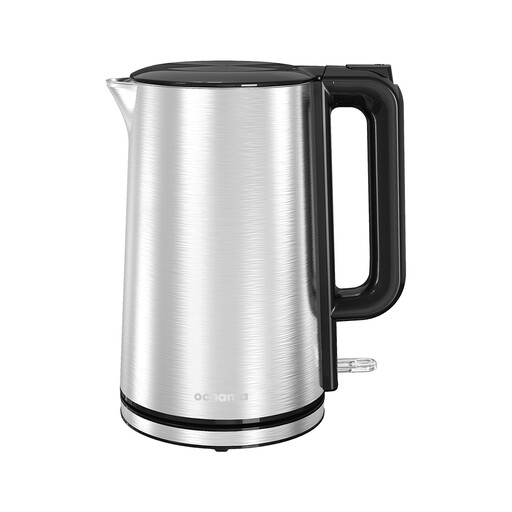
Why it suits this profile: The 1.7-litre capacity is practical for a household that prepares several cups at once. Operation focuses on standard boiling without extensive temperature settings.
The product information lists automatic switch-off and boil-dry protection. This clearly identifies two important basic safety features.
1.7-litre capacity, 2,100 watts, double-wall stainless-steel construction and cable storage in the base.
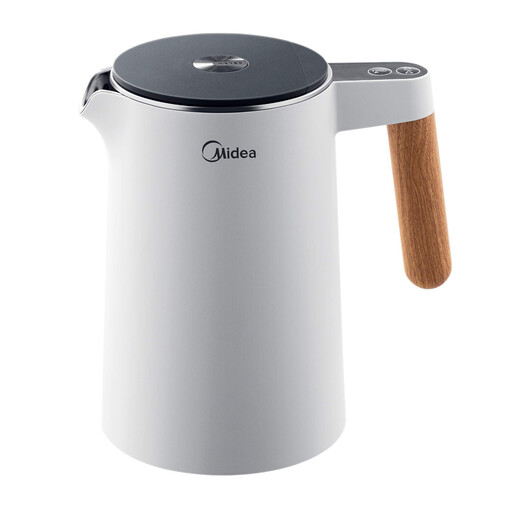
Why it suits this profile: Tea and coffee drinkers get seven temperature settings and a display showing the temperature.
The seven preset settings make the temperature selection clear and verifiable. According to the product description, the keep-warm function is available for up to one hour.
2,200 watts, 1.5 litres, double-wall design, BPA-free components according to the product information and an LED display.
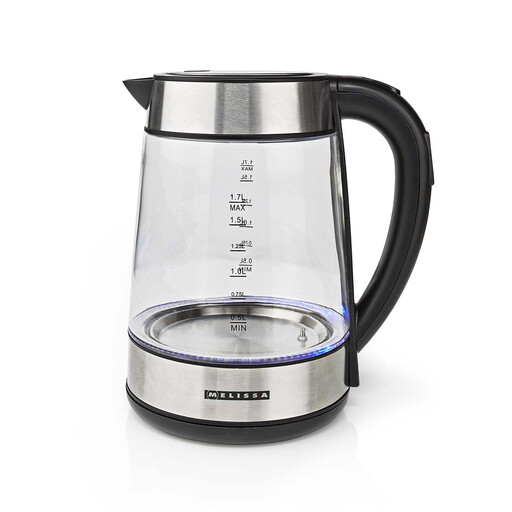
Why it suits this profile: The glass reservoir lets you see the water level at a glance. Five temperature settings are designed for tea, coffee and standard boiling.
The specifications list automatic switch-off, boil-dry protection and a removable limescale filter. This means maintenance and safety are more than just marketing terms.
1.7 litres, 2,200 watts, settings from 50 to 100 °C, 30-minute keep-warm function and 360° base.
We have compiled a complete, up-to-date list of products that fully meet these strict selection criteria and the applicable European safety regulations.
For household use, models rated at around 1,800 to 2,200 watts are common. A higher wattage can reduce heating time, but the result depends on the amount of water and the appliance design. So, if you only need one mug, do not automatically heat a full kettle.
The lifespan depends on usage, limescale build-up, cleaning and how you handle the appliance. Descaling regularly, not allowing the kettle to boil dry and keeping the cable or base dry will help to limit wear. Refer to the manual for the recommended maintenance.
Electricity consumption is mainly determined by the appliance's power rating and how long it is switched on. A 2,200-watt kettle only uses that amount of power while heating. Fill the kettle with the amount you need and, when appropriate, choose a lower temperature instead of always heating it to 100 °C.
