
Vandaag of morgen in huis

Kwaliteit gegarandeerd

Welkomstaanbiedingen ontgrendelen: GRATIS bezorging | Tot 80% korting | Gratis 30 dagen JoyPlus-proefperiode
Download de app
An electric juicer can make it easier to prepare fruit and vegetable juice, but not every appliance is suited to the same ingredients or frequency of use. If you only juice oranges, your needs will differ from those of a family that regularly processes apples, carrots and leafy greens.
Watch out for these three common pitfalls:
An electric citrus juicer is designed for oranges, lemons, limes and similar fruit. You cut the fruit in half and press it against a cone. This type is quick and straightforward to use, but it isn’t suitable for carrots, apples or celery.
A slow juicer, also known as a cold press juicer, slowly presses ingredients using a pressing mechanism. This type is often chosen for combinations of fruit and vegetables. However, preparation and cleaning can take longer than with a citrus juicer.
A centrifugal juicer usually grates ingredients at high speed. This can be handy when you want to make a glass of juice quickly. If you choose this type, pay particular attention to the noise level, pulp container and maximum operating time.
A wide feed chute can be handy for families. According to the product information, the WOOX MX0289 has a 130 mm feed chute. However, the manual says that fibrous vegetables, such as celery and parsley, should be cut into pieces measuring 3 to 4 cm. Pips and certain types of peel also need to be removed.
So, a wide opening mainly means less chopping for suitable ingredients. It doesn’t mean you can put every piece of fruit into the appliance completely unprepared.
Don’t just look at the capacity of the juice jug: check the pulp container and recommended operating time too. A reservoir holding a few hundred millilitres is suitable for one or two glasses. For a family, a larger collection container is more practical.
The WOOX MX0289 is listed as having a juice jug with a maximum 600 ml marking and an 836 ml pulp container. According to the information supplied, the appliance can run continuously for up to 10 minutes, after which the motor needs to cool down for 20 minutes. This is useful to know if you want to make several portions in a row.
Check whether the removable parts are dishwasher-safe and whether a cleaning brush is included. Also look for non-slip feet, a locking system, overheating protection and clear instructions.
A CE marking indicates that the manufacturer declares the product complies with the applicable EU rules. Always check the instructions, maximum operating time and permitted ingredients too. A metal casing may feel sturdy, but on its own it says nothing about how well the pressing mechanism performs.
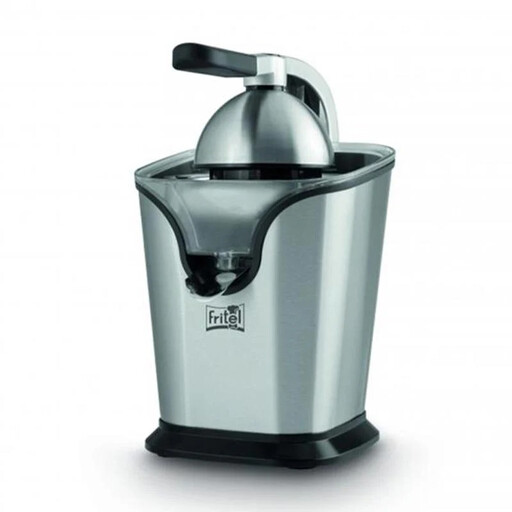
Why it suits this type of user: This electric citrus juicer is designed for everyday orange, lemon and lime juice, without complicated settings or a long list of ingredients to consider.
The product information lists two pressing cones for different sizes of citrus fruit. This makes it clearer which fruit the appliance is designed for than with a universal juicer whose limitations aren’t clear.
100 W power, anti-drip spout, pulp filter, non-slip feet and removable dishwasher-safe parts.
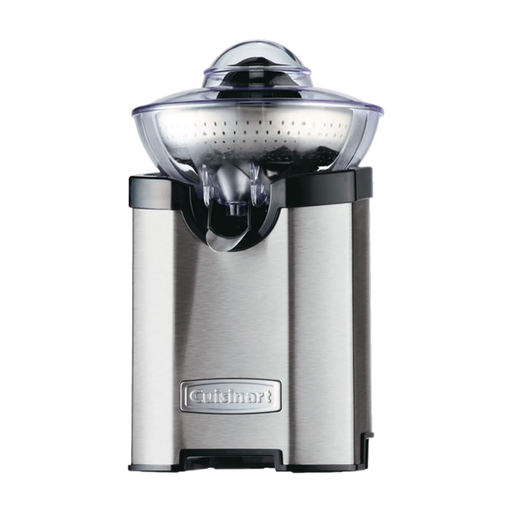
Why it suits this type of user: A good fit if you value a stainless steel design, generous collection capacity and an appliance that can stay on the worktop.
The product information lists an anti-drip system, a wide spout and removable dishwasher-safe parts. This helps reduce spills and makes everyday cleaning more straightforward.
100 W power, 1-litre juice and pulp reservoirs, BPA-free according to the product details, and a three-year manufacturer’s warranty as listed.

Why it suits this type of user: This model is designed for people who want to juice fruit and vegetables together, and value a large feed chute and generous collection capacity.
The specifications state both the maximum operating time and the overheating protection. They also explain which ingredients need to be cut into smaller pieces first.
150 W motor, 130 mm feed chute, juice jug with a capacity of up to 600 ml, 836 ml pulp container and a stated noise level below 72 dB.
For every model, check the current manual and product page too. This helps you avoid buying an appliance with “slow juicer” in the title but different or incomplete product specifications in reality. One example is a listing where the title refers to a juicer, while the accompanying text describes features of an ice cream maker. If the information conflicts, it’s worth contacting the seller before you order.
We’ve put together a full, up-to-date list of products that meet these strict selection criteria and the applicable European safety regulations.
It depends on the model. Carrots and similar vegetables are often suitable if you cut them into smaller pieces. Always check the permitted ingredients, maximum operating time and the manufacturer’s instructions. A citrus juicer isn’t designed for hard vegetables.
Its lifespan depends on how often you use it, how well you clean it and whether you load it correctly. Let the motor cool down when the manual says to, don’t use ingredients that aren’t permitted, and don’t force pieces that have become stuck. Overheating protection is useful, but it doesn’t replace careful use.
Energy use depends on the power rating and how long you use the appliance for. A 100 W appliance running for a few minutes uses less energy per session than a more powerful model that runs for longer. For most households, the difference in daily energy use mainly depends on how often and for how long you switch the juicer on.
