
The careful custard cook
You want to adjust the heat as the custard thickens, and you stay by the pan to whisk it. The Voedingscentrum warns that a sauce containing egg yolk can curdle if it boils.


Choose a standalone hotplate based on your pan, how many pans need heat at the same time and the available connection. Then consider how you can adjust the heat as the custard thickens. Milieu Centraal explains that induction heats up and responds to adjustments quickly, but you’ll need a suitable pan. Ceramic and conventional electric hotplates can work with other pans, but may stay hot after being switched off. No appliance setting alone can guarantee that your custard won’t curdle.
You want to adjust the heat as the custard thickens, and you stay by the pan to whisk it. The Voedingscentrum warns that a sauce containing egg yolk can curdle if it boils.
You want to check that the base of your pan fits the cooking zone and, if you’re using induction, that it’s magnetic. Milieu Centraal describes the magnet test as a way to check this.
You want to make custard and another dish at the same time. In that case, both the number of independently controlled cooking zones and the appliance’s total power matter.
| What to consider | What should you check? | Who might find this especially important? |
|---|---|---|
| Heat while the custard thickens | Compare the adjustment options on the exact model. The Voedingscentrum advises whisking custard as it thickens and not letting it boil. | I want to be able to adjust the heat as the custard thickens, so I stay by the pan to whisk it. Around 31% of consumers prioritise controllable heat when thickening custard. |
| Pan and cooking zone | Measure the base of your pan and compare it with the stated zone or pan size. For induction, Milieu Centraal describes the magnet test for checking the pan base. | I want to keep using my existing pan, so I need to know first whether its base will fit. Around 25% of consumers give pan compatibility top priority. |
| One or two pans | Check how many independently controlled zones there are, as well as the total power. The Consumentenbond notes that limited power can restrict cooking on several high settings at once. | I also need to heat a second pan while I’m cooking, so one cooking zone isn’t enough. Around 25% of consumers prioritise being able to cook with more than one pan at a time. |
| Connection and set-up | Check the connection details for the exact model and its set-up instructions. Use a stable, heat-resistant surface if the manufacturer specifies one. | I want to know in advance where the hotplate can be used safely and whether its connection will work in my home. Around 19% of consumers give the connection and set-up the most weight. |
An appliance setting or temperature selection doesn’t automatically measure the temperature of the sauce. Custard containing egg yolk can curdle if it boils.
Keep stirring as the custard thickens and watch what’s happening in the pan. Don’t treat the appliance setting as a measurement of the food itself.
With induction, the pan base needs to be suitable, and the model’s stated pan or zone diameter may also matter.
Measure the base of your pan and compare it with the hotplate specifications. For induction, you can use a magnet to check whether the base is magnetic.
The zones share the available power. The Consumentenbond describes how limited power can restrict cooking on several high settings at once on freestanding induction hotplates.
Check the total power of the exact model and consider whether both pans really need to be on a high setting at the same time.
The technologies have different requirements for pans and can respond differently when you turn the heat down. A glass-ceramic surface doesn’t automatically mean that a hotplate uses induction.
Check the heating technology specified for the exact model. Bear in mind that ceramic and conventional hotplates can retain heat after use.
The KI120T is a single-zone induction hotplate for use with a compatible induction pan.
The DK 1031 is a two-zone induction hotplate, while the KP 1091 is a single-zone conventional electric hotplate.
The KP-6245 is a conventional electric hotplate with two independently controlled plates.
The CT 2200/E is a ceramic hotplate with one heating area, for anyone who doesn’t want to use an induction pan.
The S-Line 2100 is a single-zone induction hotplate for use with a compatible pan.
This selection includes electric hotplates with one or two zones, including induction and conventional models, as well as a built-in model. If you’re choosing a built-in hotplate, check that it’s suitable for your kitchen.
 No image available
An option if you’re looking for a freestanding infrared hotplate with adjustable power.
The product name lists 3500 W and a timer. Use the hotplate indoors on a stable, heat-resistant surface; it gets hot during use.
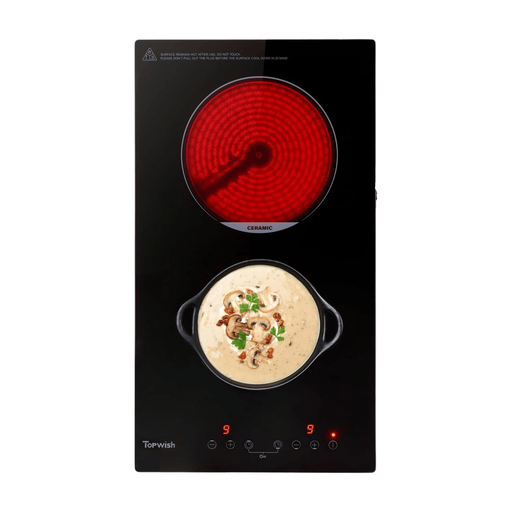 No image available
A built-in option if you need two places for pans and can install a hob in your kitchen.
The product name lists two cooking zones, 3000 W and 29 cm. Check the installation requirements and whether your pan sizes suit the cooking zones. Don’t leave the hob unattended while it’s in use.
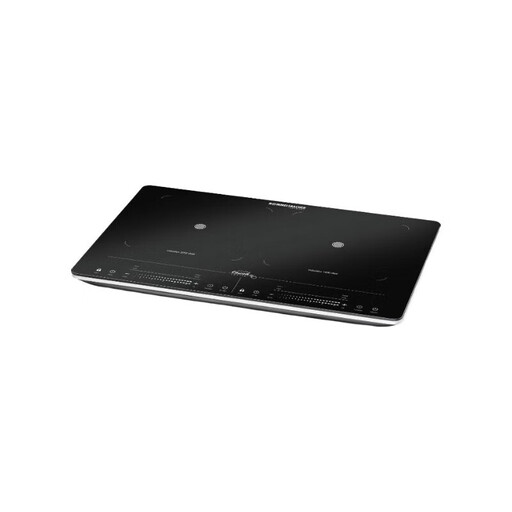 No image available
An option if you want to heat two pans at once and use pans that are suitable for induction.
The product details specify two zones and pans with a ferromagnetic base of up to 260 mm. Check that both pan bases will fit.
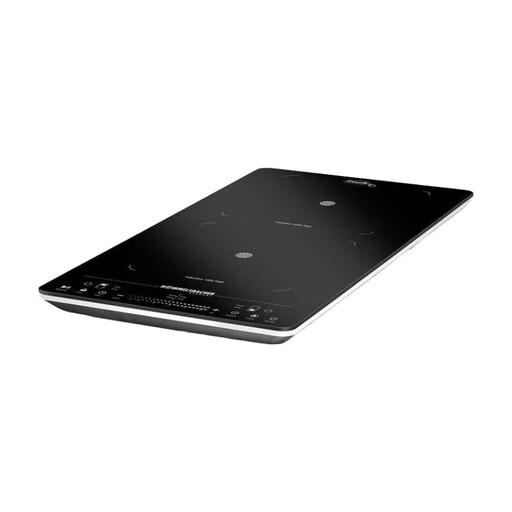 No image available
An option for cooking with two pans at once, provided both pans are suitable for induction.
The product details specify induction-compatible pans with a flat, magnetic base measuring 120–260 mm. The glass-ceramic surface may be hot during and after cooking. Keep devices such as pacemakers and credit cards at least 30 cm away.
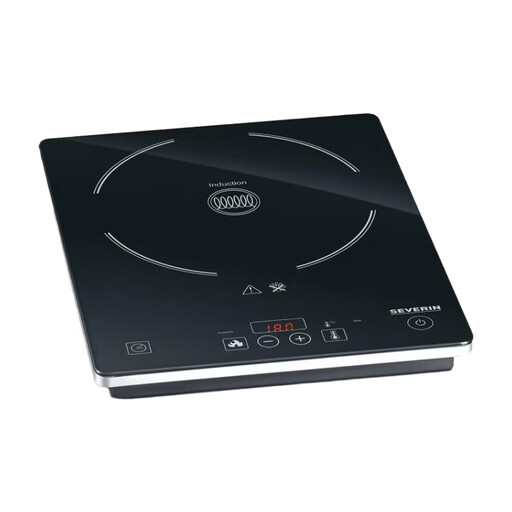 No image available
A conventional electric option if you want to heat a pan without using induction.
The product name lists 2000 W. Place the hotplate on a stable, level, heat-resistant surface and let it cool before cleaning.
A low appliance setting doesn’t measure the temperature of the custard. The Voedingscentrum advises whisking the sauce as it thickens and not letting it boil, as it could otherwise curdle.
Check whether the pan base is magnetic and compare its diameter with the hotplate’s stated range. Milieu Centraal describes the magnet test as a practical way to check.
Not necessarily: the zones share the appliance’s power. The Consumentenbond notes that limited power can restrict cooking on several high settings at once on freestanding induction hotplates. Check the specifications for the exact model.
Don’t assume so without checking. Look at the plug and connection details for the exact model, and consider what other appliances are on the same circuit.
Don’t leave perishable food out of the fridge for more than 2 hours. That’s the Voedingscentrum’s advice for food that spoils quickly.