
Vandaag of morgen in huis

Kwaliteit gegarandeerd

Welkomstaanbiedingen ontgrendelen: GRATIS bezorging | Tot 80% korting | Gratis 30 dagen JoyPlus-proefperiode
Download de app
An electric hob may seem simple to choose, but the difference between a useful purchase and an unsuitable one often comes down to the details. Will the hob fit your worktop? Can your electrical circuit handle the power? Are the cooking zones large enough for your pans? And is a freestanding model more practical than a built-in hob?
For Dutch kitchens, student rooms and small homes, three pitfalls are particularly important.
A four-zone hob offers more space than a two-zone hob, but the number of zones does not tell you everything. Also check the diameter and power of each zone. A small zone is less suitable for a large frying pan. A hob with an extendable zone can be more practical if you use different-sized pans.
A glass hob may be 60 cm wide on the outside, while the required cut-out could measure 56 × 49 cm, for example. Therefore, always check:
A compact hob measuring around 29 or 30 cm wide often has different installation dimensions from a standard 60 cm model.
An electric hob with a high connected load places greater demands on your electrical installation. Models rated at around 3,000 watts may sometimes be suitable for a basic connection, but always check the manual and your consumer unit. Hobs rated from 6,000 to 7,400 watts are often connected across multiple phases.
Have a fixed built-in hob connected by a qualified electrician. A product with a plug is not automatically suitable for every socket or situation.
A ceramic hob uses electric heating elements beneath a glass-ceramic surface. The surface itself becomes hot and remains hot for some time after switching off. This makes a residual heat indicator and clear controls useful features.
Ceramic models generally work with different types of pans, provided the pan base is flat and clean. The smooth surface is easy to wipe down, but burnt-on residue may require a specialist hob cleaner or glass scraper.
An induction hob heats suitable magnetic pans. Therefore, check whether your pans are magnetic, for example by holding a magnet against the base. Aluminium, copper and certain stainless-steel pans do not always work without a magnetic layer.
Induction hobs often offer features such as pan detection, flexible zones and boost. These can be useful for cooking quickly or using large pans, but they do not automatically make the hob easier to use for everyone. Also check the connected load and the required hob cut-out.
A freestanding hob, or electric hob for use on the worktop, is suitable as a temporary solution, an additional cooking zone, for a student room or for a small kitchen. You do not need to cut into the worktop, but you do need a stable, heat-resistant surface.
A single-zone hob is suitable for simple meals. With a double hob, you can cook pasta and heat sauce at the same time, for example.
Do not look only at the total wattage; consider how the power is distributed as well. A two-zone hob with zones rated at 1,200 and 1,800 watts offers different possibilities from a model with two identical zones. For everyday cooking with several pans, separate controls and sufficient space are important.
A hob with touch controls has a smooth surface and is quick to clean. Rotary knobs can be more convenient when you want to adjust a setting immediately while cooking. A hob with a timer can switch off a zone after the set time, depending on the model.
Pay attention to the timer settings: some models run for up to 90 minutes, while others go up to 99 minutes. Also check whether the timer can be set separately for each zone.
Useful features include:
No feature replaces supervision while cooking. A glass or ceramic surface may remain hot after use. Only touch the surface once the residual heat indicator shows that it is safe to do so.

Why it suits this profile: This 29 cm-wide ceramic hob is suitable for a small kitchen or as an additional cooking zone. The two zones provide a combined power output of 3,000 watts.
The external dimensions and cut-out dimensions are listed separately. This allows you to check whether your worktop is suitable before buying.
9 power levels, touch controls, a timer of up to 90 minutes, child lock and residual heat indicator.
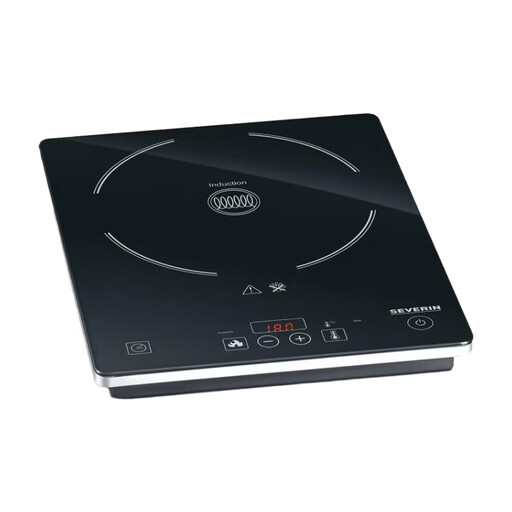
Why it suits this profile: This freestanding single hob takes up very little space and can be used as an additional cooking station.
There is no need to plan for a fixed cut-out or complicated connection. However, place the appliance on a stable surface and use the socket in accordance with the manual.
2,000 watts of power, ceramic glass, continuously adjustable temperature control and a portable design.
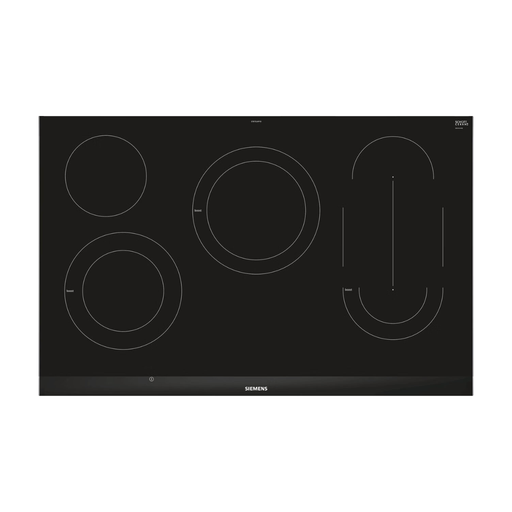
Why it suits this profile: This 80 cm-wide model has five cooking zones and is designed for spacious kitchens where several pans are used at the same time.
The technical specifications state a connected load of 11,200 watts and three phases. This makes it clear in advance that professional installation is required.
5 zones, touch controls, timer with switch-off function, child lock and residual heat indicator.
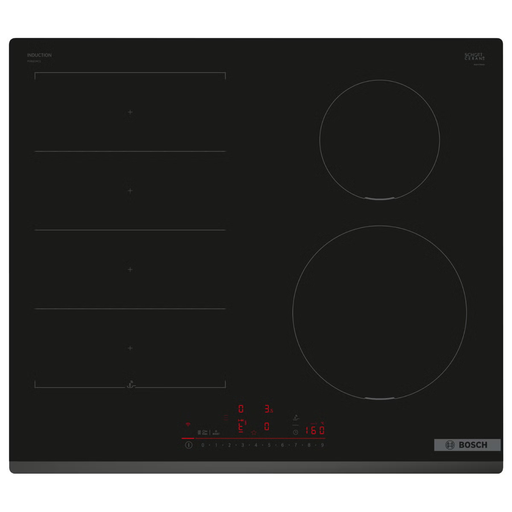
Why it suits this profile: This four-zone induction hob is aimed at users who value flexible cooking space and responsive controls.
As an induction model, the product specifies that magnetic cookware is required. Check your pans before buying.
4 cooking zones, 7,400 watts, DirectSelect controls, FlexInduction and PowerBoost according to the product description.
We have put together a complete, up-to-date list of products that fully meet these strict selection criteria and the applicable European safety regulations.
Before installation, check the manual, the cut-out and the electrical connection point. Place a freestanding hob on a flat, heat-resistant surface with sufficient space around the appliance.
For ceramic models, use pans with a flat base. Lift pans rather than sliding them across the glass. With induction, only use suitable magnetic cookware. Wait until the hob has cooled sufficiently before cleaning it, and do not use abrasive products.
The cost depends on the power rating, cooking time and energy tariff. In theory, a 3,000-watt hob uses 3 kWh when it operates continuously at maximum power for one hour. In practice, a thermostat or power control often reduces the output. Actual consumption is therefore lower or varies from one dish to another.
You can generally use a freestanding model with a suitable plug in accordance with the manual. A fixed built-in hob without a plug, or one with a high connected load, must be connected by a qualified electrician. Check beforehand whether your home supports a single-phase or multi-phase connection.
The lifespan depends on usage, installation, maintenance and the quality of the components. Do not leave a hob running empty at high power for extended periods, keep ventilation openings clear and use the correct pans. Switch off the appliance and have it inspected if the glass develops cracks, the controls do not respond properly or an unusual smell occurs.
